TL;DR
Listen free for 30 days with Audible
Thousands of audiobooks and originals — cancel anytime.
Start your free trialAs an affiliate, we earn on qualifying purchases.
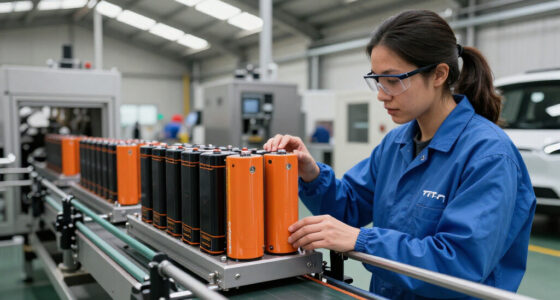
LG has announced that its experimental lithium-metal rechargeable (LMR) battery retained 92% of its initial capacity after 883 charge cycles. This milestone suggests significant improvements in battery lifespan and durability, potentially impacting electric vehicle and portable device markets.
LG has announced that its experimental lithium-metal rechargeable (LMR) battery retained 92% of its initial capacity after 883 charge cycles. This development highlights potential advancements in battery durability, which could influence electric vehicle and consumer electronics markets. The company has not yet confirmed if this is part of a commercial product or ongoing research, but the results mark a significant milestone in battery longevity testing.
The experimental LG LMR battery was tested over 883 charge cycles, a number that exceeds typical lifespan expectations for current lithium-ion batteries. According to LG, the battery maintained 92% of its original capacity, indicating a relatively slow capacity fade over extended use. The company did not specify the exact testing conditions or the initial capacity but emphasized that the results demonstrate the potential for longer-lasting batteries in practical applications.
This battery technology is based on lithium-metal chemistry, which differs from conventional lithium-ion batteries. Lithium-metal batteries are considered promising because of their higher energy density and potential for improved safety, but they have historically faced challenges related to cycle life and stability. LG’s recent results suggest progress in overcoming some of these issues, although further validation is needed.
Potential Impact on Battery Longevity and Market Adoption
This milestone could signal a breakthrough in battery technology, offering longer lifespan and improved performance for electric vehicles, portable electronics, and renewable energy storage. A battery that retains over 90% capacity after nearly 900 cycles could reduce replacement costs and extend device longevity, making it highly attractive for consumers and manufacturers. However, as LG’s results are from experimental testing, it remains uncertain whether this performance can be replicated in commercial-scale production or under real-world conditions.
lithium-metal rechargeable batteries
As an affiliate, we earn on qualifying purchases.
As an affiliate, we earn on qualifying purchases.
Advances in Lithium-Metal Battery Research and Industry Trends
Research into lithium-metal batteries has gained momentum over the past few years, driven by the need for higher energy density and longer-lasting power sources. Major companies and research institutions have been exploring this chemistry as a potential successor to lithium-ion technology, which has limitations in capacity and cycle life. LG’s recent announcement aligns with broader industry efforts to commercialize lithium-metal batteries, though widespread adoption remains a few years away. Prior experimental results have shown mixed longevity, making these latest findings notable but still preliminary.
long-lasting electric vehicle batteries
As an affiliate, we earn on qualifying purchases.
As an affiliate, we earn on qualifying purchases.
Unverified Aspects of Commercial Viability and Long-Term Stability
It is not yet clear whether LG’s experimental battery performance can be replicated in commercial products or scaled for mass production. Details about the testing conditions, initial capacity, and stability over even longer cycles are still emerging. Additionally, the battery’s performance in real-world scenarios, such as temperature fluctuations and mechanical stresses, remains untested.
high cycle life portable batteries
As an affiliate, we earn on qualifying purchases.
As an affiliate, we earn on qualifying purchases.
Further Testing and Industry Validation Needed
LG is likely to continue testing its lithium-metal batteries, including longer cycle life assessments and real-world performance trials. Industry observers will monitor whether these results can be replicated at scale and integrated into commercial products, especially in electric vehicles and portable devices. Regulatory approvals and safety evaluations will also play a critical role in determining the technology’s future.
advanced battery technology for electronics
As an affiliate, we earn on qualifying purchases.
As an affiliate, we earn on qualifying purchases.
Key Questions
What makes LG’s experimental battery different from current lithium-ion batteries?
LG’s experimental battery is based on lithium-metal chemistry, which offers higher energy density and potentially longer lifespan, but has historically faced challenges with cycle stability and safety. The recent results suggest progress in addressing these issues.
How significant is retaining 92% capacity after 883 cycles?
This level of capacity retention is considered promising in battery research, indicating a slower capacity fade and longer usable life compared to typical lithium-ion batteries, which often lose significant capacity after a few hundred cycles.
When could this technology be available commercially?
It is uncertain. While the results are promising, LG has not announced a timeline for commercial deployment. Industry experts suggest several years of further testing and validation are needed before market release.
What challenges remain for lithium-metal batteries?
Major challenges include ensuring long-term stability, safety, and cost-effective manufacturing at scale. Overcoming issues related to dendrite formation and thermal management are also critical hurdles.
Could this breakthrough impact electric vehicle markets?
Potentially, yes. Longer-lasting, higher-density batteries could reduce costs and improve vehicle range, but only if the technology can be reliably scaled and meet safety standards.
Source: rss
Fall Picks
fall essentials
As an affiliate, we earn on qualifying purchases.