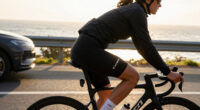
The baleaf Men’s Winter Cycling Jacket earns my best overall pick for balancing windproof softshell warmth, fit and everyday value better than anything else in this lineup. Riders who need serious weather sealing should look at the ARSUXEO Winter Thermal Softshell, while commuters who want a jacket that disappears into a jersey pocket will prefer the Castelli Squadra Stretch. The core tradeoff in this category is straightforward: insulated winter jackets protect more but breathe less, while packable shells stuff down tiny but leave you cold below roughly 45°F. Waterproofing adds another wrinkle, since fully taped rain jackets like the Bikewa run hotter than water-resistant softshells. Read on for the full breakdown of all 15 jackets and which one fits your riding.

Get business pricing on garage and car supplies
- Business-only prices and quantity discounts
- Tax-exempt purchasing
- Multiple users, one account, clear invoices
Complete the kit


Key Takeaways
- Softshell jackets (baleaf, ARSUXEO, ROCKBROS) dominated cold-weather rankings because their windproof front panels plus breathable backs match how riders actually generate heat — better than fully insulated fleece jackets like the INBIKE Winter Fleece.
- The two Castelli entries beat budget shells on fabric quality and packability but cost several times more, making them best for riders who ride often rather than occasionally.
- Sleeve versatility was a hidden differentiator: the Little Donkey Andy’s removable sleeves turn one jacket into a vest, covering more of the temperature range than any single-purpose option.
- Waterproof claims varied widely — truly seam-sealed rain jackets (Bikewa, Baleaf rain jacket) handle sustained rain, while thermal jackets labeled ‘water resistant’ only shrug off brief showers before wetting out.
- The INBIKE Thermal Fleece Jersey is the weakest weather jacket here but the best pure-layering piece, working as midlayer duty under a shell in deep winter.
| Little Donkey Andy Men’s Packable Cycling Jacket with Removable Sleeves |  | Best Convertible Design | Fabric: 95% polyester, 5% elastane | Stretch: Four-way stretch | Pockets: 5 (1 back, 2 zippered hand, 2 inner) | VIEW LATEST PRICE | See Our Full Breakdown |
| Przewalski Men’s Winter Cycling Jacket, Thermal Windproof Running Coat |  | Best for Shoulder-Season Warmth | Fabric: 90% polyester, 10% elastane | Lining: Brushed fleece | Closure: Full-length zipper with internal draft flap | VIEW LATEST PRICE | See Our Full Breakdown |
| ROCKBROS Men’s Winter Cycling Jacket |  | Best Budget Thermal | Fabric: Thermal fleece | Ventilation: Breathable panels on shoulders and back | Water resistance: Light rain only | VIEW LATEST PRICE | See Our Full Breakdown |
| Przewalski Men’s Lightweight Packable Cycling Windbreaker Jacket |  | Best Ultralight Wind Layer | Fabric: 100% polyester | Wind protection: Windproof shell | Ventilation: Rear ventilation opening | VIEW LATEST PRICE | See Our Full Breakdown |
| ARSUXEO Winter Thermal Softshell Cycling Jacket – Windproof & Waterproof |  | Best Winter Softshell | Fabric: 92% polyester, 8% spandex | Construction: 3-layer softshell | Layers: Windproof shell, waterproof membrane, fleece lining | VIEW LATEST PRICE | See Our Full Breakdown |
| Castelli Men’s Squall Shell Jacket |  | Best Premium Emergency Shell | Material: 100% Polyester | Fabric: Stretch 2-layer with waterproof membrane | Seams: Taped seams | VIEW LATEST PRICE | See Our Full Breakdown |
| Bikewa Men’s Waterproof Packable Cycling Rain Jacket |  | Best Storage and Ventilation Value | Material: Polyester | Waterproofing: 5000 mm membrane | Breathability: 3000 g/m²/24 hr | VIEW LATEST PRICE | See Our Full Breakdown |
| baleaf Men’s Winter Cycling Jacket – Windproof Softshell Thermal |  | Best Cold-Weather All-Rounder | Material: 100% Polyester | Construction: 3-layer softshell: windproof shell, breathable membrane, fleece lining | Temperature Range: 20–50°F | VIEW LATEST PRICE | See Our Full Breakdown |
| ROCKBROS Men’s Thermal Windproof Cycling Jacket | 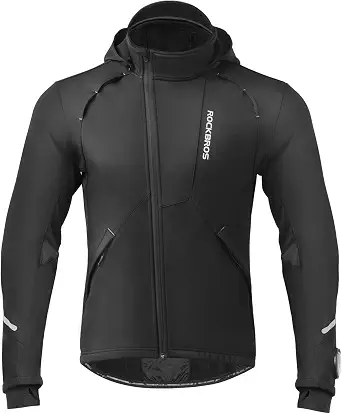 | Best for Deep Cold | Fabric: 93% polyester, 7% spandex | Lining: 320g polar fleece | Weather Protection: Windproof and water-resistant outer layer | VIEW LATEST PRICE | See Our Full Breakdown |
| Baleaf Men’s Lightweight Packable Waterproof Cycling Rain Jacket |  | Best Breathable Rain Shell | Fabric: Polyester | Waterproofing: 10,000 mm | Breathability: 5,000 g | VIEW LATEST PRICE | See Our Full Breakdown |
| Castelli Men’s Squadra Stretch Cycling Jacket |  | Best Minimalist Wind Shell | Fabric: Coated ripstop nylon with stretch panels | Fit: Close-to-body; size up if between sizes | Intended Use: Road cycling and cool-weather commuting | VIEW LATEST PRICE | See Our Full Breakdown |
| baleaf Men’s Running Jacket – Winter Cycling Jacket, Water Resistant, Fleece Lined |  | Best Value Winter Workhorse | Fabric: 100% polyester softshell | Lining: Fleece throughout interior | Water Resistance: Yes | VIEW LATEST PRICE | See Our Full Breakdown |
| INBIKE Men’s Winter Fleece Cycling Jacket |  | Best Everyday Comfort Pick | Fabric: Polyester softshell | Lining: Two-sided polar fleece | Weather Protection: Windproof and water-resistant | VIEW LATEST PRICE | See Our Full Breakdown |
| INBIKE Men’s Hooded Cycling Jacket with Reflective Details |  | Best for Head Coverage | Fabric: 100% polyester | Lining: Thickened velvet fleece | Water Resistance: Water-resistant | VIEW LATEST PRICE | See Our Full Breakdown |
| INBIKE Thermal Fleece Cycling Jersey for Men and Women |  | Best Lightweight Thermal Layer | Fabric: 78% polyester, 22% spandex | Closure: Full self-locking zipper | Recommended Temperature: 40–60°F | VIEW LATEST PRICE | See Our Full Breakdown |
| cycling jacket | Care | Fabric | Pockets |
|---|---|---|---|
| Little Donkey Andy Men’s Packa | Machine wash | 95% polyester, 5% elastane | 5 (1 back, 2 zippered hand, 2 inner) |
| Przewalski Men’s Winter Cyclin | Hand wash only | 90% polyester, 10% elastane | 1 chest zipper, 2 rear, 2 hand |
| ROCKBROS Men’s Winter Cycling | Hand wash only | Thermal fleece | — |
| Przewalski Men’s Lightweight P | Machine wash | 100% polyester | 2 zippered side; 1 converts to storage pouch |
| ARSUXEO Winter Thermal Softshe | Machine wash | 92% polyester, 8% spandex | 2, including 1 zippered front |
| Castelli Men’s Squall Shell Ja | Machine wash | Stretch 2-layer with waterproof membrane | — |
| Bikewa Men’s Waterproof Packab | — | — | 3 front waterproof zipper pockets, 2 inner pockets, 1 back zipper pocket |
| baleaf Men’s Winter Cycling Ja | Machine wash | — | 2 zippered side pockets, 2 bellowed rear pockets |
| ROCKBROS Men’s Thermal Windpro | Hand wash only | 93% polyester, 7% spandex | Two hand pockets, one zippered back pocket |
| Baleaf Men’s Lightweight Packa | Machine wash | Polyester | — |
| Castelli Men’s Squadra Stretch | Hand wash only | Coated ripstop nylon with stretch panels | — |
| baleaf Men’s Running Jacket | Machine wash | 100% polyester softshell | Two side zip, one chest zip, one rear velcro |
| INBIKE Men’s Winter Fleece Cyc | Hand wash or machine wash | Polyester softshell | — |
| INBIKE Men’s Hooded Cycling Ja | Hand wash only | 100% polyester | Zippered chest and waist pockets |
| INBIKE Thermal Fleece Cycling | Hand wash only | 78% polyester, 22% spandex | 3 rear pockets |
More Details on Our Top Picks
Little Donkey Andy Men’s Packable Cycling Jacket with Removable Sleeves
Most jackets in this roundup force a commitment: shell or thermal, jacket or vest. This one refuses to choose. The zip-off sleeves turn it into a vest mid-ride when the sun climbs, which the Przewalski thermal jacket — a dedicated cold-weather piece — simply cannot do. At 3000 mm waterproofing, it sits between a windbreaker like the ROCKBROS packable windbreaker and a true rain shell, so it handles drizzle without the sweat-box effect of fully taped jackets. Five pockets, including a back pocket sized for a phone and a self-stowing design, make it the most versatile layering piece here. The tradeoff: with a mesh back panel, it is not a deep-winter option, and the sizing descriptions are inconsistent, so check measurements carefully.
Pros:- Removable sleeves and hood give you three wearable configurations in one garment
- Packs into its own back pocket for jersey-pocket or backpack storage
- Five pockets including one that fits a 6.5-inch phone
- Reflective details add low-light visibility for evening rides
Cons:- Mesh back panel limits warmth in genuinely cold conditions
- Inconsistent men’s/women’s sizing descriptions create ordering confusion
Best for: Riders who face changeable weather and want one jacket that converts from full shell to vest as temperatures swing
Not ideal for: Cold-winter commuters — the mesh back panel and 3000 mm rating won’t replace a three-layer softshell like the ARSUXEO
- Fabric:95% polyester, 5% elastane
- Stretch:Four-way stretch
- Pockets:5 (1 back, 2 zippered hand, 2 inner)
- Convertibility:Removable sleeves and hood
- Care:Machine wash
Our verdict“Buy this if your rides start cold and finish warm — it’s the most adaptable layer in the lineup, but not a winter jacket.”
Przewalski Men’s Winter Cycling Jacket, Thermal Windproof Running Coat
This jacket occupies the middle ground between the fleece-only ROCKBROS thermal and the heavy ARSUXEO softshell — and that middle ground is exactly where most autumn and spring rides live. The brushed fleece interior and high-cut collar with draft flap lock in warmth without the bulk of a three-layer winter shell, while underarm and back moisture-wicking panels address the problem fleece jackets often ignore: sweat buildup on climbs. Compared with the ROCKBROS, the storage layout is more ambitious, with a chest zip pocket and rear pockets alongside hand pockets. Be aware it runs tight — Przewalski itself suggests sizing up for layering — and it is water-resistant, not waterproof, so heavy rain riders should look to a dedicated rain jacket instead.
Pros:- Brushed fleece lining balances warmth against breathability
- Targeted moisture-wicking panels under the arms and back reduce sweat buildup
- Full-length draft flap and high collar block cold air at speed
- Versatile pocket layout with secure chest zip and rear storage
Cons:- Hand wash only adds friction to regular rotation
- Athletic cut runs tight; most riders will need to size up for base layers
- Not built for moderate or heavy rain
Best for: Road riders and runners training in 45–70°F conditions who want warmth with athletic-fit storage
Not ideal for: Heavy commuters in sustained rain — the water-resistant shell will wet through where a true waterproof would not
- Fabric:90% polyester, 10% elastane
- Lining:Brushed fleece
- Closure:Full-length zipper with internal draft flap
- Pockets:1 chest zipper, 2 rear, 2 hand
- Recommended temperature:45°F–70°F
- Fit:Athletic/tight; size up for layering
- Visibility:Reflective logo and back stripe
- Care:Hand wash only
Our verdict“The smartest pick for cool-weather training rides if you size up — just don’t expect it to replace a rain shell.”
ROCKBROS Men’s Winter Cycling Jacket
Where the Przewalski thermal jacket layers on features, this ROCKBROS keeps things simple: fleece lining, breathable panels, reflective details, done. That simplicity is the appeal. For riders who want a straightforward cold-weather layer without paying for convertible hoods or multi-pocket layouts, this covers the essentials. The shoulder and back ventilation panels matter more than they sound — pure fleece jackets turn into saunas on any sustained climb — though the breathability story is less refined than the Przewalski’s targeted underarm wicking. Water resistance handles drizzle and road spray but gives up in real rain. Hand wash only is the price of admission at this tier, shared with the Przewalski, but the lower barrier to entry makes it a sensible first winter jacket rather than a centerpiece purchase.
Pros:- Thermal fleece lining delivers dependable core warmth on cold rides
- Breathable shoulder and back panels manage heat better than plain fleece
- Reflective details improve visibility for night riding
- Simple, focused design with no features you won’t use
Cons:- Hand wash only makes frequent use inconvenient
- Water resistance stops at light rain
- Simpler pocket layout than the Przewalski thermal
Best for: New winter riders and casual commuters who want reliable fleece warmth without feature overload
Not ideal for: Performance riders in variable weather — no convertible options or advanced ventilation compared with the Little Donkey Andy
- Fabric:Thermal fleece
- Ventilation:Breathable panels on shoulders and back
- Water resistance:Light rain only
- Visibility:Reflective details
- Care:Hand wash only
Our verdict“A no-nonsense fleece jacket for riders entering winter cycling who’d rather spend on layers than on gadgets.”
Przewalski Men’s Lightweight Packable Cycling Windbreaker Jacket
This is the jacket you forget you’re carrying — and that’s the entire point. Unlike its thermal sibling from the same brand, this piece strips out insulation entirely and focuses on blocking wind at minimal weight, packing down into its own pocket pouch. The rear ventilation opening and two-way zipper show real attention to airflow, something the Little Donkey Andy manages differently with its mesh back panel. Where this jacket falls short is honest spec transparency: no water-resistance or insulation ratings are provided, so anyone expecting the 3000 mm protection of the Little Donkey Andy will be guessing. Think of it as a fair-weather shield — crisp morning starts, breezy descents, shoulder-season commutes — rather than a storm option, and the tradeoff of minimalism over protection starts making sense.
Pros:- Featherweight design layers easily over a jersey or base layer
- Pocket converts into a compact storage pouch for travel
- Rear vent and two-way zipper actively manage heat buildup
- Versatile enough for cycling, running, hiking, and commuting
Cons:- No stated water resistance — plan around the weather forecast
- No insulation, so it’s strictly a wind layer, not a warmth layer
- Two zippered side pockets only; less cargo capacity than thermal options here
Best for: Runners, hikers, and commuters who want a wind layer that disappears into a pocket or pack between efforts
Not ideal for: Wet-climate riders — with no stated water resistance, this won’t substitute for a proper rain jacket like the Bikewa packable shell
- Fabric:100% polyester
- Wind protection:Windproof shell
- Ventilation:Rear ventilation opening
- Zipper:Two-way front
- Pockets:2 zippered side; 1 converts to storage pouch
- Packability:Packs into its own pocket
- Care:Machine wash
Our verdict“The right pick when weight and packability outrank weather protection on your priority list.”
ARSUXEO Winter Thermal Softshell Cycling Jacket – Windproof & Waterproof
When conditions push every other jacket in this lineup out of its depth, this is the one that stays on your back. The three-layer construction — windproof shell, waterproof membrane, fleece interior — outclasses the single-layer Przewalski thermal and the fleece ROCKBROS for genuine winter riding, combining the warmth of one with weather protection neither fully delivers. Thoughtful cycling-specific details reinforce the intent: extended cuffs, a drop tail with elastic hem for on-bike coverage, and stretch inserts for pedaling mobility. Those stretch inserts are the honest weak point — they trade protection for movement, letting cold air in at exactly the spots you flex hardest. Sizing has historically run snug, so the revised size chart deserves a close read before ordering. Machine washability is a genuine plus over the hand-wash-only thermal options.
Pros:- Three-layer build delivers windproofing, waterproofing, and insulation together
- Cycling-specific fit with drop tail and extended cuffs for riding position
- Machine washable, unlike the hand-wash-only thermal jackets here
- Reflective accents and a zippered pocket round out the details
Cons:- Stretch inserts are neither windproof nor waterproof, leaking cold air at flex points
- Snug historical sizing requires careful chart-checking before purchase
- Heavier and less packable than the windbreaker options in this guide
Best for: Winter commuters and cold-weather road riders who need windproofing, waterproofing, and warmth in a single jacket
Not ideal for: Mild-climate riders — this is overkill above 50°F compared with the Przewalski windbreaker
- Fabric:92% polyester, 8% spandex
- Construction:3-layer softshell
- Layers:Windproof shell, waterproof membrane, fleece lining
- Pockets:2, including 1 zippered front
- Fit features:Extended cuffs, drop tail with elastic hem, stretch inserts
- Visibility:Reflective accents
- Care:Machine wash
Our verdict“The most weatherproof jacket of this batch — buy it for real winter riding, and verify your size first.”
Castelli Men’s Squall Shell Jacket
Among packable shells in this roundup, the Castelli Squall stands apart through its stretch 2-layer waterproof membrane with taped seams — a genuine rain barrier rather than the coated fabrics found on the Bikewa or Baleaf rain jackets below. At just 3.3 ounces, it disappears into a jersey pocket yet delivers full windproofing front and back, which makes it the pick I’d trust on long alpine descents or unpredictable spring rides between 4–18°C. The high collar and reflective rear stripe show racing pedigree that budget options lack. The tradeoff is real: this is a shell, not insulation. Riders facing sub-39°F conditions will want the baleaf softshell instead. The close-to-body Italian fit also demands careful sizing — many buyers will need to size up for comfort over base layers.
Pros:- Genuine 2-layer waterproof membrane with fully taped seams, not just a DWR coating
- Extremely light at 3.3 oz and packs down small enough for a jersey pocket
- Full windproof protection front and back for fast descents
- Reflective rear stripe adds low-light visibility
Cons:- Uninsulated — too cold worn alone below 39°F
- Close-to-body race fit often requires sizing up, especially for layering
Best for: Serious road riders who want a genuinely waterproof, pocket-sized shell for changable mountain weather and cold descents
Not ideal for: Cold-winter commuters or buyers seeking warmth — this is an unlined shell, so it lacks insulation below 39°F
- Material:100% Polyester
- Fabric:Stretch 2-layer with waterproof membrane
- Seams:Taped seams
- Weight:3.3 ounces
- Temperature Range:4–18°C / 39–64°F
- Fit:Close-to-body; size up for less compressive fit
- Care:Machine wash
Our verdict“The pick for riders who refuse to compromise on waterproofing and packability, provided they already run warm or layer properly.”
Bikewa Men’s Waterproof Packable Cycling Rain Jacket
Where the Castelli Squall bets everything on fabric quality and minimal weight, the Bikewa packable rain jacket takes the opposite approach: more features for less money. Its 5000 mm waterproof membrane sits mid-pack in this lineup, but the underarm zips and back vents out-ventilate most competitors, and the pocket array is unmatched here — three waterproof front pockets, two inner pockets, and a rear pocket that doubles as the stuff sack. Compared with the simpler Baleaf lightweight rain jacket, you get more carrying capacity and adjustable venting, at the cost of a bulkier packed size. The 3000 g/m²/24 hr breathability rating is modest, so sustained high-intensity efforts in mild rain may still cause some clamminess. For commuters and touring riders, though, the storage-versus-price equation is hard to beat.
Pros:- Six total pockets including three waterproof zipped front pockets
- Underarm zips and back vents give adjustable heat release
- DWR finish plus 5000 mm membrane handles steady rain
- Back pocket doubles as a stuff sack for packing down
Cons:- 3000 g/m²/24 hr breathability is lower than the Baleaf rain jacket’s 5000 g rating
- Feature-heavy design makes it bulkier in a jersey pocket than minimalist shells
Best for: Bike commuters and touring riders who carry a phone, tools, and snacks and want vented rain protection without paying premium shell prices
Not ideal for: Racing-focused riders who prioritize minimal packed size and maximum breathability during hard efforts
- Material:Polyester
- Waterproofing:5000 mm membrane
- Breathability:3000 g/m²/24 hr
- Ventilation:Underarm zips and back vents
- Pockets:3 front waterproof zipper pockets, 2 inner pockets, 1 back zipper pocket
- Packability:Back pocket doubles as storage pouch
- Extras:DWR finish, reflective elements, adjustable hem drawcord
Our verdict“The rational choice for riders who value pockets and venting over featherweight packability.”
baleaf Men’s Winter Cycling Jacket – Windproof Softshell Thermal
This is the jacket I’d point to when temperatures drop out of shell territory entirely. Its 3-layer softshell construction — windproof face, breathable membrane, fleece lining — covers a broad 20–50°F window that neither the Castelli Squall (too thin below 39°F) nor the ROCKBROS thermal (built for deeper cold) can match as a single solution. The two zippered chest vents are the standout: they let you modulate heat on climbs without unzipping the front and losing wind protection. Reflective hits on the chest, elbows, back, and rear pocket are more thorough than most in this roundup. The compromises are a snug form-fit that resists heavy layering, and the left-side zipper, which some US riders find awkward. For mixed winter riding at moderate intensity, it hits the sweet spot.
Pros:- 3-layer softshell spans a wide 20–50°F temperature range
- Zippered chest vents let you dump heat on climbs without exposing your front
- Four pockets, including roomy bellowed rear pockets for gloves and nutrition
- Reflective elements placed on chest, elbows, back, and rear pocket
Cons:- Form-fit cut runs snug and limits bulky layering
- Left zipper orientation feels unfamiliar to many US riders
Best for: Year-round cyclists and cold-morning commuters who need one jacket spanning 20–50°F with climb-friendly venting
Not ideal for: Riders with broader builds or those who layer thickly underneath — the form-fit cut runs snug
- Material:100% Polyester
- Construction:3-layer softshell: windproof shell, breathable membrane, fleece lining
- Temperature Range:20–50°F
- Ventilation:2 zippered chest vents
- Pockets:2 zippered side pockets, 2 bellowed rear pockets
- Fit Details:High collar, drop-tail hem, silicone gripper
- Care:Machine wash
Our verdict“The most versatile cold-weather pick here — buy it for the temperature range and vents, size carefully for the fit.”
ROCKBROS Men’s Thermal Windproof Cycling Jacket
When the forecast dips below what the baleaf softshell was built for, the ROCKBROS thermal jacket leans on a 320g polar fleece lining — noticeably heavier insulation than most fleece-lined entries in this roundup. The windproof, water-resistant outer plus mesh side panels and six ventilation holes keep that warmth from becoming a sauna on harder efforts, and the spandex-blend fabric (7%) gives it more stretch than pure-polyester shells like the Castelli Squall. Tradeoffs are everyday annoyances rather than design flaws: the hand-wash-only care requirement is a genuine hassle for a garment you’ll sweat in weekly, and the fit runs tight, with the listing itself recommending a size up. For riders whose winter rides start near freezing and stay there, though, this is the warmest option among the lighter-weight picks here.
Pros:- 320g polar fleece lining delivers the deepest warmth in this batch
- Six back/shoulder vents and mesh side panels prevent overheating on climbs
- Stretchy 7% spandex fabric moves better than rigid polyester shells
- Two hand pockets plus a zippered back pocket for essentials
Cons:- Hand-wash-only care is inconvenient for a high-use winter garment
- Sizing runs tight — a size up is recommended for a looser fit
Best for: Winter riders who regularly ride below freezing and prioritize maximum fleece warmth over convenience
Not ideal for: Anyone who wants low-maintenance gear — hand-wash-only care is impractical for a frequently worn winter jacket
- Fabric:93% polyester, 7% spandex
- Lining:320g polar fleece
- Weather Protection:Windproof and water-resistant outer layer
- Ventilation:Six holes on back and shoulders; mesh side panels
- Pockets:Two hand pockets, one zippered back pocket
- Care:Hand wash only
- Extras:Reflective details
Our verdict“Choose this when warmth is the non-negotiable priority and you can live with fussy washing and snug sizing.”
Baleaf Men’s Lightweight Packable Waterproof Cycling Rain Jacket
In a batch of rain shells, breathability is usually the first casualty — and that’s where this Baleaf separates itself. Its 5,000 g breathability rating outpaces the Bikewa (3,000 g) by a wide margin, meaning fewer soaked-from-the-inside moments on temperate rides, while its 10,000 mm waterproof rating doubles Bikewa’s membrane for sustained rain. Like the Castelli Squall, it packs into its own rear pocket, making it a natural emergency-shell candidate, and the underarm vents plus drawcord hem round out a sensible feature set. Where it falls short of Castelli is fabric stretch and seam construction — it reads as a capable all-rounder rather than a race-day piece. Note also that published sizing details are thin, so checking the size chart carefully before ordering is wise. For humid-weather riders, it’s the most balanced rain shell here.
Pros:- 10,000 mm waterproof rating is the strongest in this batch
- 5,000 g breathability rating beats cheaper rain shells for high-output riding
- Packs into its own rear pocket for jersey-pocket storage
- Underarm vents and adjustable drawcord hem fine-tune airflow and fit
Cons:- No published sizing or fit guidance, making online ordering riskier
- Lacks the stretch fabric and refined fit of premium shells like the Castelli Squall
Best for: Riders in humid or mild climates who need real rain protection without cooking inside their jacket
Not ideal for: Anyone wanting guaranteed fit out of the box — sizing and fit details are sparse, so ordering involves some guesswork
- Fabric:Polyester
- Waterproofing:10,000 mm
- Breathability:5,000 g
- Packability:Packs into its own rear pocket
- Ventilation:Underarm vents
- Adjustability:Adjustable drawcord hem
- Visibility:Reflective prints
- Care:Machine wash
Our verdict“The strongest waterproof-breathability balance in this group, best for riders who sweat hard in the rain and can navigate the size chart.”
Castelli Men’s Squadra Stretch Cycling Jacket
Where most jackets in this roundup lean on fleece linings for warmth, the Castelli Squadra takes the opposite approach: a stripped-back, coated ripstop nylon shell whose only job is cutting wind. That makes it the lightest, most packable-feeling option here, and unlike the INBIKE Thermal Fleece Jersey, it layers cleanly over a base layer or thermal jersey when temperatures swing during a ride. The stretch panels and high collar give it a genuine race-fit character that road riders will appreciate, though that close cut means anyone between sizes should plan on sizing up. Compared with the baleaf Fleece Lined Jacket, it offers far less warmth on its own — this is a shoulder-season shell, not a winter jacket.
Pros:- Wind-resistant coated ripstop shell blocks chill without bulk
- Stretch panels keep the close fit from feeling restrictive on the bike
- Reflective details and high collar add low-light coverage for commuting
- Layers well over thermal kit for flexible temperature control
Cons:- No insulation — too cold alone in true winter conditions
- Close-to-body fit often requires sizing up
- Hand wash only adds upkeep hassle
Best for: Road riders and commuters who want a lightweight, close-fit wind layer for cool morning rides and variable conditions
Not ideal for: Cold-weather riders in the 20–40°F range who need insulation built in rather than layered underneath
- Fabric:Coated ripstop nylon with stretch panels
- Fit:Close-to-body; size up if between sizes
- Intended Use:Road cycling and cool-weather commuting
- Features:High collar, reflective details
- Care:Hand wash only
- Origin:Made in the USA or imported
Our verdict“A slim, no-frills wind shell for riders who’d rather layer strategically than haul a heavy winter jacket.”
baleaf Men’s Running Jacket – Winter Cycling Jacket, Water Resistant, Fleece Lined
This baleaf softshell bundles nearly everything a cold-weather rider needs at a budget-friendly price point: full fleece lining, a wind- and water-resistant shell, a dropped tail, and four pockets. Compared with the INBIKE Winter Fleece Jacket, it’s the more versatile pick — the stated 20–50°F range and stretch panels at the armpits make it work for running and hiking too, not just cycling. The pocket layout beats both INBIKE models, with a zippered chest spot for a phone and a rear velcro pocket for gloves or gels. The tradeoff is fit precision: it runs close and some body types will find it small, and unlike the Castelli Squadra it can’t compress down to a light emergency layer.
Pros:- Fleece-lined softshell handles wind, light rain, and cold in one piece
- Four well-positioned pockets including a zippered chest pocket
- Reflective strips on pockets and back boost low-light visibility
- Stretch panels at armpits and sleeves allow unrestricted pedaling
Cons:- Close fit runs small for some body types
- Performance drops off outside its stated 20–50°F range
- Bulkier than a packable shell when stowed
Best for: Multi-sport riders who want one affordable jacket covering cycling, running, and hiking through winter
Not ideal for: Riders outside the 20–50°F window — it’s too warm for mild autumn days and not rated for deep-freeze conditions
- Fabric:100% polyester softshell
- Lining:Fleece throughout interior
- Water Resistance:Yes
- Temperature Range:20–50°F
- Pockets:Two side zip, one chest zip, one rear velcro
- Safety Features:Reflective strips on pockets and back
- Care:Machine wash
- Fit:Close fit with stretch panels at armpits and sleeves
Our verdict“The most complete cold-weather package in this batch for riders who want warmth, storage, and versatility without paying premium prices.”
INBIKE Men’s Winter Fleece Cycling Jacket
The INBIKE Winter Fleece Jacket sits between the baleaf and Castelli options: warmer than the Castelli Squadra, more relaxed than the baleaf Fleece Lined Jacket. Its comfort-fit 3D cut and chin flap make it the easiest jacket in this batch to wear all day, whether on the bike or off it, and the two-sided polar fleece holds warmth without the compressive race fit many riders dislike. It matches baleaf’s wind and water resistance claims but gives up the dropped tail and dedicated phone pocket in exchange. The weak spot is transparency: no waterproof rating and no temperature guidance, so buyers are left guessing where its limits sit compared with baleaf’s clearly stated 20–50°F range.
Pros:- Two-sided polar fleece delivers steady warmth without bulk
- Windproof and water-resistant shell handles mixed conditions
- Breathable mesh pockets double as vents when you heat up
- Chin flap prevents zipper chafing on long rides
Cons:- No waterproof rating stated, so rain performance is uncertain
- No temperature range guidance for buyers
- Relaxed fit creates more drag than slim-cut alternatives
Best for: Recreational riders who prioritize all-day comfort and a relaxed cut over race-fit aerodynamics
Not ideal for: Riders who need clear performance data — no waterproof rating or temperature range is provided
- Fabric:Polyester softshell
- Lining:Two-sided polar fleece
- Weather Protection:Windproof and water-resistant
- Fit:Comfort fit with 3D cut
- Uses:Cycling, running, and outdoor sports
- Care:Hand wash or machine wash
- Origin:Imported
Our verdict“A comfortable, do-it-all fleece jacket for casual riders who value wearability over technical precision.”
INBIKE Men’s Hooded Cycling Jacket with Reflective Details
This is the only jacket in this batch with a hood, and that’s its whole argument. For commuters and trail riders who ride through wind, drizzle, and darkness, a fixed fleece-lined hood covers a gap the baleaf Fleece Lined Jacket and INBIKE Winter Fleece Jacket leave to a separate cap or headband. The thickened velvet fleece interior is warmer than the standard polar fleece in INBIKE’s own non-hooded model, and zippered chest and waist pockets keep essentials secure around town. The compromises are real: the hood doesn’t detach or stow, so it can flap or interfere with a helmet, and hand-wash-only care makes it higher maintenance than baleaf’s machine-washable softshell.
Pros:- Fixed fleece-lined hood adds head coverage without extra accessories
- Thickened velvet fleece is among the warmest linings in this batch
- Zippered chest and waist pockets secure valuables off the bike
- Reflective details improve visibility for dark commutes
Cons:- Hood is not detachable or stowable
- Hand wash only, unlike machine-washable rivals
- Water resistance suits drizzle, not sustained rain
Best for: Urban commuters and casual riders who want built-in head coverage for cold, windy, damp conditions
Not ideal for: Helmet-first road riders — the fixed hood can’t be removed and may bunch under a helmet
- Fabric:100% polyester
- Lining:Thickened velvet fleece
- Water Resistance:Water-resistant
- Hood:Fixed, non-detachable
- Pockets:Zippered chest and waist pockets
- Care:Hand wash only
- Origin:Imported
Our verdict“Choose this if hooded warmth matters more than helmet compatibility; skip it if you always ride with a lid on.”
INBIKE Thermal Fleece Cycling Jersey for Men and Women
Of everything in this batch, this is the only true jersey rather than a jacket — and that distinction matters. The 78/22 polyester-spandex blend gives it a stretch and next-to-skin feel no softshell matches, making it ideal as a standalone layer for 40–60°F or as a warm mid-layer under the Castelli Squadra when it gets colder. Its three rear pockets follow classic jersey layout, something the baleaf and INBIKE jackets don’t offer, and the non-slip hem keeps it anchored in a riding position. The obvious limitation: no wind or water resistance at all, so on its own it’s outmatched by every softshell here once conditions turn wet or blustery.
Pros:- Stretchy spandex-blend fabric moves naturally in a riding position
- Three rear pockets offer classic jersey storage for food and tools
- Non-slip hem stays put without riding up
- Works equally well as a mid-layer under a wind shell
Cons:- No wind or water resistance — strictly fair-weather or layered use
- Limited to moderately cool 40–60°F conditions
- Hand wash only
Best for: Riders in mild-cool weather who want a stretchy thermal jersey, or anyone building a layering system under a shell
Not ideal for: Wet or windy conditions — it has no shell fabric, so it offers zero weather protection alone
- Fabric:78% polyester, 22% spandex
- Closure:Full self-locking zipper
- Recommended Temperature:40–60°F
- Pockets:3 rear pockets
- Features:Non-slip hem, fleece thermal fabric
- Care:Hand wash only
- Origin:Imported
Our verdict“A flexible thermal jersey for mild days and layering, not a substitute for an actual weatherproof jacket.”
How We Picked
I evaluated each jacket against four buyer-relevant criteria. Weather protection came first: how well the fabric blocks wind, whether seams are taped or just water resistant, and how the collar, cuffs and hem seal out drafts. Breathability and temperature range came second, because a jacket that keeps you warm at mile one but cooks you at mile ten fails at its job — softshells with mesh or stretch back panels scored higher here than fully sealed designs. Third, I weighed fit and riding position: longer rear hems, drop tails and non-restrictive shoulders matter more on a bike than any street-size chart suggests. Fourth, practicality — packability, pocket placement, reflectivity and how well the jacket survives repeated washing.
The ranking logic favors versatility per dollar. Jackets that handle a wide temperature band and mixed conditions placed above single-condition specialists, unless that specialty is executed exceptionally well (as with the Castelli shells). I also penalized jackets whose marketing overstates protection — a fleece-lined jersey called a ‘jacket’ ranks below a genuine softshell at a similar price. The result is a list ordered by how confidently I’d recommend each one to the largest number of riders, with clearly flagged exceptions for specific needs like commuting in sustained rain or racing in mild drizzle.
| cycling jacket | Care |
|---|---|
| Little Donkey Andy Men’s Packa | Machine wash |
| Przewalski Men’s Winter Cyclin | Hand wash only |
| ROCKBROS Men’s Winter Cycling | Hand wash only |
| Przewalski Men’s Lightweight P | Machine wash |
| ARSUXEO Winter Thermal Softshe | Machine wash |
| Castelli Men’s Squall Shell Ja | Machine wash |
| Bikewa Men’s Waterproof Packab | — |
| baleaf Men’s Winter Cycling Ja | Machine wash |
| ROCKBROS Men’s Thermal Windpro | Hand wash only |
| Baleaf Men’s Lightweight Packa | Machine wash |
| Castelli Men’s Squadra Stretch | Hand wash only |
| baleaf Men’s Running Jacket | Machine wash |
| INBIKE Men’s Winter Fleece Cyc | Hand wash or machine wash |
| INBIKE Men’s Hooded Cycling Ja | Hand wash only |
| INBIKE Thermal Fleece Cycling | Hand wash only |
Factors to Consider When Choosing Best Cycling Jackets
Before choosing from the 15 jackets above, it helps to understand how the category actually works. Most buyer mistakes come from buying one jacket and expecting it to cover every condition — here is how to avoid that trap.Match the Jacket to Your Real Riding Temperature
The single most common mistake is overbuying warmth. A thick fleece-lined jacket that feels perfect standing in your driveway will have you unzipping and sweating within fifteen minutes of riding, and sweat-soaked base layers make you colder once you stop. Riders who commute at moderate effort usually need less insulation than riders who train hard, because effort level is a heat source the size chart never accounts for. As a rough frame: packable windbreakers work from roughly 50–65°F, softshells from 35–50°F, and thermal fleece jackets below that only when paired with proper layering. If your rides cross these bands — cold mornings, warm afternoons — a convertible option or a lighter jacket plus arm warmers beats one heavy jacket. Think in systems, not single garments, and you’ll ride more comfortably across the whole season.
Waterproof vs. Water Resistant: Know the Difference
Manufacturers use these terms loosely, and the gap between them is bigger than most buyers expect. Truly waterproof jackets have taped or sealed seams and a membrane coating; water resistant means the fabric face repels light rain for a while before wetting through, usually at the shoulders and seams first. For commuting in sustained rain, only the sealed-seam category will keep you dry — water-resistant jackets will get you home damp in a downpour but fine in drizzle. There’s also a penalty: waterproof membranes breathe worse, so a rain jacket worn on a dry day becomes a sauna. Many experienced riders own both a water-resistant softshell for cold dry days and a packable rain jacket that lives in a pocket until needed. Decide which failure mode you’d rather avoid — getting soaked or overheating — and buy accordingly.
Fit Cut for Bikes, Not Bodies
Cycling jackets are patterned for a forward-leaning position, and this is where casual jackets fail on the bike. A proper cycling cut has a longer rear hem and drop tail to cover your lower back when bent over the bars, sleeves that reach your wrists with arms extended, and a collar that seals without gaping when you’re hunched. Buying a size up to layer underneath usually backfires: excess fabric flaps in the wind, bunches at the shoulders and lets cold air funnel through. If you plan to wear a thick midlayer, look for jackets cut with room for it rather than sizing up a race-fit shell. Also check cuff design — latex or velcro-sealed cuffs block wind dramatically better than loose knit ones. Trying the jacket in a riding stance, not standing, tells you far more about the fit.
Breathability Is the Hidden Dealbreaker
Warmth ratings get all the marketing attention, but breathability decides whether a jacket stays comfortable past the first hill. Jackets breathe through three mechanisms: breathable membrane fabric, venting panels (usually a stretch-mesh back), and pit or back zips. Softshells with ventilated back panels consistently outperform fully sealed jackets in real riding because your back sweats most while your chest takes the wind. Fully waterproof jackets without vents trap moisture fastest, which is why rain jackets are meant to be worn only while it’s raining, not carried as all-day outerwear. If you run hot or climb a lot, prioritize venting over insulation — you can always add a base layer, but you can’t add vents to a sealed jacket. Riders who run cold can tolerate simpler, less breathable designs and save money doing it.
Visibility and Safety Features
Most of these jackets come in bright colors, but reflective details vary enormously, and this matters most for the commuters and winter riders most likely to buy them. Look for reflective piping on the moving parts of your body — arms, shoulders and legs — because drivers’ eyes catch motion before they catch static panels. A jacket with reflective details only on the chest is far less visible from the side or rear than one with sleeve accents. High-visibility fluorescent fabric outperforms dark jackets with small reflective logos by a wide margin in low-light studies, so color choice isn’t just aesthetic. If your favorite pick lacks reflectivity, budget for clip-on lights or a reflective vest over the top rather than dismissing the jacket. For anyone riding before sunrise or after sunset, this factor should rank alongside weather protection, not after it.
When Paying More Actually Matters
The price gap in this lineup runs from budget-friendly to premium Italian brand territory, and the difference isn’t just a logo. Premium jackets deliver lighter weight, better packability and more refined fabrics — a Castelli shell stuffs smaller and drapes better than budget equivalents, which matters if you carry it every ride. Where premium pricing rarely pays off: casual commuting, occasional fair-weather riding, or if you’re rough on gear and wash frequently. Budget jackets have closed the gap on basic weather protection dramatically; where they still lag is durability of zippers, DWR coating longevity and fabric feel after a season of washing. A sensible rule: if you ride fewer than two or three times a week, buy mid-range and replace when it wears out. If you ride daily year-round, the premium jacket’s durability and comfort-per-ride math starts working in its favor.
Frequently Asked Questions
Can I use a cycling jacket for running or hiking instead of buying two?
Often yes, with caveats. Cycling jackets are cut longer in the back and shorter in the front, which looks and feels odd when upright — a dropped hem that protects you on the bike flaps or sags when running. Several options in this roundup, including the Przewalski Winter jacket and baleaf running/cycling hybrid, are explicitly dual-sport and split the difference with a more neutral cut. Convertible-sleeve designs like the Little Donkey Andy adapt especially well since the vest mode works for high-output activities. If you mostly run and occasionally ride, buy the dual-sport cut; if you mostly ride, get a proper cycling pattern — you’ll feel the difference every ride.
Do I need a waterproof jacket if my softshell is water resistant?
For most riders, no — a water-resistant softshell handles drizzle, road spray and short showers well, and breathes far better while doing it. A dedicated waterproof earns its place if you commute in sustained rain, ride long distances where you can’t wait out weather, or live somewhere rain arrives without warning. The practical middle path many riders take: wear the softshell for cold dry days and keep a packable rain shell like the Bikewa or Baleaf in a jersey pocket or bag as insurance. That combination covers more conditions than any single jacket and avoids the swampy feeling of wearing sealed raingear on dry days. Only skip the softshell entirely if you ride exclusively in wet climates.
How tight should a cycling jacket fit?
Snug but not restrictive — the jacket should follow your body without bagging at speed, while still letting you reach the bars with fully extended, uncovered wrists. The test is position, not posture: put the jacket on and lean forward as if holding handlebars, then check that the rear hem still covers your lower back and the sleeves still reach your wrists. You should be able to fit one light base layer underneath a thermal jacket without the fabric stretching tight at the shoulders. If you plan serious winter layering, choose a roomier model rather than sizing up a race-fit shell, since sizing up throws off the collar and cuff seals. Fabric flapping in the wind at speed means the jacket is too loose and is actively costing you warmth.
Are removable sleeves a gimmick or genuinely useful?
Genuinely useful, if the execution is good. The Little Donkey Andy’s zip-off sleeves convert it between a full jacket for cold starts and a vest once you warm up or the day heats up — effectively covering two temperature bands with one garment. That flexibility matters most for shoulder-season riding and long routes where conditions change. The tradeoffs are real, though: zip conversions add bulk at the shoulders, the vest mode provides no arm wind protection, and cheap zippers can fail or chafe over time. Riders who ride at consistent times in consistent weather get less benefit. But if your rides span mornings into afternoons, a convertible beats carrying a second layer entirely.
Why does my thermal cycling jacket make me colder on long rides?
Almost always sweat, not cold. Heavily insulated jackets trap the moisture your body produces, and once that moisture saturates your base layer, it pulls heat away from your skin — especially when you stop or descend. The fix is rarely a warmer jacket; it’s a better layering system: a moisture-wicking base layer, a breathable midlayer, and a windproof outer shell rather than one thick insulated piece. Softshells with ventilated back panels manage this automatically by dumping heat where you generate most of it. You can also regulate with zippers — unzipping on climbs and sealing up for descents keeps your base layer drier. If your rides regularly end with a damp, chilled feeling, the answer is more breathability, not more insulation.
Conclusion
The right pick depends less on the jackets themselves and more on how you ride. For best overall, the baleaf Men’s Winter Cycling Jacket hits the sweet spot of windproof softshell performance, sensible fit and everyday value across the widest range of conditions. The Przewalski Winter Cycling Jacket is my best value pick — it delivers most of the cold-weather performance of pricier softshells for noticeably less. For best premium, the Castelli Squall Shell brings fabric quality, weight and packability that budget brands haven’t matched, making it the pick for frequent riders. Beginners should start with the baleaf running/cycling hybrid or the INBIKE Hooded jacket: forgiving fits, low commitment and enough versatility to learn what you actually need before spending more.
For specific needs: sustained-rain commuters should choose the Bikewa Waterproof Packable or Baleaf rain jacket; riders facing deep-cold conditions get the most from the ARSUXEO softshell layered over the INBIKE Thermal Fleece; and anyone wanting one jacket to span changing conditions should pick the Little Donkey Andy with removable sleeves. Whatever you choose, buy for the conditions you actually ride in — not the worst weather you can imagine — and layer beneath rather than over-buying insulation. That single habit will keep you more comfortable than any price tier can.
Fall Picks
fall essentials
As an affiliate, we earn on qualifying purchases.