TL;DR

Get business pricing on garage and car supplies
- Business-only prices and quantity discounts
- Tax-exempt purchasing
- Multiple users, one account, clear invoices
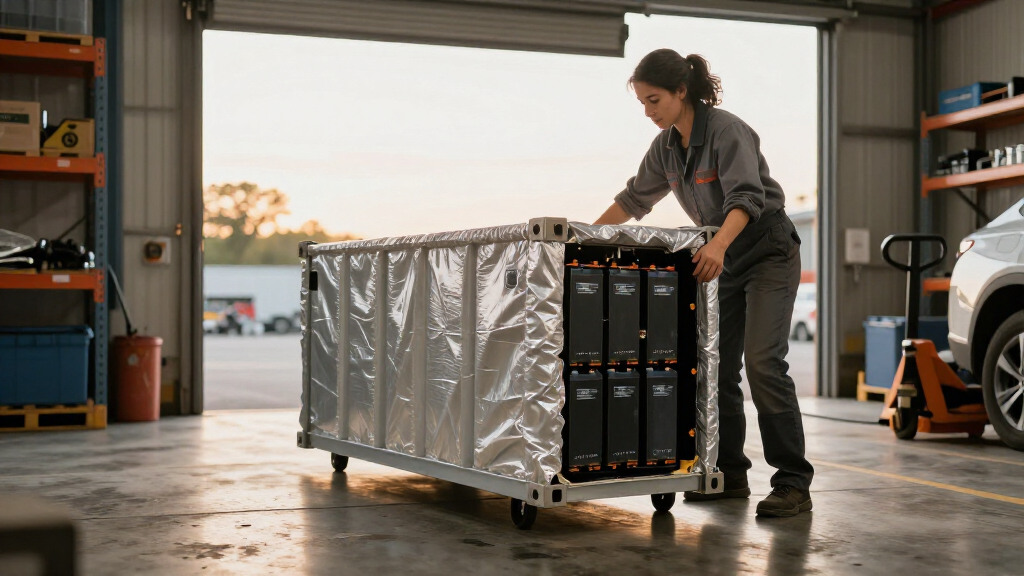
Renewance, a company managing end-of-life EV and energy storage batteries, has adopted DGeo’s Obexion AG container to ship multiple damaged, defective or recalled (DDR) batteries together instead of one per container. The company says the purpose-built, reusable packaging reduces transportation risk and handling costs.
Renewance, a company that manages end-of-life electric vehicle and energy storage batteries at scale, has changed how it ships damaged, defective or recalled (DDR) batteries by adopting a purpose-built container that allows multiple batteries to be packed per shipment rather than one per container, according to a case study published by Charged EVs and sponsored by packaging supplier Labelmaster. The shift addresses one of the costliest constraints in battery logistics: dangerous-goods rules that typically require a single battery per package.
DDR batteries are classified as dangerous goods, and shipping them safely has usually meant one battery per container, the report states. For a high-volume operator like Renewance, that requirement drives up both cost and handling time, because each battery requires its own certified package, its own handling cycle, and more shipments overall to move the same quantity of material.
Renewance found an alternative in Obexion AG, a reusable, stackable container made by DGeo and built specifically to hold multiple DDR batteries. According to the case study, the container lets Renewance consolidate shipments and reduce the transportation risks associated with damaged batteries, while the reusable and stackable design cuts packaging waste and improves warehouse and trailer space efficiency.
“It’s a more advanced product, designed for this specific application,” said Sterling Picton, who leads solutions development for end-of-life projects at Renewance. “It enables us to handle higher volume at a reduced risk.” The case study describes how the company restructured its battery packaging approach around the DGeo product.
Why Battery Packaging Limits Recycling Volume
End-of-life battery volumes are rising as the first generations of mass-market EVs and stationary storage systems retire, and logistics is a major bottleneck in recycling and second-life chains. Because DDR batteries carry fire and thermal-runaway risk, they are treated as dangerous goods under transport regulations, and packaging rules designed for the worst case — one battery per container — make each shipment expensive and slow.
A container certified to carry multiple DDR batteries at once changes that economics. Fewer packages per battery means fewer shipments, less handling, and fewer points where a damaged cell is moved or transferred. For recyclers and battery managers, packaging choices like this can determine whether processing capacity is fed efficiently or starved by transportation costs.
From One-Battery-Per-Box to Consolidated Shipments
Renewance manages end-of-life EV and energy storage batteries at scale, handling batteries that arrive damaged, defective, or subject to recall. Under standard dangerous-goods practice, each of those batteries is packaged individually in certified containment before transport.
DGeo, the container manufacturer, developed Obexion AG as a reusable, stackable package designed specifically for DDR battery transport rather than adapted from general-purpose dangerous-goods packaging. The case study, published by Charged EVs and sponsored by Labelmaster, a dangerous-goods compliance and packaging company, presents the Renewance deployment as an example of how purpose-built packaging changes DDR logistics.
“It’s a more advanced product, designed for this specific application. It enables us to handle higher volume at a reduced risk.”
— Sterling Picton, solutions development lead for end-of-life projects, Renewance
What the Case Study Leaves Unmeasured
The report is a sponsored case study published by a packaging-industry partner, so the claimed benefits — reduced risk, higher volume, lower cost — come from the companies involved and are not independently verified. The case study does not publish specific figures on cost savings, shipment counts, accident or incident rates, or how many DDR batteries a single Obexion AG container holds.
It is also unclear which transport modes and regulatory regimes the container is certified under, how the container’s reusability is maintained and inspected between shipments, and whether the approach has been adopted by other battery logistics operators beyond Renewance.
Scaling Purpose-Built Packaging Across Battery Logistics
The full case study, linked from the Charged EVs report, details how Renewance restructured its packaging approach with DGeo. Readers can consult it for operational specifics the summary does not cover. As retired EV and storage battery volumes grow, similar packaging innovations are likely to spread among recyclers, logistics providers, and original equipment manufacturers seeking to cut dangerous-goods shipping costs.
Companies shipping DDR batteries should verify current dangerous-goods regulations and certified packaging approvals applicable to their transport modes before changing packaging practices.
Key Questions
What are DDR batteries?
DDR stands for damaged, defective or recalled batteries. Because of fire and thermal-runaway risk, they are classified as dangerous goods and are subject to strict packaging and transport rules.
What is the Obexion AG container?
It is a reusable, stackable container made by DGeo, designed specifically to hold multiple DDR batteries in a single package, unlike standard dangerous-goods packaging that typically holds one battery.
Why was one-battery-per-container shipping a problem?
According to the case study, the requirement increased both cost and handling time for Renewance, since every damaged battery needed its own container, handling cycle, and shipment space.
Is this an independent evaluation?
No. The report is a sponsored case study published by Charged EVs on behalf of Labelmaster, and the claimed benefits come from Renewance and the packaging suppliers. Independent verification and detailed performance figures are not provided.
Can any company ship multiple DDR batteries this way?
The case study describes Renewance’s experience only. Companies shipping DDR batteries must verify that any packaging is certified for their specific transport mode and applicable dangerous-goods regulations before use.
Source: rss
Fall Picks
fall essentials
As an affiliate, we earn on qualifying purchases.