
TL;DR

Get garage and car supplies delivered free — and shop member deals
- Fast, free delivery on millions of items
- Access to Prime Big Deal Days deals on October 6–7
- Prime Video, Amazon Music and more included
A bicycle in collector Richard Hoddinott’s collection is identified by Cycling Weekly as an Eddy Merckx team bike from the late Molteni era, almost certainly from 1972. Its small frame means it was not Merckx’s own bike, and a painted note on the underside of the bottom bracket has not been conclusively explained.
Collector Richard Hoddinott owns a small-framed Eddy Merckx team bike that Cycling Weekly identifies as dating from the Belgian champion’s late Molteni era, almost certainly 1972. The bicycle is not Merckx’s own, and while it may have been used by a teammate, its rider and exact history have not been established.
The bike’s team-era identification and approximate date place it in a remarkable season for Merckx. In 1972, he won the Giro d’Italia and Tour de France, three Monuments—Milan–San Remo, Liège–Bastogne–Liège and Il Lombardia—and other races, including La Flèche Wallonne and the Trofeo Baracchi. He also set the hour record in Mexico City. Those results provide the historical setting, but do not establish that this particular bicycle was used in any of those events.
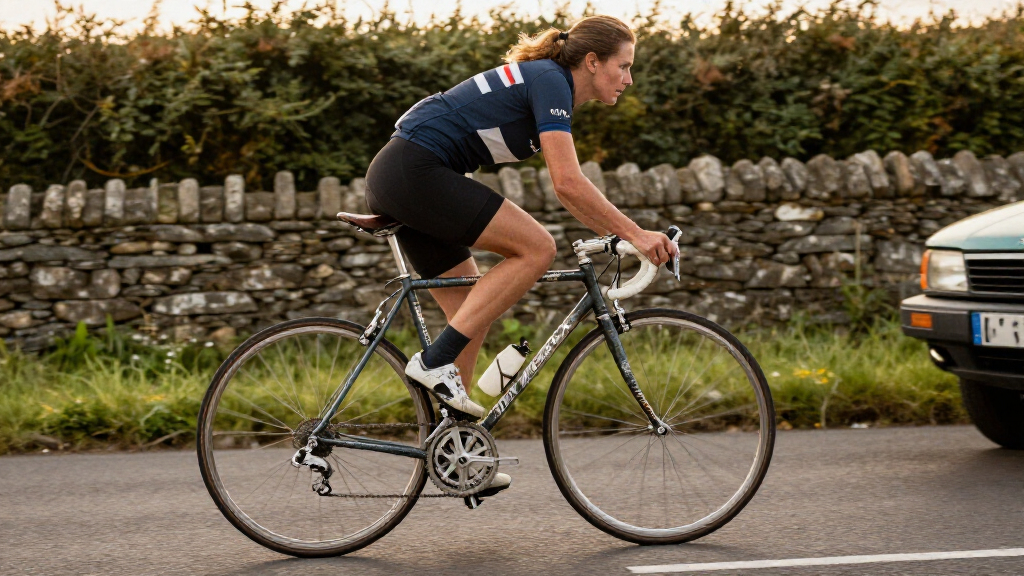
Hoddinott, who runs vintage specialists The Velo Pages, told Cycling Weekly he values the bike’s feel and surviving details. Its equipment includes Campagnolo components, Cinelli handlebars and stem, and a Unicanitor saddle. Hoddinott also pointed to worn Reynolds 531 decals and a large, drilled Campagnolo Nuovo Record chainring. The bike has been kept with its existing marks and patina rather than restored.
A painted inscription on the underside of the bottom bracket reads “K V.D. ELST”. Cycling Weekly raises the possibility that the letters refer to Belgian entrepreneur Fernand Kessels and frame builder Marcel van der Este, but presents that as a question, not a confirmed attribution. The note could instead identify a shop or a later intended rider, the report says.
A Team Bike Without a Known Rider
The bicycle offers a material connection to Merckx’s Molteni years, but its historical value rests partly on what can be observed and partly on what cannot yet be verified. The team-era appearance, components and wear are features of the surviving object; a specific rider, race or stage has not been tied to it by evidence in the report.
That distinction matters to readers interested in cycling history and collectible equipment. A team bike associated with a period of major victories can draw attention, but its association with the team does not prove Merckx rode it or that it accompanied him on particular climbs. Hoddinott’s decision to leave the bicycle in its acquired condition preserves its visible wear, while also leaving its provenance open to further investigation.
Vintage Eddy Merckx cycling jersey
As an affiliate, we earn on qualifying purchases.
As an affiliate, we earn on qualifying purchases.
Molteni-Era Supply and Builders
In the early 1970s, according to Cycling Weekly, Merckx used Belgian entrepreneur Fernand Kessels to supply bicycles for the Molteni team. The report says the team also had bikes from Colnago and De Rosa. Kessels commissioned high-end frame builders, including Marcel van der Este, rather than building frames himself.
The article describes Hoddinott as a collector with more than 100 bicycles, ranging from disability trikes to Tour de France machines from the 1920s and bikes associated with British time-trial riders of the 1960s and ’70s. He does not restore the bikes in his collection, believing marks and remaining dirt form part of their history. That approach keeps the Merckx-era bike’s current condition visible, though it does not by itself establish its original owner or builder.
“There’s a unique quality to this bike.”
— Richard Hoddinott, owner of The Velo Pages, speaking to Cycling Weekly
As an affiliate, we earn on qualifying purchases.
The Inscription’s Meaning Remains Open
The exact year, original rider and route the bike took through the team remain unconfirmed. Cycling Weekly calls 1972 almost certain, but does not provide a serial-number record or other documentation that settles the date. The frame is described as too small for Merckx, ruling out the report’s suggestion that it was his own bicycle, but not identifying who rode it.
The lettering “K V.D. ELST” has no established interpretation in the report. It may point to Kessels and van der Este, or to a shop or rider, but those possibilities are speculative. The article also does not document a chain of ownership from the Molteni team to Hoddinott.
As an affiliate, we earn on qualifying purchases.
Further Provenance Could Clarify Its Past
No further research, sale or authentication step is announced in the report. The bike’s history could become clearer if records, markings or testimony connect its inscription to a builder, shop, team member or later owner. Until such evidence is presented, the most careful description is a likely 1972 Molteni-era team bike whose exact provenance remains unknown.
As an affiliate, we earn on qualifying purchases.
Key Questions
Did Eddy Merckx ride this bicycle?
The report says no: the frame is too small to have been Merckx’s own bike. It may have belonged to a teammate, but that has not been confirmed.
When was the bike made?
Cycling Weekly identifies it as almost certainly from 1972, during Merckx’s late Molteni era. The exact date is not documented in the supplied report.
Who built the frame?
The report says Kessels commissioned several frame builders, including Marcel van der Este, and considers whether the underside inscription refers to him. It does not confirm that he built this bicycle.
What does “K V.D. ELST” mean?
Its meaning is unknown. It may refer to Kessels and van der Este, or to a shop or intended rider, but the report does not settle the question.
Why has the bike not been restored?
Hoddinott keeps his bicycles in the condition in which he acquired them. He considers their scratches, wear and remaining dirt part of their history.
Source: rss
Halloween Picks
halloween
As an affiliate, we earn on qualifying purchases.