TL;DR

Get business pricing on garage and car supplies
- Business-only prices and quantity discounts
- Tax-exempt purchasing
- Multiple users, one account, clear invoices
Proper motorcycle gear manages key risks like impact, abrasion, weather, and visibility. Certification, fit, and material choice matter more than price or brand for safety and comfort.
Imagine cruising down your favorite twisty road. The wind whips past, your engine roars, but your focus sharpens on safety gear. It’s not just about looking cool—every piece of gear is a shield against injury, weather, and distraction. You want gear that fits right, feels comfortable, and actually protects you when it counts.
This guide cuts through the noise. You’ll learn which gear is essential, what certifications really mean, how to pick items that fit perfectly, and the latest innovations that make riding safer and more enjoyable. Whether you’re a beginner or a seasoned rider, knowing what to wear can be the difference between a smooth ride and a trip to the emergency room.
Always prioritize a certified, well-fitting helmet. It’s your best defense against head injuries.
Choose armor and textiles rated to high safety standards, and ensure they fit snugly to stay in position during a crash.
Impact protection, gloves, and boots are often overlooked but critical for reducing injuries to extremities.
Weather adaptability—ventilated gear for heat, layered insulation for cold, waterproofing for rain—keeps you alert and reduces distraction.
Stay updated with evolving standards and tech, like new helmet tests and integrated airbags, to keep your safety game sharp.
Why Your Helmet Is the Most Critical Piece of Gear
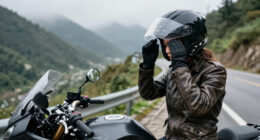
Your helmet is the single most effective way to protect your head. Even a minor impact can cause serious injury, and a helmet can absorb the shock that might otherwise crack your skull open. The right helmet feels snug, doesn’t wobble, and meets safety standards like ECE 22.06 or DOT FMVSS 218.
Imagine hitting a patch of gravel at 30 mph. Without a helmet, that’s a head injury waiting to happen. With a certified full-face helmet that fits well, much of that impact energy gets dissipated, reducing injury risk by up to 70%, according to recent studies.
Look for a helmet with a strong shell—carbon fiber or fiberglass are top choices—and a clear, anti-fog visor. Replace your helmet after a crash or every five to seven years. Used helmets are risky because their internal impact-absorbing layers could be compromised, even if they look fine.
DOT certified full-face motorcycle helmet
As an affiliate, we earn on qualifying purchases.
As an affiliate, we earn on qualifying purchases.
Choosing the Right Jacket and Pants That Actually Protect
Every day, riders wear jeans or leather jackets that aren’t built for crashes. Proper motorcycle gear combines abrasion-resistant fabrics with armor that stays in place during an impact. Certified jackets and trousers often carry EN 17092 ratings: AAA, AA, A, B, or C. AAA offers the highest protection, suitable for aggressive riding or racing.
Picture a rider sliding on asphalt at 40 mph. Without armored gear, that’s a skin-scraping disaster. With CE-rated textile or leather gear, abrasion is minimized, and impact protectors absorb some of the energy.
Choosing gear isn’t just about the numbers; it’s about understanding what each level of certification means in terms of real-world protection. AAA-rated gear, for example, is designed to withstand high-impact crashes and abrasion, which makes it suitable for aggressive riders or those venturing onto more challenging roads. Conversely, B or C ratings might be acceptable for casual, low-speed riding but offer less impact resistance. The tradeoff often involves comfort, weight, and flexibility—higher protection gear can sometimes be bulkier or stiffer, so you need to balance safety with mobility for your riding style.
Look for garments with reinforced seams, adjustable armor, and a secure connection between jacket and trousers. Remember: gear that shifts or fits poorly can fail to protect precisely when you need it most.
impact-resistant motorcycle jacket with armor
As an affiliate, we earn on qualifying purchases.
As an affiliate, we earn on qualifying purchases.
Impact Armor: How to Pick Protectors That Really Work
Impact armor is designed to absorb and distribute force, reducing the energy transferred to your body during a crash. Certified options usually carry EN 1621-1 for limbs, EN 1621-2 for back protectors, and EN 1621-3 for chest protectors. But certification alone isn’t enough—proper fit and placement are crucial for effective protection. Level 2 armor transmits less impact force but may be thicker and heavier, which can affect comfort and mobility.
Imagine falling onto the curb during a slow maneuver. Well-positioned knee armor that stays in place can prevent fractures, but armor that shifts or slides out of position becomes useless, regardless of its certification. The key is ensuring the protectors contour well to your body and remain stable during movement and impact.
Balance coverage with comfort. You want armor that stays aligned with your joints, doesn’t pinch, and allows freedom of movement. Proper fit maximizes impact absorption—loose armor slides away when you need it most. Think of armor as an extension of your body’s natural defense: if it’s too tight, it can restrict blood flow; if too loose, it won’t provide effective impact mitigation. The tradeoff is finding a snug but comfortable fit that stays in place during all riding conditions.
abrasion-resistant motorcycle gloves
As an affiliate, we earn on qualifying purchases.
As an affiliate, we earn on qualifying purchases.
Why Gloves and Boots Are Hidden Safety Giants
Hands and feet are the first contact points during a fall. Good gloves feature abrasion-resistant palms, knuckle protection, and secure wrist closures. Short gloves are fine for city riding, but gauntlets provide extra wrist coverage and impact protection.
Think about dropping your bike at a standstill. Your instinct is to catch yourself with your hands. Proper gloves absorb shocks and prevent skin burns, but they also protect against cuts and abrasions that can lead to infections or long-term disability. The choice of materials and armor placement directly impacts how well they perform in real crashes, especially when combined with proper fit and dexterity for control.
Boots should cover your ankles, have reinforced toes and heels, and be stiff enough to support twisting forces. Look for EN 13634-rated footwear with slip-resistant soles. Ordinary work boots might be tough, but they lack the specific protections needed for motorcycle crashes. Good riding boots also help prevent ankle injuries, which are common in falls, and provide better control over your bike’s controls. The tradeoff often involves balancing flexibility for comfort with stiffness for protection—finding the right mix is key for safety and riding performance.
waterproof motorcycle riding pants
As an affiliate, we earn on qualifying purchases.
As an affiliate, we earn on qualifying purchases.
Frequently Asked Questions
How do I know if my helmet fits properly?
A helmet fits well if it feels snug all around without pressure points. It shouldn’t wobble side to side or front to back. When you shake your head, the helmet should stay in place. Try on different sizes and shapes, and check for comfortable, even pressure across your skull.
Are CE-rated riding jackets really better than regular jackets?
Yes. CE-rated jackets have undergone impact and abrasion testing, ensuring they provide a level of protection that ordinary fashion jackets cannot. Look for ratings like EN 1621-1 or AAA certification to confirm their protective capacity.
Can I wear normal jeans while riding?
Regular denim offers minimal abrasion resistance and is not designed for crashes. Certified riding jeans use stronger fabrics, reinforcements, and armor to protect you better. Never rely on everyday jeans for safety—choose gear built for riding.
How often should I replace my helmet?
Replace your helmet after a crash, or every five to seven years, whichever comes first. UV exposure, sweat, and foam degradation can reduce its protective qualities over time. Always check for cracks, stiffness, or compromised fit.
What’s the biggest mistake riders make with gear?
Wearing gear that doesn’t fit properly or isn’t certified. Ill-fitting gear shifts out of position during a crash, and uncertified gear can fail to absorb impact. Prioritize fit, certification, and regular inspection above all.
Conclusion
Your gear is your armor—make it count. Invest in certified, well-fitting equipment that covers all critical areas, and stay aware of new safety innovations. Remember, comfort and proper fit aren’t just conveniences; they’re your best defense in a crash.
Before your next ride, check your gear’s condition, adjust for fit, and ride with confidence. The road is unpredictable—your gear shouldn’t be.
Halloween Picks
halloween
As an affiliate, we earn on qualifying purchases.