TL;DR

Get business pricing on garage and car supplies
- Business-only prices and quantity discounts
- Tax-exempt purchasing
- Multiple users, one account, clear invoices
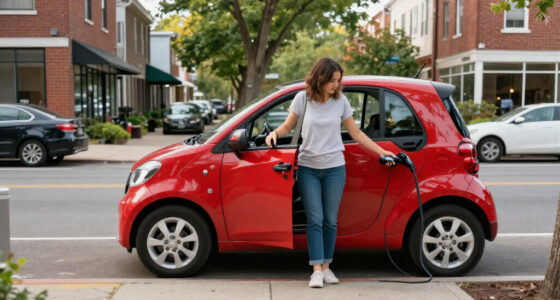
BP Pulse’s 874 DC fast-charging ports in the United States are now part of ChargeHub’s Passport Hub roaming ecosystem. Drivers can use the ChargeHub app to locate BP Pulse chargers, see connector and availability information, and pay for charging; BP Pulse sites also have credit card readers.
BP Pulse’s 874 U.S. DC fast-charging ports are now available through ChargeHub’s Passport Hub, allowing drivers to find stations, check connector types and availability, and pay in the ChargeHub app instead of using BP Pulse’s app. The integration brings BP Pulse into a multi-network service used to locate and access charging from multiple operators.
The integration covers BP Pulse’s entire U.S. fast-charging network, according to the report. ChargeHub’s app provides station information, including real-time port availability and connector type, and supports access and payment. BP Pulse chargers can still be used without an app: the sites have on-site credit card readers.
The network has a mix of connectors. Roughly one-third of the 874 ports have NACS connectors, while most use CCS1; some have CHAdeMO plugs. The source report says BP Pulse also supports Plug & Charge for Ford and BMW vehicles, but only at its fastest stalls. Drivers should check the specific station and vehicle details before relying on that option.
BP Pulse operates chargers rated at up to 150 kW, 180 kW and 400 kW, using equipment from Tritium, ABB and Alpitronic, respectively. Reported prices range from $0.33 to $0.65 per kilowatt-hour. The price and charger configuration may vary by site; drivers can check station details before setting out.
One App for More Charging Stops
For drivers planning trips across networks, the integration can reduce the need to switch between operator apps to find a charger and start a session. ChargeHub’s listings include BP Pulse alongside stations from other operators, giving drivers a single place to view more options. The report says ChargeHub supports charging and payment at more than 40 operators in the United States and Canada, with more than 70 additional networks also listed.
That convenience does not guarantee that every listed charger is available, compatible with a particular vehicle, or priced the same way across locations. Real-time availability and connector information can help drivers make a more informed stop, while the physical card reader provides a separate way to pay. The practical benefit is broader access through one app, not a change to the chargers themselves.
Products Worth Considering

Autel MaxiCharger AC Home Level 2 EV Charger, 50A, Hardwired J1772, Wi-Fi, 25-Foot Cable

VIOFO A229 Plus Dual-Channel 2K Dash Cam with Front and Rear HDR

Milwaukee M12 Fuel 1/4 Hex Impact Driver Kit
As an affiliate, we earn on qualifying purchases.
BP Pulse Access and Charger Options
BP Pulse is the EV-charging subsidiary of BP. Before this integration, drivers seeking to use its app-based services could rely on the BP Pulse app; the ChargeHub connection adds another route to locating and paying for sessions. The report describes ChargeHub’s Passport Hub as a roaming ecosystem that includes numerous charging networks.
BP Pulse stations differ in scale and equipment. Some have only two stalls; the largest site identified in the report is in Inglewood, California, with 48 stalls, citing DCFC Tracker. The range in power, connectors and prices means drivers should review the details of an individual site rather than assume all BP Pulse locations offer the same setup.
“We’re focused on making charging simple, reliable, and easy to access wherever drivers need it.”
— Sujay Sharma, BP Pulse vice president of EV charging
Site Details Still Vary
The source report does not specify whether every ChargeHub feature is available at every BP Pulse port, or whether app-based payment carries fees or conditions that differ from paying at a card reader. It also does not give a date-by-date rollout schedule; it describes the integration as covering the full U.S. network.
Drivers should confirm the current status, connector, charging speed and price for their intended stop in the app or at the station. The reported price range is a network-wide range, not a quoted price for any particular site, and real-time availability can change.
Check the App Before Driving
Drivers can look up BP Pulse locations in ChargeHub and compare listed connector and availability details when planning a charging stop. They can use the ChargeHub app for access and payment, or pay at a BP Pulse station’s credit card reader. For Plug & Charge, the report identifies support for Ford and BMW vehicles at only the fastest stalls, so drivers should verify eligibility and site support before relying on it.
The report does not announce further changes to BP Pulse’s network or a new construction schedule. The immediate development is expanded app-based access; whether the partnership leads to additional features or broader roaming arrangements has not been stated.
Key Questions
Can I use ChargeHub to access BP Pulse chargers?
Yes. The report says all 874 BP Pulse U.S. DC fast-charging ports are integrated into ChargeHub’s Passport Hub ecosystem. The app can be used to find stations, view details, and access and pay for charging.
Do I have to use an app to charge at BP Pulse?
No. BP Pulse chargers have on-site credit card readers, according to the report. ChargeHub offers an app-based alternative.
Which connectors are available on BP Pulse’s network?
The reported mix includes NACS, CCS1 and some CHAdeMO connectors. The source says roughly one-third of ports have NACS and most have CCS1; check a specific station’s listing before traveling.
How much does BP Pulse charging cost?
The report gives a price range of $0.33 to $0.65 per kilowatt-hour. It does not identify a single price for all stations, so check the price for the location you plan to use.
Source: insideevs.com