
TL;DR

Get garage and car supplies delivered free — and shop member deals
- Fast, free delivery on millions of items
- Access to Prime Big Deal Days deals on October 6–7
- Prime Video, Amazon Music and more included
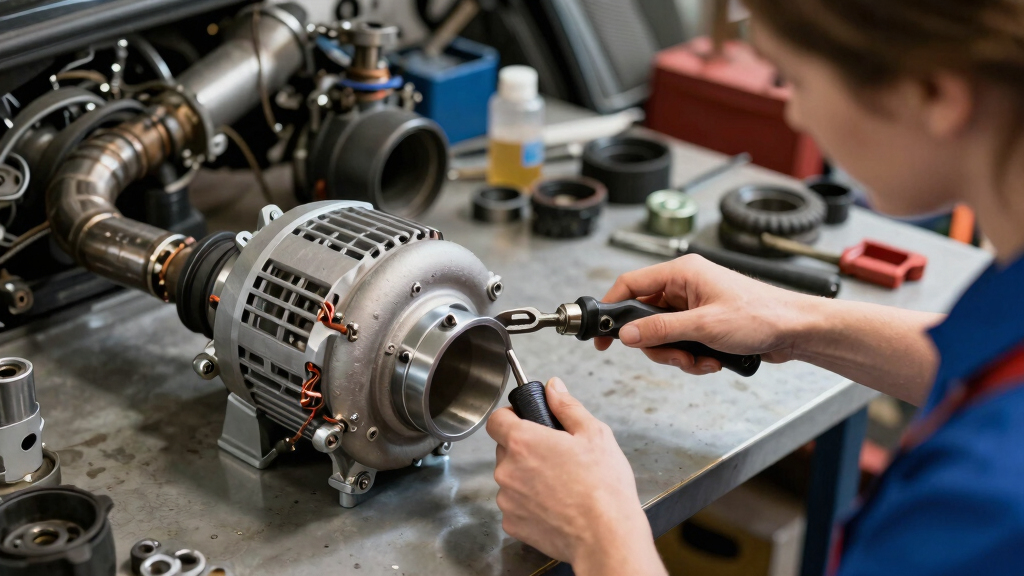
Russian engineers have designed a novel turbo-style alternator that is driven by exhaust gases. This development could enhance energy recovery and efficiency in vehicles and machinery. Details are still emerging about its full capabilities and potential applications.
Russian engineers have unveiled a turbo-style alternator driven by exhaust gases, a development that could significantly improve energy recovery in vehicles and industrial machinery. The device harnesses exhaust flow to generate electrical power, potentially increasing efficiency and reducing fuel consumption, according to the engineers involved.
The new turbo-style alternator uses a turbine connected directly to the exhaust system, which spins a generator to produce electricity. This design is inspired by turbochargers but repurposed to generate electrical energy rather than boost engine power. The engineers claim that this setup can recover waste exhaust energy, converting it into usable electrical power, thereby enhancing overall system efficiency. The development was announced by a team of Russian mechanical engineers, who demonstrated a prototype in a controlled lab setting. Specific technical details, such as power output and integration methods, have not yet been publicly disclosed. Experts suggest that this innovation could be applied in automotive engines, heavy machinery, and energy recovery systems, but it remains in early testing stages.Potential Impact on Vehicle and Industrial Efficiency
This development could mark a step forward in energy recovery technology, especially in internal combustion engines and industrial systems. By converting exhaust waste into electrical power, the alternator might reduce fuel consumption and emissions, aligning with global efforts to improve energy efficiency. If scalable, it could influence future vehicle design and industrial energy management, offering a new method to harness otherwise lost energy. The innovation also highlights ongoing Russian efforts to advance automotive and mechanical engineering, potentially impacting global markets if commercialized successfully.As an affiliate, we earn on qualifying purchases.
Russian Innovation in Exhaust Energy Recovery
The concept of harnessing exhaust gases for energy is not new; turbochargers have long used exhaust flow to boost engine performance. However, repurposing this flow specifically to generate electricity via a turbo-style alternator represents a novel approach. Russia has a history of developing unique automotive and mechanical technologies, often aiming to improve efficiency and performance amid international sanctions and economic pressures. This project appears to be part of broader efforts to innovate in energy recovery and sustainable automotive solutions. The announcement follows recent Russian initiatives to develop more efficient engines and energy systems, although detailed technical data remains scarce.“This turbo-style alternator captures waste energy from exhaust gases that would otherwise be lost, converting it into useful electrical power. It’s a promising step toward more efficient engines.”
— Russian engineer Ivan Petrov
turbo-style alternator for vehicles
As an affiliate, we earn on qualifying purchases.
As an affiliate, we earn on qualifying purchases.
Technical Details and Commercial Viability Still Unclear
It is not yet confirmed how much electrical power the alternator can produce, how it performs under real-world conditions, or how easily it can be integrated into existing vehicle and machinery systems. The engineers have not disclosed detailed specifications, and the prototype remains in early testing phases. Additionally, questions about durability, cost, and scalability are still unresolved.As an affiliate, we earn on qualifying purchases.
Further Testing and Potential Commercialization Plans
The Russian team plans to conduct more extensive testing to evaluate performance under different operating conditions. They are also exploring partnerships for industrial and automotive applications. Public demonstrations or technical publications may follow in the coming months, providing more clarity on the device’s capabilities and readiness for commercial use.As an affiliate, we earn on qualifying purchases.
Key Questions
How does the turbo-style alternator work?
The alternator uses a turbine connected to the exhaust gases, which spins a generator to produce electricity, similar to a turbocharger but focused on energy recovery rather than boosting engine power.
Can this technology be used in everyday vehicles?
It is still in early development stages. More testing is needed to determine its durability, efficiency, and ease of integration into standard vehicle systems.
What are the environmental benefits?
If scalable, this technology could reduce fuel consumption and emissions by capturing waste energy that would otherwise be lost.
Are there similar existing technologies?
While turbochargers utilize exhaust gases to boost engine power, using exhaust flow specifically to generate electrical energy via a dedicated alternator is a novel approach currently under development.
When might this technology be commercially available?
There are no specific timelines yet. After further testing and validation, commercial deployment could still be several years away.
Source: rss
Halloween Picks
halloween
As an affiliate, we earn on qualifying purchases.