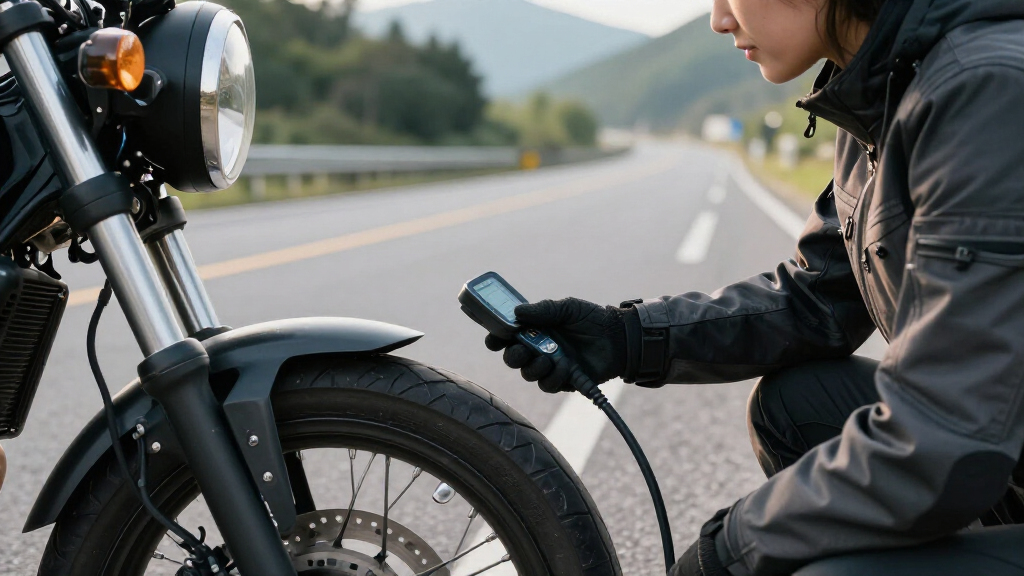
Motorcycle tire pressure monitors give riders a way to watch front and rear tire pressure while riding, but the options differ in how they display alerts, connect, and power their sensors. My best overall pick is the FOBO Bike 2 for riders who want a connected system, while the Sykik Rider SRTP300 stands out for a dedicated monitor and the solar-charging model for riders who prefer less display charging. The main tradeoff is between a self-contained screen and a phone-based system, with sensor installation and weather exposure also shaping the choice. I rank these 12 options by how well their stated features serve common motorcycle setups and riding needs. Read on for the full comparison, selection criteria, and advice on choosing a system that fits your bike.

Get business pricing on garage and car supplies
- Business-only prices and quantity discounts
- Tax-exempt purchasing
- Multiple users, one account, clear invoices
Complete the kit


Key Takeaways
- FOBO Bike 2 is the connected pick in this lineup; its app-based approach suits riders comfortable checking pressure through a phone.
- Sykik Rider SRTP300 offers a dedicated monitor, which can be a better fit for riders who do not want routine readings tied to a phone.
- Several listings specify two external sensors, making installation access and sensor exposure relevant tradeoffs across much of the roundup.
- The solar-charging model speaks to riders who want to reduce display charging, though solar power alone does not remove the need to check sensor batteries.
- The product names reveal a wide range of system styles, but listing details vary; confirm display type, alert behavior, compatibility, and included mounting parts before choosing.
| Moman Motorcycle Tire Pressure Monitoring System, 2 Sensors |  | Best for Voice Alerts | Sensors included: 2 | Compatibility: iOS and Android | Data refresh interval: About every three minutes | VIEW LATEST PRICE | See Our Full Breakdown |
| KEMIMOTO Motorcycle TPMS Tire Monitor, 2-Pack |  | Best for Connected Riding Alerts | Sensors included: 2 | Wireless technology: Wireless 5.2 | Activation: Above 20 km/h for about 20 seconds | VIEW LATEST PRICE | See Our Full Breakdown |
| Motorcycle Tire Pressure Monitoring System with Solar Charging |  | Best for Onboard Readouts | Monitored values: Tire pressure and temperature | Safety alarms: 7 | Alarm examples: High/low pressure, high temperature, rapid leakage, sensor data loss, and low battery | VIEW LATEST PRICE | See Our Full Breakdown |
| Bluetooth Motorcycle Tire Pressure Monitoring System with 2 External Sensors |  | Best for Custom App Alerts | Connectivity: Bluetooth | Sensors: 2 external sensors | Monitored values: Tire pressure and temperature | VIEW LATEST PRICE | See Our Full Breakdown |
| Shkalacar Motorcycle Tire Pressure Monitoring System with Two External Sensors |  | Best for Riders Who Want an LCD | Brand: Shkalacar | Sensors: 2 external sensors | Display: Digital LCD | VIEW LATEST PRICE | See Our Full Breakdown |
| FOBO Bike 2 Wireless Tire Pressure Monitoring System for Motorcycles |  | Best for Multi-Bike App Monitoring | Brand: FOBO | Model: FM2434 | Part number: FM2434 | VIEW LATEST PRICE | See Our Full Breakdown |
| Wireless Motorcycle Tire Pressure Monitoring System with Two Sensors |  | Best for Audible and Visual Alerts | Sensors: 2 external wireless sensors | Pressure range: 0–6.6 bar | Pressure accuracy: ±0.1 bar | VIEW LATEST PRICE | See Our Full Breakdown |
| Sykik Rider SRTP300 Wireless Motorcycle Tire Pressure Monitoring System |  | Best for Long Monitor Battery Intervals | Monitor size: 1.5 inches | Monitor water resistance: Water-resistant | Monitor battery: Rechargeable; estimated 9–12 months per charge | VIEW LATEST PRICE | See Our Full Breakdown |
| FOBO Bike 2 Wireless Tire Pressure Monitoring System for Motorcycles, Black | 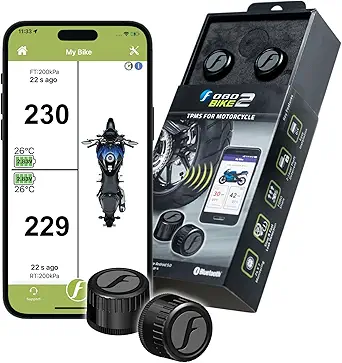 | Best for Group Rides and Cloud Sync | Connectivity: Bluetooth 5.0 | Compatibility: iOS and Android | Vehicle type: Motorcycles | VIEW LATEST PRICE | See Our Full Breakdown |
| Hyphoon Motorcycle TPMS with Bluetooth App |  | Best for Custom Alert Thresholds | Brand: Hyphoon | Model: M04-2 | Sensor type: Dual external valve sensors | VIEW LATEST PRICE | See Our Full Breakdown |
| Bluetooth Motorcycle Tire Pressure Monitoring System with External Sensors |  | Best for Multi-Vehicle App Monitoring | Bluetooth: 5.0 | Sensor type: External | Compatible vehicles: Motorcycles, scooters, ATVs, and most wheel vehicles | VIEW LATEST PRICE | See Our Full Breakdown |
| LEEPEE Motorcycle Tire Pressure Monitoring System with 2 External Sensors |  | Best for Battery-Conscious Riders | Compatibility: iOS and Android | App: Motorcare | Sensors: 2 external sensors | VIEW LATEST PRICE | See Our Full Breakdown |
| motorcycle tire pressure monitor | Compatibility |
|---|---|
| Moman Motorcycle Tire Pressure | iOS and Android |
| KEMIMOTO Motorcycle TPMS Tire | — |
| Motorcycle Tire Pressure Monit | — |
| Bluetooth Motorcycle Tire Pres | iOS and Android |
| Shkalacar Motorcycle Tire Pres | — |
| FOBO Bike 2 Wireless Tire Pres | iOS and Android |
| Wireless Motorcycle Tire Press | Motorcycles and other two-wheeled vehicles; tires below 8 bar maximum pressure |
| Sykik Rider SRTP300 Wireless M | — |
| FOBO Bike 2 Wireless Tire Pres | iOS and Android |
| Hyphoon Motorcycle TPMS with B | — |
| Bluetooth Motorcycle Tire Pres | — |
| LEEPEE Motorcycle Tire Pressur | iOS and Android |
More Details on Our Top Picks
Moman Motorcycle Tire Pressure Monitoring System, 2 Sensors
The Moman two-sensor system suits riders who want tire warnings spoken through their phone rather than relying on a dedicated display. It works with iOS and Android, and its voice alerts can make an abnormal reading easier to catch while attention stays on the road. Compared with the Motorcycle Tire Pressure Monitoring System with Solar Charging, Moman keeps monitoring in an app and avoids adding a separate screen to the cockpit. The tradeoff is slower awareness: readings refresh about every three minutes, and the sensors transmit only when motion is detected, so this is less suited to riders seeking near-instant changes. Replaceable batteries and a weatherproof design help with upkeep, but careful valve installation matters because a poor fit can cause air leakage.
Pros:- Voice alerts can flag abnormalities without requiring a dedicated monitor screen.
- App support covers both iOS and Android.
- Replaceable batteries simplify sensor upkeep.
- Weatherproof design suits regular outdoor use.
Cons:- Readings refresh about every three minutes, limiting how quickly changes appear.
- Sensors transmit only when motion is detected.
- Incorrect valve installation may cause air leakage.
Best for: Riders who prefer spoken tire alerts on an iOS or Android phone and want replaceable sensor batteries.
Not ideal for: Riders who need frequent pressure updates or want a dedicated display without relying on a phone app.
- Sensors included:2
- Compatibility:iOS and Android
- Data refresh interval:About every three minutes
- Transmission:Motion-activated
- Battery:Replaceable
- Installation:Valve-mounted; app pairing required
- Vehicle compatibility:Cars, RVs, SUVs, trucks, and pickups
- Design:Weatherproof
Our verdict“Choose Moman if spoken app alerts matter more to you than rapid updates or an onboard display.”
KEMIMOTO Motorcycle TPMS Tire Monitor, 2-Pack
KEMIMOTO’s two wireless sensors stand apart for sending alerts to a phone, helmet headset, or smartwatch, giving connected riders more ways to notice a problem than the Moman Motorcycle Tire Pressure Monitoring System, which centers on app voice alerts. Its screw-on setup needs no wiring or tools, and the stated approximately two-year battery life may reduce routine battery changes. The fit is the key constraint: the sensors suit standard American-style Type 19 valve stems but do not fit stems that protrude at 90° from the rim. Riders also need to be moving above 20 km/h for about 20 seconds before updates begin. That activation delay and stated ±2 PSI accuracy make it less appealing for riders who want readings while stationary or the tightest possible pressure precision.
Pros:- Alerts can reach smartphones, helmet headsets, and smartwatches.
- Screw-on installation needs no tools or wiring.
- Stated battery life is approximately two years.
- App can monitor up to 50 vehicles.
Cons:- Does not fit valve stems that protrude at 90° from the rim.
- Updates require riding above 20 km/h for about 20 seconds.
- Stated accuracy has a ±2 PSI variance.
Best for: Motorcyclists with standard American-style valve stems who want alerts routed to a phone, helmet headset, or smartwatch.
Not ideal for: Riders with 90° protruding valve stems or those who need monitoring while stationary or immediately after starting.
- Sensors included:2
- Wireless technology:Wireless 5.2
- Activation:Above 20 km/h for about 20 seconds
- Stated accuracy:±2 PSI and 2°C variance
- Valve compatibility:Standard American-style Type 19 stems
- Battery life:Approximately 2 years
- App vehicle capacity:Up to 50 vehicles
- Certification:UL1642
Our verdict“Pick KEMIMOTO if your valve stems fit and you want riding alerts delivered through connected devices.”
Motorcycle Tire Pressure Monitoring System with Solar Charging
For riders who want to see pressure and temperature without opening a phone app, the solar-charging TPMS offers a dedicated display and seven alerts for conditions such as rapid leakage, high temperature, or lost sensor data. That makes it a more self-contained choice than the app-based Bluetooth Motorcycle Tire Pressure Monitoring System with 2 External Sensors. Vibration activation and automatic sleep after ten minutes of inactivity also help limit unnecessary operation when parked. Its tradeoffs are less clearly specified: the product data gives no pressure range or battery runtime, so it is harder to judge fit for a particular setup or how often charging will be needed. The display stays on while riding, which favors glanceable monitoring but may not suit riders who want a phone-only system with minimal cockpit equipment.
Pros:- Displays tire pressure and temperature while riding.
- Seven alerts cover pressure, temperature, leakage, sensor data, and battery issues.
- Vibration activation and inactivity sleep help manage power.
- Offers both solar and magnetic charging.
Cons:- Display remains on while riding.
- No specific pressure range is provided.
- Battery runtime is not specified.
Best for: Riders who want a dedicated screen for pressure and temperature readings plus several tire and sensor alerts.
Not ideal for: Riders who prefer an app-only setup or need published pressure-range and battery-runtime details before choosing.
- Monitored values:Tire pressure and temperature
- Safety alarms:7
- Alarm examples:High/low pressure, high temperature, rapid leakage, sensor data loss, and low battery
- Charging:Solar and magnetic
- Activation:Vibration-activated
- Automatic sleep:After 10 minutes of inactivity
- Protection:Waterproof and dustproof
Our verdict“Choose this model if a dedicated riding display and broad alert coverage matter more than detailed battery specifications.”
Bluetooth Motorcycle Tire Pressure Monitoring System with 2 External Sensors
This Bluetooth TPMS is the pick for riders who want pressure and temperature readings in an app and the ability to set their own alert thresholds. Its two external sensors replace standard valve caps, so installation needs no tools or wiring. Compared with the Shkalacar Motorcycle Tire Pressure Monitoring System, which includes an LCD display, this model puts the monitoring experience on an iOS or Android phone instead of adding a separate screen. That keeps the equipment simple, but it also makes the phone and companion app part of the system; riders who do not want a phone-based setup should look elsewhere. The product specifies American-style valve compatibility, which narrows fit for some motorcycles. Replaceable batteries help with ongoing upkeep, while the waterproof and dustproof sensors suit exposure to the elements.
Pros:- Monitors pressure and temperature in real time.
- Customizable high- and low-limit alerts can match rider preferences.
- Tool-free, wireless installation replaces standard valve caps.
- External sensors have replaceable batteries and waterproof, dustproof construction.
Cons:- Requires a smartphone and companion app.
- Compatibility is specified for American-style valves.
Best for: Riders with American-style valves who want adjustable pressure and temperature alerts in a smartphone app.
Not ideal for: Riders who want a dedicated display, do not want to depend on a smartphone, or have incompatible valve types.
- Connectivity:Bluetooth
- Sensors:2 external sensors
- Monitored values:Tire pressure and temperature
- Alerts:Customizable high- and low-pressure and temperature alerts
- Compatibility:iOS and Android
- Installation:Replaces standard valve caps; no tools or wiring
- Sensor protection:Waterproof and dustproof
- Batteries:Replaceable
Our verdict“Choose this Bluetooth model if adjustable app alerts are your priority and your motorcycle has compatible valves.”
Shkalacar Motorcycle Tire Pressure Monitoring System with Two External Sensors
Shkalacar pairs two external sensors with a digital LCD, making it a practical option for riders who want onboard readings and alerts without making a phone app the center of monitoring. It covers leaks, pressure and temperature limits, low power, and lost signal, while magnetic charging and waterproof construction add convenience for regular motorcycle use. Compared with the Motorcycle Tire Pressure Monitoring System with Solar Charging, Shkalacar specifies a maximum tire pressure below 8 bar, giving buyers a defined fit limit; the solar model, by contrast, lists seven alert types and solar charging. That stated ceiling is also a restriction: riders whose tires can exceed 8 bar should rule this out. The supplied information does not state a pressure accuracy or update interval, so riders who need those figures to compare monitoring precision may prefer a model with published values.
Pros:- Digital LCD provides an onboard readout.
- Alerts cover leaks, pressure and temperature limits, low power, and lost signal.
- Two external sensors are included.
- Magnetic charging and waterproof construction are specified.
Cons:- Intended for tires with a maximum pressure below 8 bar.
- Pressure accuracy and update interval are not specified.
Best for: Riders whose tire pressure stays below 8 bar and who want an LCD with alerts without relying on a phone app.
Not ideal for: Riders with tires that may exceed 8 bar or buyers who require stated accuracy and update-interval figures.
- Brand:Shkalacar
- Sensors:2 external sensors
- Display:Digital LCD
- Maximum tire pressure:Below 8 bar
- Charging:Magnetic
- Waterproof:Yes
- Item weight:5.9 ounces
- Package dimensions:6.97 x 6.22 x 1.89 inches
Our verdict“Choose Shkalacar if your tire pressure is within its stated limit and you want an LCD with broad alerts.”
FOBO Bike 2 Wireless Tire Pressure Monitoring System for Motorcycles
The FOBO Bike 2 suits riders who want pressure and temperature readings tied to an app, with alerts for low pressure, leaks, and abnormal heat. Bluetooth 5.0 connects the sensors to an iOS or Android phone, so there is no separate receiver to mount. Its support for multiple bike profiles and group monitoring gives it a clearer advantage for riders managing several motorcycles than the more basic Sykik Rider SRTP300, whose listed strengths center on a dedicated monitor and long battery intervals. The tradeoff is that FOBO depends on a compatible phone and its app for access to readings. That makes it a less convenient fit for riders who prefer a standalone display or do not want a phone involved during rides. This silver version’s core appeal is connected monitoring rather than a screen-free setup.
Pros:- Tracks tire pressure and temperature in real time
- Alerts cover low pressure, leaks, and abnormal temperatures
- Bluetooth 5.0 setup requires no separate receiver
- Supports multiple bike profiles and group monitoring
Cons:- Requires the FOBO app and a compatible smartphone
- No standalone monitor is listed for viewing readings
Best for: Riders who manage more than one motorcycle or want app-based pressure and temperature alerts on iOS or Android
Not ideal for: Riders who want readings on a dedicated display or prefer not to rely on a compatible smartphone and app
- Brand:FOBO
- Model:FM2434
- Part number:FM2434
- Color:Silver
- Connectivity:Bluetooth 5.0
- Compatibility:iOS and Android
- Monitoring:Tire pressure and temperature
- Included items:1
- GTIN:89555678602423
Our verdict“Choose the FOBO Bike 2 if you want connected monitoring across multiple motorcycles and are comfortable using its app.”
Wireless Motorcycle Tire Pressure Monitoring System with Two Sensors
This two-sensor system is a practical pick for riders who want warnings for pressure, temperature, leaks, low power, and signal loss without relying on a phone app as the alert interface. Automatic power-on with vibration detection cuts down on manual startup, while magnetic charging avoids wear on a conventional USB port. Compared with the app-dependent FOBO Bike 2, its listed audiovisual alerts offer a more direct warning style, though the product data does not specify a phone app or a dedicated display’s dimensions. Its stated pressure range tops out at 6.6 bar, so riders whose tires require readings above that limit should look elsewhere. External sensors are also exposed to road grime and theft, despite the included theftproof nuts. The broad operating temperature range makes it a stronger fit for riders who encounter varied weather.
Pros:- Audiovisual alerts cover pressure, temperature, leaks, low power, and signal loss
- Vibration detection powers the system on automatically
- Magnetic charging avoids a standard USB port on the monitor
- Operating temperature range is -20°C to +80°C
Cons:- Pressure range is limited to 0–6.6 bar
- External sensors remain exposed to road conditions and theft
Best for: Motorcyclists who want direct audiovisual warnings, automatic wake-up, and sensors rated for varied operating temperatures
Not ideal for: Riders whose tires need readings above 6.6 bar or who want sensors protected from road exposure
- Sensors:2 external wireless sensors
- Pressure range:0–6.6 bar
- Pressure accuracy:±0.1 bar
- Temperature accuracy:±3°C
- Operating temperature:-20°C to +80°C
- Charging:Magnetic charging
- Compatibility:Motorcycles and other two-wheeled vehicles; tires below 8 bar maximum pressure
- Included accessories:Support bracket, spanner, 2 theftproof nuts, charging cable, instruction manual
Our verdict“Pick this system for broad warning coverage and automatic operation if its 6.6 bar ceiling suits your tires.”
Sykik Rider SRTP300 Wireless Motorcycle Tire Pressure Monitoring System
The Sykik Rider SRTP300 stands apart for its listed 9–12 months of monitor battery life per charge, reducing how often riders need to take the display off the bike to recharge it. Its 1.5-inch water-resistant monitor also gives readings a dedicated place to appear, unlike the app-based FOBO Bike 2, which requires a compatible phone and the FOBO app. The sensors have an estimated two-year battery life under normal use, another plus for riders seeking fewer battery changes. The tradeoff is that the monitor itself still needs recharging, and the product is designed for motorcycles only. Its listed details do not specify pressure and temperature alert types, so riders prioritizing detailed warning coverage may prefer the two-sensor system with audiovisual alerts. This is the more straightforward choice for riders who value a compact display and longer intervals between charges.
Pros:- 1.5-inch water-resistant monitor
- Monitor battery is estimated to last 9–12 months per charge
- Sensor batteries are estimated to last two years under normal use
- Includes a one-year warranty
Cons:- Monitor must be recharged
- Designed for motorcycles only
- Listed product details do not specify alert types
Best for: Motorcycle riders who want a compact dedicated monitor and infrequent monitor recharging
Not ideal for: Riders seeking a system for other vehicle types or who need clearly specified pressure and temperature alert functions
- Monitor size:1.5 inches
- Monitor water resistance:Water-resistant
- Monitor battery:Rechargeable; estimated 9–12 months per charge
- Sensor battery life:Estimated 2 years under normal use
- Default units:PSI and Fahrenheit
- Warranty:1 year
- Customer service location:California, US
Our verdict“Choose the SRTP300 if a dedicated, water-resistant monitor and long recharge intervals matter more than app-based features.”
FOBO Bike 2 Wireless Tire Pressure Monitoring System for Motorcycles, Black
This black FOBO Bike 2 is aimed at connected riders who want pressure and temperature monitoring alongside cloud sync, multiple bike profiles, and group ride support. Like the silver FOBO Bike 2 FM2434, it uses Bluetooth 5.0 and the FOBO app, so its main distinction is the listed cloud syncing and black finish rather than a different monitoring approach. Real-time alerts for low pressure, leaks, and abnormal temperatures provide useful warnings without a separate receiver. Compared with the Sykik Rider SRTP300, FOBO prioritizes app features and multi-bike management over a dedicated display with a stated battery interval. The phone requirement is a meaningful compromise: riders who want to glance at a mounted screen or ride without app dependence should choose another style of system.
Pros:- Monitors tire pressure and temperature continuously
- Alerts cover low pressure, leaks, and abnormal temperatures
- Bluetooth 5.0 setup needs no separate receiver
- Supports cloud sync, multiple bike profiles, and group rides
Cons:- Requires a compatible smartphone and the FOBO app
- No dedicated monitor is listed for viewing readings
Best for: Riders who use multiple motorcycles or ride in groups and want cloud-synced readings through a phone app
Not ideal for: Riders who want a standalone monitor or do not want to depend on the FOBO app and a compatible smartphone
- Connectivity:Bluetooth 5.0
- Compatibility:iOS and Android
- Vehicle type:Motorcycles
- Monitoring:Tire pressure and temperature
- Installation:Wireless, app-based setup; no additional receiver required
- Features:Real-time alerts, cloud sync, multiple bike profiles, group ride support
- Color:Black
Our verdict“Choose this black FOBO model if cloud sync and group ride support fit your connected, multi-bike routine.”
Hyphoon Motorcycle TPMS with Bluetooth App
The Hyphoon system makes sense for riders who want to set their own warning limits for pressure and temperature rather than rely only on preset alerts. Its two external valve sensors cover both front and rear tires, and the Spedal Link app can warn about rapid air loss and abnormal conditions. Compared with the FOBO Bike 2, Hyphoon’s listed differentiator is customizable alert thresholds; FOBO adds multiple bike profiles, cloud sync, and group ride support. Both require a compatible phone and app, so neither suits riders seeking a standalone monitor. Hyphoon’s sensors screw onto standard valve stems, which keeps installation simple but leaves them exposed to road conditions and potential theft. It is a focused choice for app users who value control over alert limits, with fewer listed multi-bike features than FOBO.
Pros:- Monitors front and rear tire pressure and temperature in real time
- Customizable pressure and temperature alert thresholds
- Wireless installation avoids complicated wiring
- Alerts include rapid air loss and abnormal conditions
Cons:- Requires a smartphone and the Spedal Link app
- External sensors attach to valve stems and remain exposed
Best for: Phone-connected riders who want to tailor pressure and temperature warning thresholds for both tires
Not ideal for: Riders who want a dedicated display, avoid external valve sensors, or need listed multi-bike and group ride tools
- Brand:Hyphoon
- Model:M04-2
- Sensor type:Dual external valve sensors
- Connectivity:Bluetooth
- Monitored readings:Tire pressure and temperature
- Alerts:High/low pressure and temperature, rapid air loss, abnormal conditions
- App:Spedal Link
- Installation:Wireless; screws onto standard valve stems
- Unit count:1
Our verdict“Pick Hyphoon if adjustable alert limits are your priority and you are comfortable checking readings through the Spedal Link app.”
Bluetooth Motorcycle Tire Pressure Monitoring System with External Sensors
This system suits riders who want tire pressure and temperature readings on a phone and may move the setup among a motorcycle, scooter, or ATV. Its Bluetooth 5.0 link and alerts for pressure, heat, air leaks, sensor battery, and signal loss cover more warning types than a basic pressure-only setup. Compared with the LEEPEE Motorcycle Tire Pressure Monitoring System, it lists broader vehicle compatibility and does not depend on a named app in the supplied product details. Both use external sensors, so neither hides the hardware from weather or tampering. The IP67-rated screw-on sensors are designed for wet and dusty conditions, and installation avoids wheel disassembly. The tradeoff is that readings depend on having a phone and app available, while exposed valve sensors can be damaged or stolen.
Pros:- Phone app provides real-time pressure and temperature monitoring
- Alerts cover abnormal pressure, high temperature, air leaks, low sensor battery, and signal loss
- IP67-rated external sensors are designed for wet and dusty conditions
- Screw-on installation avoids dismantling wheels or programming sensors
Cons:- A smartphone app is required to view readings
- Valve-mounted sensors are exposed to damage or theft
Best for: Motorcycle, scooter, and ATV owners who want app-based pressure and temperature alerts across compatible vehicles
Not ideal for: Riders who want a dedicated display or prefer sensors sheltered from theft and road damage
- Bluetooth:5.0
- Sensor type:External
- Compatible vehicles:Motorcycles, scooters, ATVs, and most wheel vehicles
- Pressure units:PSI, BAR, KPA
- Temperature units:°C, °F
- Sensor protection:IP67-rated
- Installation:Screw-on tire valve sensors
Our verdict“Choose this system if you want broad warning coverage and phone monitoring for a motorcycle, scooter, or ATV and accept exposed sensors.”
LEEPEE Motorcycle Tire Pressure Monitoring System with 2 External Sensors
The LEEPEE is aimed at riders who want two-sensor pressure and temperature monitoring through a familiar iOS or Android phone. Its standout detail is the sensors’ sleep mode after 10 minutes of inactivity, with vibration waking them when the motorcycle moves; that may help conserve sensor power between rides. Alerts include high and low pressure, leakage, high and low temperature, and battery level. Compared with the Bluetooth Motorcycle Tire Pressure Monitoring System with External Sensors, LEEPEE names its app, Motorcare, and specifies its power-saving behavior, while the other system lists broader compatibility with scooters and ATVs and IP67 protection. LEEPEE is described as waterproof and dustproof, but no rating is supplied, so the protection level is less precise. It also relies on a phone and app, and the external sensors remain exposed.
Pros:- Monitors pressure and temperature in real time through an iOS or Android app
- Alerts cover pressure, leakage, temperature, and sensor battery level
- Sensors sleep after 10 minutes of inactivity and wake with vibration
- Waterproof and dustproof construction is described
Cons:- Requires a phone and the Motorcare app to access readings
- Not compatible with bicycles
- External valve sensors are exposed, and no specific protection rating is provided
Best for: Motorcycle riders who use iOS or Android and want tire alerts with sensors that sleep between rides
Not ideal for: Bicycle owners or riders seeking a dedicated display, a stated ingress-protection rating, or less exposed sensors
- Compatibility:iOS and Android
- App:Motorcare
- Sensors:2 external sensors
- Monitored conditions:Tire pressure and temperature
- Alerts:High and low pressure, air leakage, high and low temperature, and battery level
- Power-saving mode:Sleeps after 10 minutes of vehicle inactivity; reactivates with vibration
- Protection:Waterproof and dustproof
- Bicycle compatibility:Not compatible
Our verdict“Pick LEEPEE if sensor power-saving behavior matters and you are comfortable using the Motorcare app with exposed motorcycle sensors.”

How We Picked
I compared the 12 listed systems on the factors that affect daily motorcycle use: whether readings come through a dedicated display or a phone, how the sensors attach, how power is handled, and how clearly the product listing describes alerts and compatibility. I gave more weight to features that can change a rider’s routine or installation than to broad claims that are difficult to compare across listings. A dedicated monitor can be easier to glance at, while a Bluetooth system may suit riders who already use a phone mount and prefer app-based information.
The ranking reflects the apparent use case and the specificity of each product’s stated features, with the FOBO Bike 2 and Sykik SRTP300 placed ahead for their distinct connected and dedicated-display approaches. Solar charging earns a place for riders prioritizing display upkeep, while the simpler two-sensor listings are relevant value-oriented alternatives when their specifications match the bike. Two FOBO Bike 2 entries appear in the supplied list, one with a color variant; I treat them as closely related choices rather than evidence of different performance. Product listings do not provide equal detail, so buyers should confirm fit, alert settings, and included hardware before ordering.
| motorcycle tire pressure monitor | Compatibility |
|---|---|
| Moman Motorcycle Tire Pressure | iOS and Android |
| KEMIMOTO Motorcycle TPMS Tire | — |
| Motorcycle Tire Pressure Monit | — |
| Bluetooth Motorcycle Tire Pres | iOS and Android |
| Shkalacar Motorcycle Tire Pres | — |
| FOBO Bike 2 Wireless Tire Pres | iOS and Android |
| Wireless Motorcycle Tire Press | Motorcycles and other two-wheeled vehicles; tires below 8 bar maximum pressure |
| Sykik Rider SRTP300 Wireless M | — |
| FOBO Bike 2 Wireless Tire Pres | iOS and Android |
| Hyphoon Motorcycle TPMS with B | — |
| Bluetooth Motorcycle Tire Pres | — |
| LEEPEE Motorcycle Tire Pressur | iOS and Android |
Factors to Consider When Choosing Motorcycle Tire Pressure Monitors
Choosing a motorcycle TPMS starts with how you want to receive information and how much setup you are willing to manage. These broader checks can prevent a mismatch between the monitor, your riding habits, and your wheel hardware.
Choose a Display You Can Check Safely
A dedicated screen and a phone app serve different routines. A screen can keep readings available without opening an app, but its mount must remain visible without blocking controls or pulling your attention from the road. A phone-based setup may fit riders who already use a secure handlebar mount, though notifications, app permissions, and phone battery use become part of the system. Decide where you will check readings before choosing a display style. Never adjust the monitor while moving; set alerts and mounting position before the ride. If several riders use the same bike, consider whether each person can access the readings easily.
Check Sensor Fit Before You Buy
External sensors are easier to attach than systems requiring tire work, but they sit on the valve stems and are exposed to weather, road debris, and tampering. Confirm the valve stem type, clearance near the brake hardware, and whether the sensor shape can interfere with nearby parts. Some motorcycles use angled or unusually short stems, which can make a sensor difficult to install or read. Check whether the system includes locking hardware and the tools needed for installation. A sensor that fits one wheel may not fit the other equally well. When fit information is missing, verify it with the manufacturer or a qualified tire shop before ordering.
Understand What the Alerts Actually Tell You
A pressure reading is useful only when you know what counts as an actionable change. Set alert thresholds with the motorcycle manufacturer’s recommended cold pressures in mind, rather than copying a car setting or relying on a generic default. Ask whether the unit reports both pressure and temperature, and whether it warns about rapid pressure loss or only a preset limit. Temperature readings can provide context, but they do not replace checking pressure when the tires are cold. Avoid setting thresholds so narrowly that normal variation produces constant alerts. Keep a separate accurate gauge for confirming a reading when the display raises a concern.
Compare Power Needs Across the Whole System
Solar charging can reduce how often a display needs to be charged, but it depends on light exposure and does not necessarily power the wheel sensors. Phone-connected systems also draw on a device that riders may need for navigation or emergencies. Look for clear information about sensor battery type, expected service interval, replacement access, and low-battery warnings. A system with replaceable batteries may be easier to maintain on a long trip than one with an unclear replacement process. Think about how you store the motorcycle, since a covered garage or winter storage changes charging and battery habits. Treat advertised power features as one part of upkeep rather than a maintenance-free promise.
Match Connectivity to Your Riding Routine
Bluetooth systems can offer a convenient app view, but the experience depends on pairing stability, phone compatibility, and whether the app works as expected in your usual riding setup. Before buying, check supported operating systems and whether readings remain available after a phone reconnects or the app closes. Riders who tour beyond reliable mobile service should distinguish Bluetooth communication from internet access; local sensor readings may not need cellular coverage, but app behavior still matters. A dedicated monitor avoids some phone dependencies, yet adds another device to mount, charge, and protect. If you ride with gloves, assess whether the controls and screen are practical to use before departure. Choose the system whose routine you can maintain consistently.
Pay More for the Need You Actually Have
Extra connectivity or a more elaborate display is useful only when it solves a problem in your riding routine. A commuter who wants a quick glance may prefer a straightforward dedicated monitor, while a rider who already relies on a phone mount may value app integration. For occasional riders, simple sensor replacement and clear battery warnings may matter more than added functions. Touring riders should give greater weight to reliable mounting, readable alerts, and a practical maintenance path. Do not assume two systems with similar product names include the same accessories or alert features. Compare the box contents and support details before paying for features you may not use.
Frequently Asked Questions
Should I choose a phone-based TPMS or one with a separate display?
Choose based on what you can check consistently before and during a ride. A separate display keeps the system’s readings off your phone, while an app-based monitor can suit riders who already mount a phone and want connected controls. Phone compatibility, pairing behavior, app upkeep, and battery use matter more with the app route. A dedicated screen brings its own mounting and charging needs. Either way, set alerts before riding and avoid interacting with the device while moving.
Will external TPMS sensors fit my motorcycle’s valve stems?
Fit depends on the valve stem shape, wheel clearance, and the sensor’s size and attachment method. Check whether your bike has metal or rubber stems, whether the wheel uses angled stems, and how close the valves sit to brake components. A sensor can be technically compatible yet awkward to install or inspect in a tight space. Confirm the manufacturer’s fit guidance for your exact motorcycle and wheel setup. If clearance is uncertain, ask a tire shop to check before you order.
Can I rely on a TPMS reading instead of checking tire pressure with a gauge?
A TPMS is best treated as an ongoing monitor, not a substitute for a reliable pressure gauge. Sensors can have battery, fit, or communication issues, and a warning should prompt a safe stop and a closer check. Use the motorcycle maker’s recommended cold pressure as your reference and confirm readings periodically with a gauge. Do not change cold-pressure targets based only on a warm tire reading during a ride. If the monitor reports a sudden loss, inspect the tire and valve before continuing.
Does solar charging mean I will not need to maintain the monitor?
No. Solar charging may reduce charging for a display when it receives enough light, but it does not necessarily power the wheel sensors or remove battery upkeep. Storage conditions, shade, and short rides can also limit solar input. Check what components the solar panel powers and how the system reports low battery. Before a long trip, confirm that the display and sensors are working. Keep the replacement or charging instructions available for the parts that need attention.
What should I prioritize for touring or long-distance rides?
For touring, give priority to readable warnings, secure mounting, sensor fit, and a clear way to handle battery replacement or charging away from home. A phone-based system may fit if your phone mount and power setup are dependable, while a dedicated monitor reduces reliance on an app. Check whether the sensors remain accessible for routine tire service and whether replacement parts are documented. Test the pairing and alert settings before leaving, then carry a separate gauge for confirmation. The best fit is the system whose readings and maintenance you can manage throughout the trip.
Conclusion
For the best overall connected option, I recommend the FOBO Bike 2 to riders who prefer app-based monitoring and are comfortable maintaining a Bluetooth setup. For a dedicated display, the Sykik Rider SRTP300 makes more sense for riders who want readings on a separate monitor. The solar-charging model is the lineup’s clearest match for buyers seeking less display charging, while the simpler two-sensor options can serve as value candidates when their fit and alert details check out. For beginners, I would favor whichever listing clearly documents installation, compatible valve stems, and alert setup over a longer feature list. Riders choosing either FOBO listing should verify whether the black version differs from the other entry beyond color; match the system to your bike and routine before deciding.
Fall Picks
fall essentials
As an affiliate, we earn on qualifying purchases.