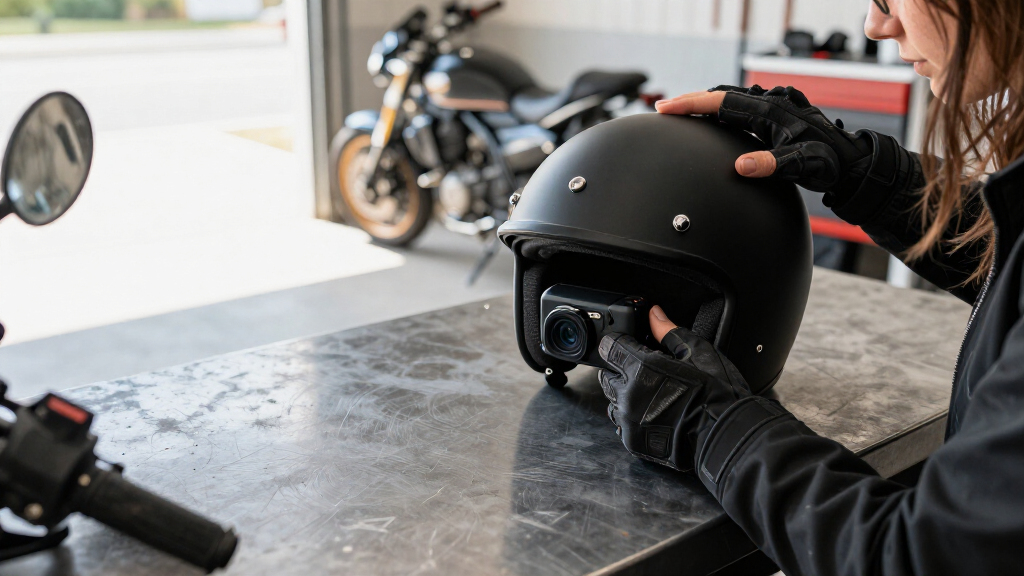

Motorcycle helmet cameras come in several distinct flavors, and picking the wrong one is the most common mistake riders make. If you want the best all-around footage with serious stabilization, the 4K camera with 6-axis stabilization and the Sony IMX415 sensor is the strongest choice for clean, shareable ride video. Riders who want camera plus communication in one device should look at the Bluetooth headset with 2K camera and two-way intercom, while the Drift Ghost XL’s 9-hour battery makes it the pick for all-day touring. The main tradeoffs in this category are image quality versus aerodynamics, single-camera simplicity versus front-and-rear coverage, and action-cam versatility versus helmet-integrated convenience. Keep reading for the full breakdown of all 13 options and which one fits your riding style.

Get business pricing on garage and car supplies
- Business-only prices and quantity discounts
- Tax-exempt purchasing
- Multiple users, one account, clear invoices
Complete the kit


Key Takeaways
- Purpose-built motorcycle cameras (Drift Ghost XL, MUFU V40S) beat general-purpose action cams on battery life and weather sealing, which matters more on a bike than on a beach.
- Hybrid devices that combine intercom and camera (FreedConn R1 Plus, the Bluetooth headset with 2K camera) trade image quality for convenience — fine for casual riders, frustrating for anyone who wants crisp footage.
- The 4K/6-axis stabilization model was the only single-lens camera here that reliably handles vibration-heavy handlebar and chin-mount footage without jelly effects.
- Compact options like the Insta360 GO 3S bundle solve the aerodynamic drag and weight problem better than any full-size action cam, but demand more battery management.
- Budget action cams (AKASO Brave 4, Sixmou i3, mini 1080p body cam) can capture ride footage cheaply, but weak mounting ecosystems and vibration performance make them a false economy for serious riders.
| Motorcycle Helmet Bluetooth Headset with 2K Camera and Two-Way Intercom |  | Best Camera-and-Comms Combo | Camera: 2K HD video and photo | Bluetooth: Version 6.0 | Intercom: Two-rider communication | VIEW LATEST PRICE | See Our Full Breakdown |
| 4K Motorcycle and Bike Camera with 6-Axis Stabilization, Sony IMX415 Sensor, 5GHz Wi-Fi, 140° Wide Angle, IP64 Rating, 2900mAh Battery, App Control, and Mounts |  | Best 4K Image Quality | Resolution: 4K at 30 fps | Sensor: Sony IMX415 | Stabilization: 6-axis anti-shake | VIEW LATEST PRICE | See Our Full Breakdown |
| LKT Dual Motorcycle and Bicycle Camera, 2K Front and 1080p Rear, 64GB Card |  | Best Dual-Lens Coverage | Front resolution: 2K | Rear resolution: 1080p | Frame rate: 60 fps | VIEW LATEST PRICE | See Our Full Breakdown |
| Drift Ghost XL Pro 4K Waterproof Action Camera |  | Best Battery Life and Weatherproofing | Video resolution: 4K; FHD display | Lens rotation: 300° | Water resistance: IPX7 | VIEW LATEST PRICE | See Our Full Breakdown |
| MOTOEYE E6+ Motorcycle Helmet HUD with Bluetooth, Rearview Camera, and CarPlay |  | Best Smart Helmet System | Display: Transparent HUD with auto brightness | Bluetooth: 5.2 | Phone support: CarPlay and Android Auto | VIEW LATEST PRICE | See Our Full Breakdown |
| Mini 1080p Body Camera with 120° Wide-Angle Lens |  | Best Ultra-Cheap Entry Point | Video resolution: 1080p | Lens angle: 120° wide angle | Weight: 26 g (0.9 oz) | VIEW LATEST PRICE | See Our Full Breakdown |
| AKASO Brave 4 4K Action Camera |  | Best Budget 4K | Video resolution: Up to 4K at 30 fps | Photo resolution: 20 MP | Viewing angles: 170° / 140° / 110° / 70° | VIEW LATEST PRICE | See Our Full Breakdown |
| MUFU V40S Motorcycle Dash Cam with Dual 2K Cameras |  | Best Set-and-Forget Dash Cam | Camera resolution: 2K front and rear | Battery: 4000mAh, up to 8 hours | Water resistance: IP66 | VIEW LATEST PRICE | See Our Full Breakdown |
| Sixmou i3 4K Mini Action Camera with 64GB Card |  | Best Compact All-Rounder | Video resolution: UHD 4K | Weight: 35.7 g | Dimensions: 0.7 x 1.1 x 2.5 in | VIEW LATEST PRICE | See Our Full Breakdown |
| FreedConn R1 Plus Motorcycle Helmet Intercom with 1080p Camera |  | Best Camera Plus Communication Combo | Camera: 1080p HD with 120° wide-angle lens | Intercom capacity: Up to 6 riders, 3,280 ft range | Bluetooth: Version 5.0 with Wi-Fi video viewing | VIEW LATEST PRICE | See Our Full Breakdown |
| Drift Ghost XL Motorcycle Action Camera, 1080p, 9-Hour Battery, Waterproof |  | Best for All-Day Endurance Riding | Video resolution: 1080p HD | Battery life: Up to 9 hours | Water resistance: IPX7 waterproof | VIEW LATEST PRICE | See Our Full Breakdown |
| Insta360 GO 3S Motorcycle In-Helmet POV Bundle, 128GB |  | Best Premium Compact POV | Video resolution: 4K | Storage: 128 GB | Battery life: Up to 140 minutes with Action Pod | VIEW LATEST PRICE | See Our Full Breakdown |
| AKASO Brave 4 4K Action Camera Bundle with 64GB MicroSD Card |  | Best Budget Starter Bundle | Maximum video resolution: 4K at 30 fps | Photo resolution: 20 MP | Adjustable viewing angles: 170°, 140°, 110°, 70° | VIEW LATEST PRICE | See Our Full Breakdown |
| motorcycle helmet camera | Connectivity | Battery | Weight |
|---|---|---|---|
| Motorcycle Helmet Bluetooth He | Wi-Fi hotspot support | 1500 mAh | 290 g |
| 4K Motorcycle and Bike Camera | — | 2900mAh, approx. 4.5 hours 4K | — |
| LKT Dual Motorcycle and Bicycl | — | 1920mAh | — |
| Drift Ghost XL Pro 4K Waterpro | USB, Wi-Fi (Drift Life app) | 2 batteries included | 145 g |
| MOTOEYE E6+ Motorcycle Helmet | — | — | — |
| Mini 1080p Body Camera with 12 | — | — | 26 g (0.9 oz) |
| AKASO Brave 4 4K Action Camera | Wi-Fi and HDMI | Two rechargeable 1050 mAh cells | — |
| MUFU V40S Motorcycle Dash Cam | USB and Wi-Fi (802.11g/n) | 4000mAh, up to 8 hours | 128 g |
| Sixmou i3 4K Mini Action Camer | Wi-Fi | — | 35.7 g |
| FreedConn R1 Plus Motorcycle H | — | 1500 mAh | 2.56 oz |
| Drift Ghost XL Motorcycle Acti | Bluetooth, Wi-Fi | — | 0.13 kg |
| Insta360 GO 3S Motorcycle In-H | — | — | — |
| AKASO Brave 4 4K Action Camera | Wi-Fi, HDMI, USB | — | — |
More Details on Our Top Picks
Motorcycle Helmet Bluetooth Headset with 2K Camera and Two-Way Intercom
Most helmet cameras ask you to give up communication; this option refuses that trade. It pairs a 2K camera with a two-rider intercom, Bluetooth 6.0, and music sharing in one unit, which makes it a smarter pick than a camera-only device like the LKT dual-lens model if you ride with a passenger or a buddy. The Wi-Fi hotspot file transfer means you are not fumbling with cards at the end of a ride, and IP65 resistance handles rain and road dust. The catch: two riders is the intercom ceiling, so larger groups will outgrow it fast, and battery runtime is left unspecified — a real gap for all-day touring.
Pros:- Combines 2K video and photo capture with intercom in one unit
- Bluetooth 6.0 with music sharing and audio mixing
- Hands-free voice assistant access
- IP65 dust and water resistance
Cons:- Intercom limited to two riders only
- Battery runtime is not specified
Best for: Solo riders and pairs who want one device for capturing footage and talking to a passenger or riding partner
Not ideal for: Group riders of three or more, and anyone who needs guaranteed all-day recording without a charging plan
- Camera:2K HD video and photo
- Bluetooth:Version 6.0
- Intercom:Two-rider communication
- Connectivity:Wi-Fi hotspot support
- Battery:1500 mAh
- Weight:290 g
- Protection:IP65 dust and water resistance
- Helmet fit:Full-face and open-face
Our verdict“This pick makes the most sense for riders who value talking as much as filming and don’t ride in big groups.”
4K Motorcycle and Bike Camera with 6-Axis Stabilization, Sony IMX415 Sensor, 5GHz Wi-Fi, 140° Wide Angle, IP64 Rating, 2900mAh Battery, App Control, and Mounts
If sharp footage is the whole point, this is the strongest imaging package in the lineup. The Sony IMX415 sensor combined with 6-axis stabilization produces cleaner, steadier 4K than the 2K units like the LKT dual camera, and the 140° field of view captures more road context in a dispute or a highlight clip. A 2900mAh battery delivers roughly 4.5 hours of 4K recording, and both handlebar and helmet mounts ship in the box. Two honest drawbacks: IP64 is rain-resistant, not submersible — unlike the Drift Ghost XL Pro’s IPX7 — and there’s no memory card included, so budget for a U3-class TF card before day one.
Pros:- 4K recording with a Sony IMX415 sensor
- 6-axis anti-shake stabilization
- 5GHz Wi-Fi with app control
- Includes both handlebar and helmet mounts
Cons:- IP64 rating is not submersion-proof
- TF card required and not included
Best for: Riders who prioritize crisp, stabilized 4K footage for editing or evidence and already own or don’t mind buying a fast memory card
Not ideal for: Anyone expecting a card in the box, or riders whose routes involve heavy downpours and standing water
- Resolution:4K at 30 fps
- Sensor:Sony IMX415
- Stabilization:6-axis anti-shake
- Viewing angle:140° diagonal
- Wi-Fi:5GHz
- Battery:2900mAh, approx. 4.5 hours 4K
- Protection:IP64
- Storage:TF cards up to 512GB (Class 10/U3+)
Our verdict“Compared with similar options, this model offers the best pure image quality here — just add a card and respect its weather limits.”
LKT Dual Motorcycle and Bicycle Camera, 2K Front and 1080p Rear, 64GB Card
For evidence-minded riders, one lens only tells half the story. This option records 2K front and 1080p rear simultaneously, catching the tailgater as well as the lane-cutter — something the single-lens Drift Ghost XL Pro simply cannot do. The 64GB card is included, which the 4K Sony-sensor camera above can’t claim, and the G-sensor automatically locks incident footage. Battery life of 5–6 hours is strong, with power-bank recording as a backup for touring. The tradeoffs are prep and patience: the card must be formatted before first use, and on genuinely long rides the battery still leans on external power. The odd 15-degree field-of-view spec also suggests a tighter view than typical action cams.
Pros:- Simultaneous front 2K and rear 1080p recording
- 64GB microSD card included
- 5–6 hours of recording per charge
- G-sensor automatic incident detection
Cons:- Memory card requires formatting before first use
- Extended rides may need external power
Best for: Commuters and commuters-turned-claimants who want front and rear incident footage without buying a separate card
Not ideal for: Riders chasing maximum image quality or cinematic wide-angle footage, since resolution and field of view are modest
- Front resolution:2K
- Rear resolution:1080p
- Frame rate:60 fps
- Battery:1920mAh
- Recording time:Up to 5–6 hours
- Included storage:64GB microSD card
- Charging:USB Type-C, power bank compatible
- Mounts:Helmet, bicycle, and motorcycle
Our verdict“This model is better suited to riders who want two-way proof of what happened than anyone filming for highlights.”
Drift Ghost XL Pro 4K Waterproof Action Camera
Long rides are where most helmet cameras quit, and this one doesn’t. With up to 7 hours at 1080p and 4.5 hours at 4K — plus a second battery in the box — it outlasts the LKT dual camera on paper and beats the 4K Sony-sensor model for endurance flexibility. The 300° rotating lens is the quiet genius here: mount the body anywhere and dial the framing in afterward, a flexibility fixed-lens rivals lack. IPX7 waterproofing without a housing means proper rain and dunks are fine, not just splashes. The compromises: the display tops out at FHD despite 4K recording, so onboard monitoring is softer, and you’ll need to supply your own MicroSDHC card.
Pros:- Up to 7 hours of 1080p recording with two batteries included
- 300° rotating lens for flexible mounting
- IPX7 waterproof without extra housing
- Dash cam mode with loop recording
Cons:- Display resolution limited to FHD despite 4K recording
- MicroSDHC card not included
Best for: All-day tourers and commuters in wet climates who need runtime and real waterproofing over bleeding-edge resolution
Not ideal for: Riders who want a memory card bundled or razor-sharp on-camera playback of their 4K footage
- Video resolution:4K; FHD display
- Lens rotation:300°
- Water resistance:IPX7
- Recording time:Up to 7 hrs at 1080p; 4.5 hrs at 4K
- Connectivity:USB, Wi-Fi (Drift Life app)
- Display:2 inches
- Weight:145 g
- Battery:2 batteries included
Our verdict“This option stands out for riders whose priority is recording all day in any weather rather than chasing maximum spec-sheet numbers.”
MOTOEYE E6+ Motorcycle Helmet HUD with Bluetooth, Rearview Camera, and CarPlay
This is less a camera and more a full cockpit for your helmet. The transparent HUD projects navigation and calls into your line of sight, the included rearview camera replaces mirror checks, and CarPlay or Android Auto plugs your phone in wirelessly. Compared with the Bluetooth headset with 2K camera, the communication ceiling here is dramatically higher — mesh and public-network intercom for up to 15 riders versus two. It also plays nicely with existing Cardo and Sena gear, which softens the cost of switching. But buyers should be clear-eyed: it’s not primarily a footage camera, battery life is unstated, and network intercom depends on cellular coverage that disappears on remote roads.
Pros:- HUD with navigation, calls, music, and intercom in one system
- CarPlay and Android Auto with two simultaneous phones
- Intercom for up to 15 people over public network
- Compatible with Cardo and Sena systems
Cons:- Battery life and display dimensions are not specified
- Public network intercom requires cellular coverage
Best for: Tech-forward riders and large riding groups who want navigation, rearview vision, and intercom integrated into their visor
Not ideal for: Riders whose main goal is recorded video, and anyone frequently out of cellular range for network intercom
- Display:Transparent HUD with auto brightness
- Bluetooth:5.2
- Phone support:CarPlay and Android Auto
- Simultaneous phones:Up to 2
- Intercom modes:Bluetooth, mesh, public network, walkie-talkie
- Intercom capacity:Up to 15 people (public network)
- Rearview camera:Included
- Helmet fit:Full-face, flip-up, and 3/4
Our verdict“Compared with similar options, this pick makes the most sense for connected riders who want information in their visor — not a dedicated action camera.”
Mini 1080p Body Camera with 120° Wide-Angle Lens
At just 26 g and roughly the size of a matchbox, this mini body camera is about as low as the barrier to entry gets for recording rides. The built-in screen is genuinely useful here — unlike the MUFU V40S, which depends entirely on a phone app to check footage, this one shows recording status and battery at a glance. The 360° swivel clip and magnetic mount make helmet or jacket mounting quick, and recording while charging means a USB power bank can extend ride coverage beyond the modest 120-minute battery. The tradeoff is resolution: 1080p is fine for insurance documentation but plates and faces get soft at distance compared to the 2K and 4K options in this lineup. Factor in a microSD purchase, since no card ships in the box.
Pros:- Extremely light at 26 g with a tiny wearable footprint
- Built-in screen for instant recording and battery confirmation
- Records while charging for extended sessions
- Flexible 360° clip and magnetic mounting
Cons:- 1080p footage lacks the detail of 2K and 4K rivals for plate capture
- No Wi-Fi, Bluetooth, or app — footage transfer is USB-card only
- microSD card required but sold separately
Best for: Riders who want the cheapest possible way to capture basic ride footage for insurance or liability purposes
Not ideal for: Anyone wanting crisp 4K detail or app-based clip sharing — there is no Wi-Fi, Bluetooth, or companion software
- Video resolution:1080p
- Lens angle:120° wide angle
- Weight:26 g (0.9 oz)
- Recording time:Up to 120 minutes
- Charging:USB-C, approx. 1 hour
- Memory card support:microSD up to 512 GB (not included)
- Mounting:360° swivel clip and magnetic mount
- Water resistance:Water resistant
Our verdict“A bare-minimum camera for riders who just need proof of what happened, not cinematic footage.”
AKASO Brave 4 4K Action Camera
The Brave 4 is the pick that makes 4K recording affordable without asking you to babysit a fragile device. Unlike the Mini 1080p body camera, it shoots genuine 4K at 30 fps with 20 MP stills, and the adjustable viewing angles (170° down to 70°) let you dial out fisheye distortion — something the fixed-lens cheaper options simply can’t do. The bundle thinking is smart too: two 1050 mAh batteries double your recording window, and the 40 m waterproof case shrugs off rain that would sideline the naked Sixmou i3. The catch is that the waterproofing lives entirely in that bulky case, which adds size on the helmet, and video calls need the phone app over a 10-meter Wi-Fi range that drops fast between rooms. Compared with the Drift Ghost XL Pro, low-light performance is noticeably weaker.
Pros:- Records genuine 4K at 30 fps with 20 MP photos
- Adjustable viewing angles reduce fisheye distortion
- Two rechargeable batteries extend total recording time
- 40 m waterproof case handles heavy rain and immersion
Cons:- Waterproofing depends entirely on the bulky external case
- Weak low-light performance versus pricier rivals like the Drift Ghost XL Pro
Best for: Budget-minded riders who want true 4K resolution and waterproofing without paying action-cam flagship prices
Not ideal for: Riders who want a slim, always-mounted setup — the waterproof case adds noticeable bulk to helmet mounting
- Video resolution:Up to 4K at 30 fps
- Photo resolution:20 MP
- Viewing angles:170° / 140° / 110° / 70°
- Displays:2-inch rear plus 0.96-inch front screen
- Waterproof depth:Up to 40 m with case
- Connectivity:Wi-Fi and HDMI
- Battery:Two rechargeable 1050 mAh cells
- Recording time:Up to 90 minutes per battery
Our verdict“The most capable camera here for riders who refuse to trade 4K quality for a low price.”
MUFU V40S Motorcycle Dash Cam with Dual 2K Cameras
This is the only product in the batch designed as a true motorcycle dash cam rather than a repurposed action camera, and the difference shows in the workflow. Front and rear 2K recording simultaneously means a rear-ender gets captured too — something no single-lens option here, including the AKASO Brave 4, can manage. The 8-hour battery from the 4000mAh cell covers a full day of riding without wiring, IP66 sealing handles weather without a separate housing, and loop recording with tilt-triggered emergency locking automatically preserves crash footage. The F1.7 lens and low-light sensor pull ahead of the Brave 4 after dark. The tradeoffs: 128 g is heavier than clip-on alternatives, the sealed battery can’t be swapped mid-ride, and reviewing clips means pulling out your phone since there’s no built-in screen.
Pros:- Simultaneous 2K front and rear coverage captures rear-end incidents
- Up to 8 hours of recording per charge
- IP66 water and dust resistance needs no external housing
- Loop recording with tilt-triggered emergency footage locking
Cons:- Built-in battery can’t be swapped for longer coverage
- No onboard screen — reviewing footage requires a smartphone
Best for: Commuters and daily riders who want automatic front-and-rear incident coverage without wiring into the bike
Not ideal for: Riders who also want an action cam for off-bike use — this is a dedicated dash cam with no playful mounting flexibility
- Camera resolution:2K front and rear
- Battery:4000mAh, up to 8 hours
- Water resistance:IP66
- Lens aperture:F1.7 with low-light sensor
- Viewing angle:170°
- Storage:64GB microSDXC card included
- Connectivity:USB and Wi-Fi (802.11g/n)
- Weight:128 g
Our verdict“The closest thing to car-style dash cam protection you can strap to a motorcycle.”
Sixmou i3 4K Mini Action Camera with 64GB Card
If the Insta360 GO 3S bundle defines tiny-but-capable, the Sixmou i3 is its budget-conscious cousin. At 35.7 g with true 4K recording, it undercuts the AKASO Brave 4 on weight dramatically while matching its headline resolution, and the magnetic mount plus rotating spring clip make repositioning between helmet, chest, and bike a one-second job. Battery life scales sensibly with expectations — 150 minutes at 1080p, 90 at 4K — and recording while charging covers long tours. The included 64 GB card means it works out of the box, unlike the Mini 1080p body camera and the FreedConn R1 Plus, which both need a separate card purchase. The honest weaknesses: the camera body itself isn’t waterproof, so rain means fitting the dive case, and the 800 mAh cell drains noticeably faster the higher you push resolution.
Pros:- Featherweight 35.7 g body with hands-free 4K recording
- Magnetic mount and rotating clip for rapid repositioning
- 64 GB microSD card included in the box
- Can record while charging for long rides
Cons:- Camera body is not waterproof without its case
- Battery life drops sharply at 2K and 4K resolutions
Best for: Riders who want Go Pro-class mounting flexibility and 4K quality in a pocketable, featherweight package
Not ideal for: All-weather commuters — the bare camera has no water resistance, so every rainy ride means fitting the case
- Video resolution:UHD 4K
- Weight:35.7 g
- Dimensions:0.7 x 1.1 x 2.5 in
- Battery life:150 min at 1080p / 120 min at 2K / 90 min at 4K
- Waterproof depth:Up to 40 m with included case
- Storage:64 GB microSD card included
- Connectivity:Wi-Fi
- Display viewing angle:150°
Our verdict“The best balance of size, resolution, and mounting freedom for riders who move their camera around.”
FreedConn R1 Plus Motorcycle Helmet Intercom with 1080p Camera
The R1 Plus solves a problem no other product here addresses: it merges a 1080p helmet camera with a six-rider Bluetooth intercom in one device. Group riders otherwise carry a separate headset and camera, doubling weight, cost, and helmet clutter — this consolidates them at just 2.56 oz. The 3,280-foot intercom range, noise cancellation, and 30 hours of talk time make it a serious communication tool first, with IP65 sealing for weather and collision footage protection that locks clips after an impact. The compromise is video: 1080p trails the 2K MUFU V40S and 4K Sixmou i3 in detail, recording lasts only 4–5 hours per charge despite the long talk time, and you’ll need to buy a microSD card before recording anything. Camera quality is the add-on here, not the headline.
Pros:- Combines 1080p camera and six-rider intercom in one lightweight unit
- 3,280-foot intercom range with noise cancellation
- Up to 30 hours of call time per charge
- Collision footage protection locks incident clips automatically
Cons:- 1080p video resolution lags behind 2K and 4K rivals
- Video recording lasts only 4–5 hours despite 30-hour talk time
- microSD card required but not included
Best for: Group riders who want ride footage and rider-to-rider communication without mounting two separate devices
Not ideal for: Footage-first riders — the 1080p camera is serviceable but clearly secondary to the intercom hardware
- Camera:1080p HD with 120° wide-angle lens
- Intercom capacity:Up to 6 riders, 3,280 ft range
- Bluetooth:Version 5.0 with Wi-Fi video viewing
- Water resistance:IP65
- Battery:1500 mAh
- Call time:Up to 30 hours
- Video recording time:4–5 hours
- Weight:2.56 oz
Our verdict“Buy it for the intercom and treat the camera as a bonus — group riders get the most value here.”
Drift Ghost XL Motorcycle Action Camera, 1080p, 9-Hour Battery, Waterproof
Nine hours of continuous recording is the number that sets the Drift Ghost XL apart from nearly everything else in this roundup. Where the Insta360 GO 3S taps out around 140 minutes and the AKASO Brave 4 manages roughly 90 minutes per battery, this camera is built for riders who log full-day trips and want one unbroken record of the ride. Its rotating lens is a quietly practical feature — mount it at an odd angle on a helmet or fork and simply twist the lens until the horizon is level, no re-mounting required. The dash cam mode and loop recording make it credible for incident documentation, not just vanity footage. The tradeoff is clear, though: 1080p resolution and no image stabilization mean footage looks dated and shaky next to the 4K, stabilized output of the GO 3S. Riders who prioritize sharpness should look elsewhere.
Pros:- Up to 9 hours of continuous recording dwarfs most action cameras
- IPX7 waterproof body handles rain without a separate case
- Rotating lens keeps footage level regardless of mounting angle
- Dash cam mode and loop recording suit everyday commute documentation
Cons:- No image stabilization, so footage shakes on rough roads
- 1080p resolution lags behind the 4K output of newer competitors
Best for: Long-distance and touring riders who need a camera that records an entire day’s ride without battery swaps or charging stops
Not ideal for: Riders who want crisp, stable 4K footage — the lack of image stabilization and 1080p ceiling make footage noticeably shakier than rivals
- Video resolution:1080p HD
- Battery life:Up to 9 hours
- Water resistance:IPX7 waterproof
- Connectivity:Bluetooth, Wi-Fi
- Lens:Fisheye, rotating lens
- Image stabilization:None
- Weight:0.13 kg
- Memory card:MicroSD
Our verdict“Buy it if ride length matters more than image quality; skip it if you edit footage for social channels where 4K smoothness shows.”
Insta360 GO 3S Motorcycle In-Helmet POV Bundle, 128GB
For riders who want the most immersive helmet-cam perspective available, the Insta360 GO 3S is the standout. Its tiny magnetic body mounts inside the helmet rather than on top of it, capturing footage the way your eyes actually see the ride. Compared with the Drift Ghost XL, the difference is generational: 4K resolution, FlowState stabilization with Horizon Lock, and a level of polish that survives even rough pavement. The bundled Action Pod adds a flip screen for framing shots and doubles as a remote — genuinely useful when the camera is strapped inside your lid and you can’t see what it’s capturing. Tradeoffs are real, though. Total runtime is around 140 minutes with the Pod, nowhere near the Ghost XL’s endurance, and the Pod itself is only splash resistant, so rain riding demands care about which half of the system stays exposed.
Pros:- 4K hands-free POV from an in-helmet mount perspective
- FlowState stabilization and Horizon Lock keep footage smooth and level
- Action Pod provides a flip screen, remote control, and live preview
- Complete bundle includes helmet mount, wind muff, and 128GB of storage
Cons:- Around 140 minutes of total recording time with the Action Pod attached
- Action Pod is only splash resistant and cannot be used in water
- Magnet Pendant accessory is off-limits for riders with pacemakers
Best for: Riders and content creators who want smooth 4K in-helmet POV footage and don’t mind recharging between rides
Not ideal for: All-weather commuters and endurance riders — battery life is short and the Action Pod must be kept away from heavy rain
- Video resolution:4K
- Storage:128 GB
- Battery life:Up to 140 minutes with Action Pod
- Camera water resistance:IPX8
- Action Pod water resistance:IPX4, splash resistant
- Stabilization:FlowState with Horizon Lock
- Screen:2.2-inch flip screen
- Lens type:Wide angle
Our verdict“The pick for riders who value cinematic in-helmet footage above all else and plan their shoots around charging breaks.”
AKASO Brave 4 4K Action Camera Bundle with 64GB MicroSD Card
The AKASO Brave 4 bundle is aimed squarely at riders testing the waters before committing serious money. It records 4K at 30 fps, includes dual screens for self-framing, offers adjustable viewing angles from 170° down to 70°, and ships with a 64GB card plus two batteries — everything needed to start filming on day one. Next to the Insta360 GO 3S, the gap is in refinement rather than raw numbers: its digital stabilization can’t match FlowState and Horizon Lock, and each battery lasts only about 90 minutes, so the two-battery setup functions as a necessity rather than a bonus. Compared with the Drift Ghost XL, its 40-meter dive case is overkill for motorcycles, but it does mean rain is a non-issue for the camera itself. Note the listed 500 g weight — this is a chunkier setup than minimalist helmet mounts.
Pros:- 4K at 30 fps recording at a beginner-friendly price point
- Adjustable viewing angles from 70° to 170° for different mount positions
- Complete bundle includes 64GB card and two rechargeable batteries
- Dual screens make framing and setup straightforward for newcomers
Cons:- Each battery records only up to 90 minutes, requiring swaps on longer rides
- Digital stabilization is noticeably weaker than gimbal-like rivals
- Wrist remote is not waterproof and the 500 g setup is bulky for helmet mounting
Best for: First-time helmet camera buyers who want a complete, low-cost starter kit with everything included out of the box
Not ideal for: Riders wanting polished, stable footage or all-day recording — stabilization is basic and batteries last only 90 minutes each
- Maximum video resolution:4K at 30 fps
- Photo resolution:20 MP
- Adjustable viewing angles:170°, 140°, 110°, 70°
- Image stabilization:Digital
- Waterproof depth:40 meters (131 ft) with case
- Displays:2-inch rear screen and 0.96-inch front screen
- Connectivity:Wi-Fi, HDMI, USB
- Included storage:64GB U3 MicroSD card
- Battery recording time:Up to 90 minutes per battery
Our verdict“A sensible first helmet camera that gets you filming immediately, as long as you accept softer stabilization and shorter battery life.”

How We Picked
I evaluated these 13 motorcycle helmet cameras against the criteria that actually decide whether footage is usable after a ride: image quality under vibration, mounting security on a moving helmet, battery endurance at real-world ride lengths, and weather resistance for riding in rain and road spray. A camera that produces beautiful desk footage but jiggles at 60 mph on a chin mount scores poorly here, because that is exactly how these products get used. I also weighed whether each product is genuinely designed for motorcycles — purpose-built mounts, handlebar or bike-powered options, intercom integration — versus a generic action camera that happens to be strap-on-able.
The ranking logic follows rider priorities rather than spec sheets. Products that solve a motorcycle-specific problem better than the alternatives rank higher, even when their raw resolution is lower. That is why a 1080p camera with a 9-hour battery outranks sharper cameras that die after 90 minutes, and why dual front-and-rear systems earn a spot despite their wiring complexity. Value picks had to deliver dependable footage and mounting without the compromises that make cheap cameras frustrating: wobbly clamps, plastic threads, and unusable audio at highway speed.
Factors to Consider When Choosing Motorcycle Helmet Cameras
Before choosing a motorcycle helmet camera, it helps to understand the tradeoffs that shape every product in this category. These are the factors that separate a camera you’ll mount once and forget from one that ends up in a drawer.Image Stabilization Matters More Than Resolution
The single biggest surprise for most riders is that resolution matters far less than stabilization on a motorcycle. Engine vibration, wind buffeting, and rough pavement will turn unstabilized 4K footage into a wobbly mess that’s unpleasant to watch and useless as evidence after an incident. A well-stabilized 1080p or 2K camera produces footage that looks better in practice than a shaky 4K one. Electronic stabilization like the 6-axis systems on higher-end models eats into battery life and crops the frame slightly, but that trade is almost always worth it for helmet mounting. When comparing specs, look for gyro-based stabilization specifically — digital-only stabilization does little against the high-frequency vibration bikes produce. If a camera’s marketing leads with resolution and barely mentions stabilization, treat that as a warning sign for helmet use.
Mounting Position Dictates Your Whole Experience
Where the camera sits on your helmet changes everything: chin mounts give the most immersive POV but expose the lens to debris, top mounts are easiest to attach but create sail-like drag at speed, and side mounts balance the two at the cost of a slightly tilted horizon. Before buying, check that the camera’s mounting system actually supports your intended position — many budget action cams ship with adhesive pads that struggle on curved helmet shells. Aerodynamic drag is genuinely noticeable above 60 mph with brick-shaped cameras, and it adds wind noise too. Tiny barrel or cube cameras sidestep the drag problem entirely but often rely on proprietary mounts that are harder to replace after a drop. A common mistake is buying a camera first and discovering afterward that its mount can’t hold the angle you want without custom adapters.
Battery Life Versus Ride Length
Most general-purpose action cameras run 60–90 minutes per charge, which covers a commute but not a day of touring — this is where purpose-built motorcycle cameras pull ahead, with some lasting six to nine hours or drawing power from the bike itself. Think honestly about your typical ride before choosing. If you ride in short bursts, a standard action cam is fine and you’ll appreciate its versatility off the bike. If you do full-day trips, a camera that dies at lunch forces you to choose between missing footage or riding home unrecorded. Also factor in whether the battery is removable — swappable batteries beat internal ones for multi-day tours, since you can charge spares overnight. Dual-camera dash systems that hardwire to the bike eliminate battery anxiety entirely, at the cost of a semi-permanent installation.
Weather Sealing and Durability
Weather resistance ratings get glossed over in listings but decide whether your camera survives its first wet ride. IP64-rated cameras handle rain and road spray reliably; purpose-built moto cams like the Drift line are inherently waterproof, while generic action cams often need a separate housing — which muffles audio and adds bulk. Check the details, because an IP rating without a stated depth or duration is marketing shorthand, not a guarantee. Connectors and doors are the usual failure points: a flimsy rubber flap over a USB port will let water in long before the body does. Cold weather matters too, as it can cut lithium battery capacity dramatically on winter rides. Riders in wet climates should weight this factor heavily; fair-weather riders can safely prioritize image quality instead.
Integrated Systems Versus Dedicated Cameras
Hybrid devices that combine an intercom and camera in one unit are tempting, and for casual riders they make sense — one device, one charge, one thing to fiddle with before a ride. The tradeoff is real, though: combining functions means compromising on both. The cameras in intercom units are typically a generation or two behind dedicated cameras, and the boom mic and speakers add bulk you wouldn’t otherwise accept. Dedicated cameras give you better footage and the flexibility to upgrade independently, but mean managing two devices and two batteries. There’s also a third path worth knowing about: HUD-style systems like rearview-camera helmets that prioritize situational awareness over recording at all. Decide which job you actually need done — communication, evidence, or content — before assuming an all-in-one is the efficient choice.
Storage, Workflow, and Footage You’ll Actually Keep
Storage is the quiet budget killer in this category. High-bitrate 4K footage can consume 8–10 GB per hour, so a camera without a card included means a hidden extra purchase — and cheap, slow cards cause dropped frames and corrupted files that you discover only after the ride. Think about your workflow too: cameras with loop recording overwrite old footage automatically, which is what you want for everyday evidence-style recording but disastrous if you hoped to keep everything. Wi-Fi transfer speed varies enormously, and 5GHz support makes pulling clips to your phone at a fuel stop actually practical versus a sluggish 2.4GHz-only transfer. Finally, consider whether you’ll edit at all — footage with strong built-in stabilization looks decent straight off the card, while raw unstabilized files demand time in editing software many riders never spend.
Frequently Asked Questions
Is a chin mount or top mount better for a helmet camera?
Chin mounts deliver the most natural point-of-view footage because the camera sits roughly at eye level and captures the road as you see it, including your handlebars and dash. The drawback is exposure: the lens faces whatever the road throws at it, so grit and bugs accumulate fast. Top mounts are easier to attach securely on most helmet shells and keep the lens cleaner, but they create noticeable aerodynamic drag and wind noise above highway speeds. Side mounts split the difference but can tilt your horizon if not angled carefully. Barrel-shaped cameras like the Drift line were designed with side mounting in mind, which is part of why they feel so natural on a helmet compared to boxy action cams.
Can I use a regular action camera like a GoPro-style model as a motorcycle helmet camera?
Yes, and plenty of riders do — models like the AKASO Brave 4 and Sixmou i3 in this lineup are exactly that. The compromises show up in three places: battery life measured in minutes rather than hours, mounts that aren’t engineered for sustained wind pressure and vibration, and audio that’s mostly wind noise at speed unless you add an external mic. Purpose-built moto cameras justify their existence through 9-hour batteries, waterproof bodies without housings, and rotating lenses that sit flat against the helmet. If you already own an action cam and ride occasionally, trying it on your helmet first costs nothing. If you ride weekly and care about the footage, a dedicated camera or a well-stabilized 4K model earns its price quickly.
Are camera-plus-intercom combo units worth buying?
They make sense for a specific rider: someone who wants basic ride footage and rider-to-rider communication without buying and charging two separate devices. For that person, units like the FreedConn R1 Plus or the Bluetooth headset with 2K camera are genuinely convenient. The honest tradeoff is image quality — the cameras in these hybrids typically shoot 1080p or 2K with modest stabilization, noticeably behind dedicated cameras at the same total price. There’s also a reliability angle: when one device does two jobs, a failure takes out both. If crystal-clear footage is your priority, buy a dedicated camera and a separate intercom. If convenience and a single charging cable matter more, the hybrids are the right call.
Do I need a dual front-and-rear camera system instead of a single helmet camera?
It depends on why you’re recording. If your main goal is evidence in case of a collision or insurance dispute, rear coverage is where single cameras fall short — a huge share of incidents involve traffic behind you. Dual systems like the MUFU V40S or the LKT dual camera solve this, and hardwired dash-style versions never run out of battery. The cost is installation complexity: running wires to the rear of the bike, finding a switched power source, and accepting a semi-permanent setup. A single helmet camera, by contrast, moves between bikes, captures your actual line of sight, and takes five minutes to install. Many riders eventually run both — a fixed dual system for evidence and a small helmet camera for the footage they actually want to watch.
How much storage do I need for motorcycle helmet camera footage?
For 4K footage at typical bitrates, budget roughly 8–10 GB per hour, so a 64GB card holds about six to seven hours and a 128GB card doubles that. For 1080p recording, the same cards hold two to three times more. The real question is whether your camera loops — meaning it records over the oldest files automatically — or stops when full. Loop recording is ideal for commuting and evidence use because you never manage files, but you must pull clips you want to keep before they’re overwritten. Non-looping cameras are better for curated content rides but demand manual file management. Buy a name-brand card rated for sustained video writing, because cheap cards are the leading cause of corrupted footage discovered after a great ride.
Conclusion
After comparing all 13, my recommendations split cleanly by rider type. For the best overall, the 4K camera with 6-axis stabilization and the Sony IMX415 sensor delivers the most watchable helmet footage in the lineup thanks to vibration handling that budget cameras can’t match. The best value pick is the Drift Ghost XL — its 1080p resolution is modest by 2026 standards, but nine hours of battery, waterproofing without a housing, and a helmet-friendly barrel shape solve the problems riders actually face. For premium buyers, the Insta360 GO 3S in-helmet bundle offers unmatched mounting flexibility and footage quality in a package small enough to forget it’s there.
Beginners should start with the AKASO Brave 4 bundle — it includes everything needed to try helmet mounting cheaply and find out what they actually want before spending more. For specific needs: touring riders covering full days should lean on the Ghost XL’s endurance or the hardwired MUFU V40S dual dash cam for front-and-rear evidence coverage; riders who want communication and footage in one device get the best balance from the Bluetooth headset with 2K camera and two-way intercom; and tech-forward riders who value situational awareness over recording will find the MOTOEYE E6+ HUD with rearview camera and CarPlay is a category of its own. Match the camera to how you actually ride, and you won’t regret the choice.
Fall Picks
fall essentials
As an affiliate, we earn on qualifying purchases.