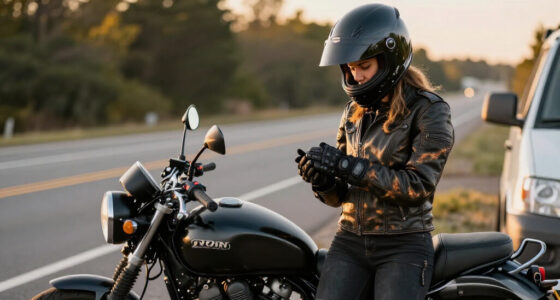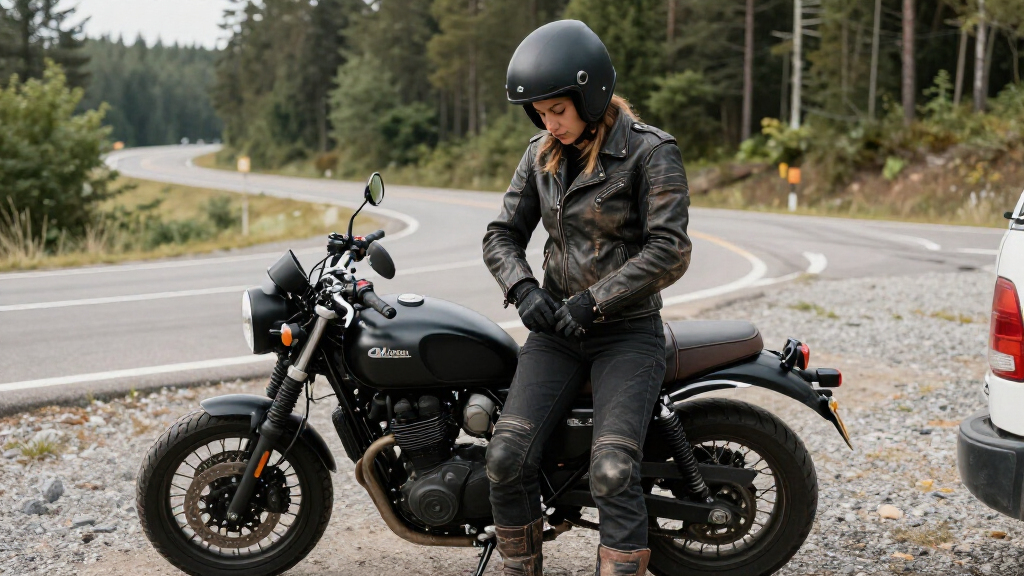

Choosing motorcycle gear is not simply a matter of picking a jacket that feels comfortable in the shop. The practical decision is whether you want leather’s close-fitting, abrasion-resistant construction or textile gear’s greater flexibility for commuting, weather changes, and daily wear. Both can provide meaningful protection when properly designed and fitted, but neither material alone tells you how safe a garment is: armor, construction, coverage, fit, and certification matter too.

Get garage and car supplies delivered free — and shop member deals
- Fast, free delivery on millions of items
- Access to Prime Big Deal Days deals on October 6–7
- Prime Video, Amazon Music and more included

iXS Pacora-ST Tour Waterproof Motorcycle Jacket
- ✔ Fabric: 100% polyester
- ✔ Weather protection: Waterproof and windproof membrane
- ✔ Ventilation: Front and back ventilation panels

Nomad Waterproof Reflective Motorcycle Rain Suit, 2-Piece
- ✔ Material: 600D polyester with PU coating
- ✔ Pieces: 2
- ✔ Weather protection: Designed to be waterproof and windproof

Scoyco CE Level 1 Motorcycle Knee and Shin Guards
- ✔ Certification: CE Level 1; EN 1621-1:2012 impact test
- ✔ Shell: 3 mm TPU
- ✔ Construction: Dual-density foam and reinforced core
Leather is often the stronger fit for riders who prioritize a secure, close fit and ride mainly in dry conditions, especially on sport or spirited road rides. Textile gear tends to make more sense for commuting, touring, and mixed weather, where vents, liners, pockets, and easier layering can matter as much as abrasion resistance. The comparison below focuses on the decisions that change what riding is like, not on treating either material as automatically safe or unsafe.
At a Glance
| Criteria | Leather motorcycle gear | Textile motorcycle gear | Winner |
|---|---|---|---|
| Abrasion resistance | Generally strong abrasion resistance, especially in substantial, well-constructed leather. | Varies widely by fabric, reinforcement, panel placement, and construction; quality matters greatly. | A |
| Impact protection and fit | Often close-fitting; armor stays positioned only if the garment fits the rider correctly. | Often adjustable and available with armor, but a loose fit can let protection shift. | Depends |
| Weather versatility | Best suited to dry conditions; rain protection usually requires separate layers or treatment. | Typically offers more options for waterproofing, removable liners, vents, and layering. | B |
| Comfort and mobility | Can feel stiff at first and restrictive when walking, but softens with wear. | Usually easier to move around in and wear off the bike, though bulky models can feel cumbersome. | B |
| Convenience and upkeep | Needs appropriate cleaning and conditioning; drying and storage care matter. | Often easier to clean; membranes and liners still require care according to instructions. | B |
| Value across riding conditions | Strong value for frequent dry-weather riders who will use it often. | Strong value for commuters and touring riders who benefit from one adaptable setup. | Depends |
iXS Pacora-ST Tour Waterproof Motorcycle Jacket
The iXS Pacora-ST Tour takes the top spot because it pairs a waterproof, windproof membrane with front and back ventilation panels. That combination makes it the most adaptable apparel pick in this group: the Nomad suit is designed specifically as a rain layer, while Scoyco supplies impact protection at the knees and shins but no weather coverage. For riders considering one garment for changing conditions, airflow provisions are a meaningful distinction from simply choosing a waterproof outer layer.Fit adjustments at the cuffs, waist, and arms help riders tailor the jacket over their riding layers, while secure zippered pockets provide storage for small essentials. Those features support touring use, where comfort and access matter over longer stretches. Still, we should not read more into the listing than it says: no armor details are provided, so buyers should confirm whether protective inserts are included or compatible before relying on it as a complete riding jacket. Hand-wash-only care is also less convenient than the Nomad suit’s stated machine-wash care.This is the strongest all-around clothing choice among the three, but not the most specialized. Riders who mainly need a packable rain layer may prefer the Nomad’s separate two-piece format, and buyers focused on certified knee coverage should look to Scoyco. We would choose the iXS for its balance of weather protection, ventilation, and adjustments, while treating its unspecified impact protection as an important limitation.
Pros:
- Waterproof and windproof membrane
- Front and back ventilation panels
- Adjustable cuffs, waist, and arm straps
- Multiple secure zippered pockets
Cons:
- No specific armor details are provided
- Hand wash only
- The description does not state waterproof test results or a protective certification
Best for: Touring-oriented riders who want a waterproof, windproof jacket with ventilation and adjustable fit.
Not ideal for: Riders who require clearly specified included armor, machine-washable care, or only need a separate rain suit.
Bottom line: We rank the iXS first for its useful balance of weather protection and ventilation, provided buyers verify the jacket’s armor situation before treating it as protective apparel.
“We rank the iXS first for its useful balance of weather protection and ventilation, provided buyers verify the jacket’s armor situation before treating it as protective apparel.”
Nomad Waterproof Reflective Motorcycle Rain Suit, 2-Piece
The Nomad two-piece rain suit is our pick for riders who want dedicated wet-weather coverage rather than a touring jacket intended to serve as a broader outer garment. Its jacket-and-pants format, waterproof and windproof PU-coated fabric, and adjustable cuffs and waist make it easier to tailor the outer layer around riding clothes. Pant stirrups are a practical inclusion for helping keep the lower legs in place, while reflective piping adds visibility detail that the iXS jacket listing does not mention.Compared with the iXS, the Nomad is more explicitly a rain suit and has an adjustable hood, but it does not list ventilation panels or the iXS’s multiple zippered pockets. The hood may be useful off the bike or in poor weather, though riders should check how it fits beneath a helmet and whether it can be secured safely while riding. The suit’s stated 600D polyester with PU coating gives buyers a material description, but the provided information includes no independent waterproof test results or performance details. We should not confuse rainwear features with impact protection: no armor or protective certification is specified.This is a sensible choice when a separate, adjustable rain layer is the priority. Its reflective accents and two-piece coverage give it a different role from Scoyco’s localized guards, which do not address rain at all. The tradeoff is uncertainty about real-world weather performance and the lack of stated airflow features. Riders seeking a jacket for varied touring conditions may find the iXS more versatile; riders needing a dedicated outer rain suit may prefer Nomad’s format.
Pros:
- Designed to be waterproof and windproof
- Two-piece coverage with adjustable cuffs and waist
- Reflective piping and an adjustable hood
- Pant stirrups help keep the lower legs positioned
Cons:
- No independent performance details are provided
- No armor or protective certification is specified
- Ventilation features are not listed
Best for: Riders who want a two-piece outer rain layer with adjustable fit and reflective detailing.
Not ideal for: Riders who need specified armor, verified waterproof performance, or ventilation panels for variable conditions.
Bottom line: We recommend the Nomad when a separate rain suit is the goal, but its weather claims and lack of stated armor make it less versatile than the iXS jacket.
“We recommend the Nomad when a separate rain suit is the goal, but its weather claims and lack of stated armor make it less versatile than the iXS jacket.”
Scoyco CE Level 1 Motorcycle Knee and Shin Guards
Scoyco’s knee and shin guards serve a different purpose from the two weather-focused apparel picks: they add localized lower-body impact protection. Their defining distinction is the stated CE Level 1 certification to EN 1621-1:2012, while neither the iXS jacket nor the Nomad suit description specifies certified armor. The 3 mm TPU shell, dual-density foam, and reinforced core are described as impact-absorbing construction; articulated movement from 45° to 180° is intended to let the guards bend with the knee rather than remain rigid.Adjustable elastic bands and Velcro straps support a more secure fit, and widened calf coverage extends protection below the knee. That makes these guards more targeted than either jacket or rain suit, but also much less complete as riding gear. They do not protect the torso, arms, or the rest of the leg, and they do not provide weather coverage. Riders should pay attention to fit and retention: the listed adjustability is useful, but the description does not provide sizing measurements or details about compatibility with particular riding pants.Scoyco ranks third in this overall roundup because it is a supplement rather than an apparel solution. For buyers specifically seeking stated knee and shin certification, however, it is the clearest match of the three. The iXS may be the better starting point for touring apparel and Nomad for rain, but neither replaces the guards’ stated certification. The main care drawback is that these pads must be wiped clean rather than machine washed, and no warranty is listed.
Pros:
- CE Level 1 certified to EN 1621-1:2012
- Articulated knee movement from 45° to 180°
- Adjustable elastic bands and Velcro straps
- Widened coverage protects the knee and lower leg
Cons:
- Covers only the knee and lower leg
- Must be wiped clean and cannot be machine washed
- No warranty is listed
Best for: Riders seeking adjustable, CE Level 1-certified knee and lower-leg guards as part of a broader protective setup.
Not ideal for: Riders looking for full-body protection, weather coverage, or a machine-washable garment.
Bottom line: Scoyco is the strongest choice here for stated knee and shin impact protection, but it should complement—not stand in for—full riding gear.
“Scoyco is the strongest choice here for stated knee and shin impact protection, but it should complement—not stand in for—full riding gear.”
As an Amazon Associate we earn from qualifying purchases.
Key Differences
The biggest practical split is specialization versus adaptability. Leather makes a compelling case when dry-road riding is the norm and the rider wants a close, secure garment built for abrasion protection. Textile gear is the more flexible everyday choice: waterproof or windproof membranes, removable thermal liners, ventilation, and practical storage are more commonly built into its design. Those features can make a bigger difference to a rider who faces a cold morning, a warm afternoon, or an unexpected shower than a small material advantage on paper.
Neither label guarantees a particular level of protection. A well-made textile jacket with suitable reinforcement and correctly positioned, certified armor may be a better choice than poorly fitting or lightly constructed leather. Check the garment’s safety certification where available, armor coverage, seams, abrasion-resistant zones, and fit in your riding posture. Leather usually wins the broad material comparison for abrasion resistance, but gear that does not fit or that a rider leaves at home because it is uncomfortable is not a useful everyday solution.
Cost only makes sense when tied to use. Paying more for leather can be worthwhile for frequent dry-weather riding and a fit that works with the rider’s posture. A higher-priced textile suit can earn its cost through weather protection and long-distance comfort, but a complex liner system is wasted if the rider rarely needs it. For many commuters, quality textile gear is the better value because it covers more conditions; for dedicated dry-road riders, leather may deliver more of what they actually want.
Detailed Comparison
Abrasion resistance (Leather motorcycle gear wins — moderate)
Leather wins by a moderate margin as a general material choice. Substantial motorcycle leather is widely used for its ability to resist abrasion, making it attractive for riders who put dry-road protection first. Textile performance is much more dependent on the specific fabric, reinforcement, seams, and garment design; some technical textiles are built for high protection, while lighter everyday fabrics may offer less. Compare the garment’s construction and certification rather than assuming every leather jacket beats every textile jacket. In practice, leather is the safer starting point for abrasion-focused buying, but quality textile gear can still be a sound protective choice.
Impact protection and fit (major difference)
This is a tie, because fit and armor matter more than the material label. Either type can include impact armor at the shoulders, elbows, and back, but armor only helps as intended when it stays in place. Leather is often cut close to the body, which can help maintain positioning. Textile garments may have adjustable waists, cuffs, and armor pockets, but an oversized fit can allow pads to move. Try gear in a riding posture and check that coverage remains in place when reaching for the bars. The practical winner is the garment that fits securely and has appropriate armor and construction.
Weather versatility (Textile motorcycle gear wins — major)
Textile wins by a major margin for riders who face changing conditions. Many textile jackets and pants are designed with waterproof membranes, wind protection, removable thermal liners, or adjustable vents. Leather can work well in dry weather, but rain generally calls for an over-suit, a suitable treatment, or another layer, and wet leather needs careful drying. A rider who leaves before sunrise, travels long distances, or cannot avoid rain will often get more practical use from textile gear. For consistently dry climates, this advantage shrinks.
Comfort and mobility (Textile motorcycle gear wins — moderate)
Textile has a moderate everyday-comfort advantage, though the cut decides the final result. Textile garments are often easier to move in when walking, sitting at work, or layering over ordinary clothes. Leather can feel stiff at first and may restrict movement away from the bike, although a well-fitted, broken-in garment can feel secure while riding. Sport-oriented leather may also be cut for a tucked riding position rather than standing or commuting. Choose textile for all-day wear and frequent stops; choose leather if its fit suits your riding posture and the added stiffness is an acceptable tradeoff.
Convenience and upkeep (Textile motorcycle gear wins — moderate)
Textile generally wins by a minor to moderate margin. Many textile garments are easier to clean and may have removable liners that help manage temperature and moisture. Waterproof membranes and technical fabrics still need proper care, and washing them incorrectly can affect performance. Leather needs suitable cleaners and conditioning, should be dried with care after getting wet, and benefits from appropriate storage. Neither is maintenance-free, but textile usually asks less of riders who want gear that can handle regular commuting without much extra attention.
Value across riding conditions (moderate difference)
The winner depends on how and where you ride. Textile is often better value for commuters and tourers because one jacket or suit can cover a wider range of weather and temperatures. A cheaper garment is not automatically good value if it lacks suitable protection or fits poorly, so check construction and safety credentials before comparing prices. Leather can be the better investment for riders who use it frequently in dry conditions and want its close fit and abrasion-focused design. Pay more for features you will use, not for a material category by itself.
Leather motorcycle gear: Pros and Cons
Pros:
- Generally strong abrasion resistance in substantial, well-constructed garments.
- Close-fitting designs can provide a secure feel and help keep armor positioned.
- Well suited to frequent dry-weather riding and sport-oriented riding positions.
Cons:
- Less convenient in rain and changing temperatures unless paired with extra layers.
- Can feel stiff or restrictive off the bike, particularly before breaking in.
- Requires suitable cleaning, drying, and conditioning.
Textile motorcycle gear: Pros and Cons
Pros:
- Often better equipped for rain, wind, temperature changes, and layering.
- Typically easier to wear for commuting, touring, and walking around off the bike.
- Commonly offers practical features such as adjustable vents, pockets, and removable liners.
Cons:
- Protection varies widely by fabric and construction; the word textile alone says little about safety.
- Loose cuts can let armor shift, so fit and adjustment are important.
- Some models are bulky, and waterproof liners can feel warm in hot weather.
Who Should Choose What
Choose Leather motorcycle gear if:
- You ride mostly in dry weather and put abrasion-focused construction near the top of your priorities.
- You want a close fit for sport or spirited road riding and are comfortable with a less flexible garment off the bike.
- You will wear leather regularly enough to justify its care needs and cost.
Choose Textile motorcycle gear if:
- You commute or tour through changing temperatures, wind, or rain.
- You want one adaptable setup with features such as vents, a removable thermal layer, or a waterproof membrane.
- You spend time off the bike in your gear and value easier movement and everyday convenience.
Skip both if: Neither material should be chosen by label alone. Look elsewhere if you cannot find a properly fitting garment with suitable protective construction and armor, or if the gear is so uncomfortable that you are unlikely to wear it on every ride.
Value for Money
Paying more is worthwhile only when the extra cost buys protection, fit, or features that match your riding. For a dry-weather rider who wants a close fit and will use the garment often, a well-made leather setup can justify its price. For a commuter or tourer, textile may provide better value by handling a wider range of temperatures and weather without requiring separate outer layers. Expensive textile gear is not automatically a better buy, and inexpensive leather is not automatically protective. Compare certification, construction, armor, fit, and useful features before judging the price.
Final Verdict
For most commuters and all-weather riders, choose quality textile gear. Its weather options, adjustability, and off-bike comfort make it easier to use consistently across a normal week. Choose leather if you mainly ride in dry conditions, prioritize abrasion-focused construction, and prefer a close fit for your riding style. The deciding factor is not which material sounds tougher; it is whether the garment’s protection, fit, and weather performance match the rides you actually take. Whichever you choose, buy for verified protective construction and a secure fit, and wear the gear on every ride.
Frequently Asked Questions
Is leather motorcycle gear safer than textile gear?
Leather generally has an advantage as an abrasion-resistant material, but that does not make every leather garment safer than every textile one. Construction, seams, reinforcement, armor, fit, and applicable safety certification all matter. Compare the actual garments, not just the labels.
Is textile gear protective enough for highway riding?
It can be, if the garment is designed for motorcycle use and offers suitable construction, coverage, armor, and fit. Textile quality varies substantially, so check the product’s protective features and safety information rather than relying on the material name.
Can I wear leather motorcycle gear in the rain?
Yes, but leather is less convenient in sustained rain than gear designed with a waterproof membrane. Riders may use a rain over-suit or suitable treatment, then dry and care for the leather according to its manufacturer’s instructions.
Which type is better for summer riding?
Neither type is automatically cooler. Ventilation, garment weight, lining, and coverage make the difference. Perforated leather can suit hot, dry riding, while ventilated textile gear may offer more adjustable airflow. Choose protective gear that suits the temperature without sacrificing fit or coverage.
Halloween Picks
halloween
As an affiliate, we earn on qualifying purchases.