TL;DR

Get garage and car supplies delivered free — and shop member deals
- Fast, free delivery on millions of items
- Access to Prime Big Deal Days deals on October 6–7
- Prime Video, Amazon Music and more included
In an interview published by Charged EVs on October 1, 2026, EV expert Rustam Kocher said Type 2 charging is widespread at European business parks and shopping centers, but drivers can face a maze of operator apps. He described access problems in an underground garage and warned that fake QR-code stickers can redirect payments or expose information. Kocher also reported better access through roaming agreements, though the interview does not quantify their coverage or reliability.
EV expert Rustam Kocher said Europe has extensive Type 2 public charging at many business parks and shopping centers, but drivers still encounter operator-specific apps that can make chargers difficult to use. In an interview published October 1 by Charged EVs, Kocher described an underground-garage charging attempt that required him to leave the parking area to get a mobile signal, and warned about fake QR-code stickers placed over payment codes. His account highlights a gap between a charger being listed as available and a driver being able to start a session.
Kocher, who worked for years on electric trucks and recently retired to Europe, told Charged EVs he has lived there for four years. He said Type 2 charging is “ubiquitous” in many large business parks and shopping centers. Drivers typically bring their own cable, and Kocher said the lower-power charging is fairly inexpensive in many cases. His observations describe his experience; the interview does not provide a survey or data measuring availability across Europe.
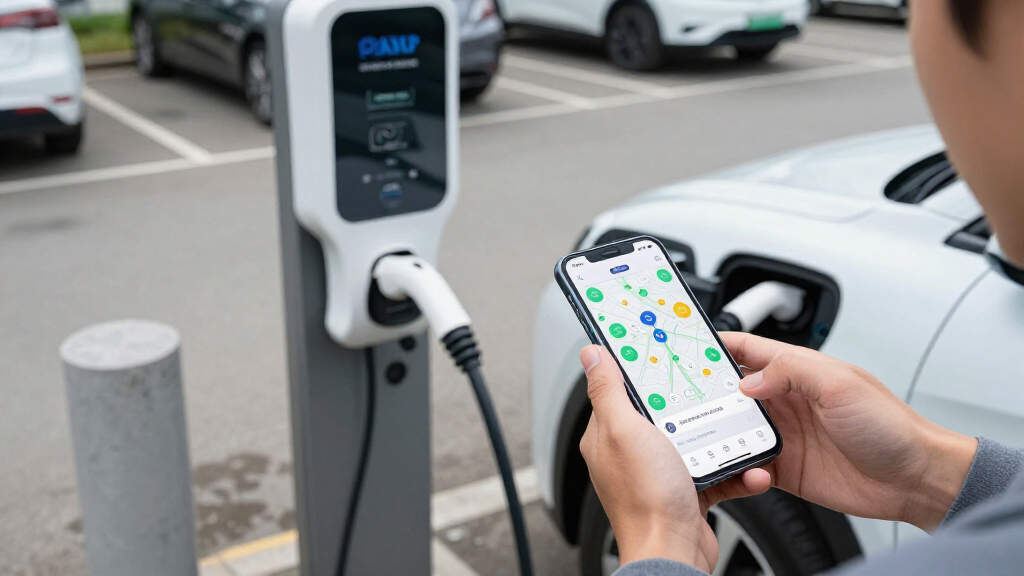
He said app fragmentation remains a problem, particularly in Spain, where some charging locations require a different operator app. Kocher said he has about 50 charging apps on his phone. In one incident, he was three levels underground in a garage with no cellular signal or Wi-Fi. The charger required an app he had not installed, so he had to go upstairs to download it and then coordinate with his wife to connect the cable before the session timed out.
Kocher also warned that people have placed counterfeit QR-code stickers over charger payment codes. He said scanning a substituted code can direct a driver to a fraudulent site rather than the charging company. The interview does not identify a specific location, operator or confirmed loss tied to the warning. Kocher reported a more positive experience using an Octopus Energy or Chargemap card while traveling to Spain’s Basque Country, where he said roaming partnerships let him access multiple networks.
Access Depends on More Than Uptime
The account draws attention to the difference between a charger being powered and a charging stop working for a driver. A unit may be technically online while its required app cannot be downloaded at the site, its payment process is confusing, or the driver cannot get a signal. In such cases, an uptime figure alone may not reflect whether a charging session can actually begin.
That distinction matters to drivers planning trips and to networks seeking customers. Friction at the point of payment can turn an available charger into an unusable stop, while a confusing or unreliable process may leave sites underused. The fake-code warning also makes payment security part of the public charging experience: drivers may be asked to scan codes in unfamiliar locations and should verify that a payment page belongs to the stated operator.
Kocher’s examples are personal observations, not a representative assessment of every European network. Still, they show why wider charger deployment does not, by itself, settle questions about ease of access, payment and successful charging. Roaming agreements may reduce the number of accounts drivers need, but the interview offers no measured comparison of their coverage or performance.
As an affiliate, we earn on qualifying purchases.
Europe’s Type 2 Charging Experience
The Charged EVs report places Kocher’s comments against a broader change in public charging. Its author contrasts Europe’s reported prevalence of paid, lower-power Type 2 charging at commercial destinations with an observation from Florida, where public Level 2 chargers have become less common as DC fast-charging stations have grown. That Florida comparison is the author’s personal observation, not a Europe-wide or US-wide data analysis.
In the same report, the author describes a shift in industry expectations: operators once viewed public charging partly as a way to attract retail customers and expected slim margins on highway fast charging, while some now expect DC fast charging to become profitable. The report says this shift appears to coincide with waning interest in public Level 2 charging, but it does not supply figures establishing a direct cause-and-effect relationship.
On the question of measuring usability, the article cites ChargerHelp CEO Kameale Terry, who argued in 2025 that uptime does not show whether a driver can connect and charge on the first attempt. Terry called first-time charge success rate a measure of the driver experience. Kocher’s garage story illustrates the kind of access issue that such a measure could capture, though the interview gives no results from a formal test.
““I literally have 50 apps on my phone.””
— Rustam Kocher, speaking to Charged EVs
EV charging app compatible with multiple networks
As an affiliate, we earn on qualifying purchases.
As an affiliate, we earn on qualifying purchases.
How Widespread Are These Problems?
The interview does not establish how often drivers across Europe face app-related failures, how many chargers accept a given roaming card, or how consistently those agreements work. Kocher’s account is based on his own experience and should not be read as a statistical picture of the whole region. The report also does not independently verify the scale or locations of the QR-code sticker scam, identify those responsible, or detail any resulting financial or data losses.
It is also unclear whether the underground charger’s app and connectivity problems were later addressed, whether the site offered an alternative payment method, or how often similar setups prevent charging. The report provides no network-level first-time charge success rates, and it does not compare prices or access conditions across operators.
As an affiliate, we earn on qualifying purchases.
Roaming and Easier Payment Ahead
The report points to roaming partnerships as one route toward simpler access, with Kocher saying he used Octopus Energy and Chargemap cards during a trip to the Basque Country. It does not name a timetable for broader European agreements or establish which networks are included in each service. Drivers will still need to check the terms and coverage of their own card or app before relying on it for a trip.
Charged EVs also notes that Octopus had launched an EV charging service in the United States intended to provide access to major networks through one app and account. The report’s author said they could not complete sign-up because of problems with the app; Kocher responded that he had been satisfied with Octopus and hoped the company would improve the service. The article gives no update on a fix or on the app’s later availability.
For now, Kocher’s account leaves practical questions for charging providers: whether drivers can pay without installing a new app on site, whether charging works where mobile coverage is poor, and whether reported uptime matches successful sessions. No operator response or announced policy change is included in the interview.
Portable EV charger with Type 2 connector
As an affiliate, we earn on qualifying purchases.
As an affiliate, we earn on qualifying purchases.
Key Questions
What did Rustam Kocher say about public charging in Europe?
Kocher said Type 2 charging is widespread at many large business parks and shopping centers in Europe. He described the chargers as generally paid, lower-power options where drivers bring their own cable. His comments reflect his experience, not a region-wide survey.
Why did Kocher criticize charging apps?
He said drivers may need a separate app for each operator or location. In one underground garage, poor mobile coverage prevented him from downloading the required app from beside the charger, forcing him to go upstairs to get a signal.
What QR-code risk did Kocher describe?
Kocher warned that counterfeit stickers can be placed over a charger’s payment QR code, directing users to a fraudulent site. The report does not identify a specific incident or document a confirmed loss.
Can roaming cards reduce the number of charging apps?
They may let drivers access multiple networks through one card or service. Kocher said Octopus Energy and Chargemap worked for him during a trip to the Basque Country, but the interview does not establish how widely those services work across Europe.
What does charger uptime tell drivers?
Uptime indicates whether equipment is reported as available, but it may not show whether a driver can start and complete a session. The report cites ChargerHelp CEO Kameale Terry’s call for first-time charge success rate as a measure closer to the driver experience.
Source: rss
Fall Picks
fall essentials
As an affiliate, we earn on qualifying purchases.