TL;DR

Get business pricing on garage and car supplies
- Business-only prices and quantity discounts
- Tax-exempt purchasing
- Multiple users, one account, clear invoices
Deutschland Tour director Fabian Wegmann says the cost and staffing required to secure road races are rising, while police support in Germany has declined. He argues that races need common safety standards across all levels, but says rules must account for national differences and public roads that organisers cannot fully control. The report does not identify a new policy or funding plan.
Fabian Wegmann, director of the Deutschland Tour, says securing road cycling races has become increasingly costly as police support in Germany declines, raising concerns about how organisers can improve safety without making events financially unviable. In an interview published by road.cc, he called for a safety standard that applies beyond professional races, while stressing that organisers work under different laws and conditions in each country.
Wegmann said the Deutschland Tour previously had 40 police motorbikes supporting the race and now has about 20. He attributed the reduction to police authorities’ position that protecting races is not their responsibility. His account describes a practical challenge for organisers: races use public roads, and police staffing and the powers available to close routes differ by country.
Organisers plan routes through repeated inspections and recons, Wegmann said, identifying points where marshals, barriers or protective padding may be needed. But controls cannot remove every risk. He said a driver leaving a home onto the course can still create a danger, despite the organisers’ preparations. The report also points to a recent near miss at the Sauerlandrundfahrt, but the supplied material does not give details of what happened or identify its outcome.
The financial burden extends beyond police. Wegmann said the Münsterland Giro uses about 1,200 people to help secure the event, all of whom are paid. He described race security as expensive and said a consistent standard is needed for races at every level, not only professional events. The interview does not provide a total budget, cost per event, or a proposed funding model.
Safety Costs Reach Every Race
The issue affects whether races can be run safely and whether organisers can afford to stage them. Fewer police motorbikes can leave race organisers relying more heavily on paid marshals and other measures, while the work still takes place on roads used by the public. That makes safety both a staffing problem and a budget question.
Wegmann’s call for standards that cover all races also broadens the debate beyond elite events. Smaller organisers may face similar requirements without the resources available to the largest tours. The source material does not establish that any event has been cancelled because of these costs, but it shows why funding and responsibility for road closures matter to the future of the calendar.
There is also a division of responsibility. Organisers plan routes and place safety personnel, while public authorities control roads and determine what police support is available. Riders, motorists and local communities share those roads. A safety rule that cannot be enforced consistently across national systems may offer limited protection, while a costly rule could put pressure on races with fewer resources.
Products Worth Considering

DEWALT 20V MAX XR Impact Driver, 1/4 Inch High Torque Brushless 3-Speed Cordless with LED Light, Extended Runtime (DCF845B)

Milwaukee 2697-22 M18 18-Volt Lithium-Ion Cordless Hammer Drill/Impact Driver XC Combo Kit (2-Tool)
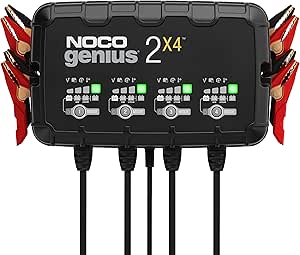
NOCO GENIUS2X4 6V/12V Four-Bank Battery Charger and Maintainer
As an affiliate, we earn on qualifying purchases.
Public Roads, Different Rules
The interview was conducted as part of a road.cc podcast feature about rider safety and race security. Wegmann was speaking as the director of the Deutschland Tour and also referred to his work on the Münsterland Giro. His comments come amid broader debate about how race routes are controlled and who is responsible when a road is not fully secured.
The report contrasts Germany’s arrangements with the Tour de France in France. Wegmann said the Tour has access to around 30,000 police personnel working for the event, and argued that paying for police at that scale would make races unworkable. The figure and comparison are his account in the interview; the report does not provide a breakdown of duties, costs or staffing across the two countries.
Tour de France route designer Thierry Gouvenou separately told road.cc that increasing rider speeds make race safety harder for organisers. That is a distinct view in the same report, not a finding that speed alone explains safety incidents. The material also refers to rider protests at Il Lombardia and a fatality discussed elsewhere in the publication, but it does not provide enough detail here to establish a complete account of either event.
““It’s also a question of cost.””
— Fabian Wegmann, Deutschland Tour director
No Cost Plan Yet
The interview does not state how much it costs to secure the Deutschland Tour or other races, how those budgets have changed over time, or which parties pay each expense. It also provides no proposal for a shared funding system or a formal timetable for introducing common standards.
Wegmann’s figures on police motorbikes, personnel and paid event staff are attributed to him; the report does not include independent verification or a detailed comparison of national arrangements. It is also unclear what specific minimum measures a proposed standard would require, how compliance would be checked, or whether smaller races would receive financial support. The Sauerlandrundfahrt near miss is mentioned without enough information to assess its circumstances.
Standards Need Funding
The report does not announce a decision or identify a next meeting, rule change or funding commitment. The immediate next step is for race organisers, cycling authorities and public agencies to clarify who is responsible for securing public roads and what minimum protections events should provide.
Any workable standard would need to address differences in national law and local police capacity, as Wegmann said countries control their own streets. It would also need a realistic funding approach that covers professional and smaller events. Until those details are set out, the interview leaves open whether organisers can raise safety protections without increasing costs beyond what some races can sustain.
Key Questions
What did Fabian Wegmann say is making race safety harder?
Wegmann cited high security costs, fewer police motorbikes supporting the Deutschland Tour, and the difficulty of controlling public roads. He said organisers inspect routes and deploy marshals and barriers, but cannot remove every risk.
How many police motorbikes did the Deutschland Tour have?
Wegmann said the race previously had 40 police motorbikes and now has “maybe 20.” The figure is his account in the road.cc interview; the report does not provide independent verification.
What safety standard is Wegmann calling for?
He said a standard should apply to every race, not only professional events. The interview does not set out specific requirements or explain how the standard would be funded or enforced.
Has a new safety rule or funding plan been announced?
No. The report records Wegmann’s views and describes the challenges facing organisers, but does not announce an adopted rule, funding commitment or implementation schedule.
Source: rss