
TL;DR

Get business pricing on garage and car supplies
- Business-only prices and quantity discounts
- Tax-exempt purchasing
- Multiple users, one account, clear invoices
The 2027 Tour de France route includes two long time trials totaling 71km, with the first summit finish scheduled for stage nine and three summit finishes overall. Race director Christian Prudhomme said the route is intended to keep contenders close, but Tadej Pogačar remains a leading favorite and the route alone cannot guarantee a close contest.
The 2027 Tour de France route will feature 71km of time trials, with the first summit finish held back until stage nine, in a course that organisers hope will keep the general classification contest closer for longer. Tour director Christian Prudhomme said the route is designed to create suspense, although recent winner Tadej Pogačar remains a major contender regardless of the course.
The route has two long individual time trials, on stages seven and 17, and three summit finishes across the 21-stage race. The source report says the route has six days in the mountains, compared with five summit finishes in the 2026 Tour. Its 71 kilometres of time trialling is the most in a Tour since 2012, when Bradley Wiggins won the race.
The opening mountain summit finish comes on stage nine. Before then, the course includes rolling and punchy stages, including a stage five finish at Plumelec that the report identifies as a possible opportunity for Pogačar. Later challenges include stages in the Massif Central, the Alps and the Pyrenees, as well as technical descents and potentially influential weather.
The long time trials could benefit riders with strong individual time-trialling records, including Remco Evenepoel, the reigning world champion in the discipline at the time described by the source, and French prospect Paul Seixas. Jonas Vingegaard is also named as a contender. These are route-based possibilities, not predictions of who will start or win.
Time Trials Could Reshape the Contest
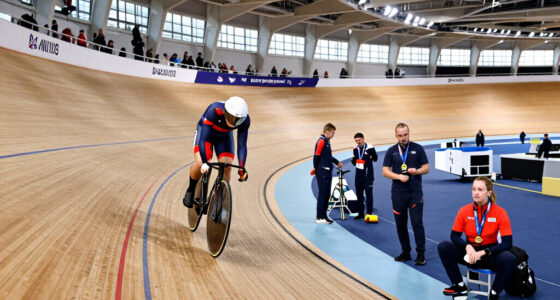
The two long time trials give the 2027 race a different balance from a route centered on repeated summit finishes. Riders who can gain time against the clock may have more ways to challenge for the overall lead, while climbers will need to limit losses before the high mountains. The placement of a time trial on stage 17 could also leave the standings open late in the race, depending on gaps already established.
That design reflects an organiser’s interest in sustaining competition and audience attention over three weeks. The source report notes that Pogačar’s winning margins in the three preceding Tours were six minutes in 2026, four in 2025 and six in 2024. Those margins do not prove that a new route will make the next race closer: Pogačar is described as an accomplished time triallist as well as a dominant all-round rider.
For viewers, the route offers several potential turning points rather than concentrating all decisive action in the final mountain stages. The Massif Central, the time trials and the Alpine and Pyrenean stages could each affect the standings. Whether those opportunities produce sustained competition depends on the riders’ form, tactics and race-day conditions.
professional cycling time trial bike
As an affiliate, we earn on qualifying purchases.
As an affiliate, we earn on qualifying purchases.
Why Organisers Changed the Balance
The route announcement follows recent Tours in which Pogačar built substantial advantages. The source report says he had effectively secured the 2026 race on stage six, with a dominant ride over the Col du Tourmalet. Organisers had presented that edition’s route as a gradual build toward the Alps, but the early gap undercut that intended progression.
For 2027, the first summit finish is later and the number of summit finishes is lower, while the time-trial distance rises. The changes appear intended to offer different types of riders a chance to influence the overall contest. Prudhomme told French newspaper L’Équipe that organisers wanted favourites close together before the officially mountainous stages.
The route also includes stages that may create uncertainty beyond the major climbs. The report points to tricky ascents, descents and weather, including the stage 14 day in the Massif Central as a possible race-shaping challenge. Such stages can affect the standings, but their impact cannot be known before the race.
“We can tell ourselves that there might be a chance of suspense and a great battle right to the end.”
— Christian Prudhomme, Tour de France director, speaking to L’Équipe
As an affiliate, we earn on qualifying purchases.
A Route Cannot Guarantee Suspense
It is not yet known which riders will start the 2027 Tour, what form they will bring or how teams will approach the time trials and mountain stages. The route’s design may create opportunities for Evenepoel, Seixas and Vingegaard, but those possibilities do not establish that they will challenge Pogačar.
The source report argues that Pogačar can still shape the race even on a course intended to reduce his advantage. His participation and condition in 2027 are not confirmed here. Weather, crashes, tactics and time gaps on the earlier stages could also alter how much the later time trials and climbs matter. Organisers’ stated aim of a close contest remains an ambition, not a forecast.
As an affiliate, we earn on qualifying purchases.
The Build-Up to July 2027
The next milestone is the race itself in July 2027, when the announced route will be tested by the riders and teams. Attention will turn to confirmed start lists, rider preparation and how contenders perform in the season’s time trials and stage races. Those developments will give a clearer picture of who could benefit from the course.
Once racing begins, the opening stages and the stage seven time trial should show whether the standings remain close ahead of the first summit finish on stage nine. The later stage 17 time trial and the final mountain days will then provide further tests. Until the race unfolds, the route indicates possible pressure points but cannot settle whether the Tour will avoid another decisive early advantage.
As an affiliate, we earn on qualifying purchases.
Key Questions
What is the biggest route feature of the 2027 Tour de France?
The race includes 71km of time trials across stages seven and 17, the most time-trial distance in a Tour since 2012, according to the source report.
How many summit finishes are planned?
The announced route has three summit finishes and six days in the mountains. The first summit finish is on stage nine.
Is the route designed to stop Tadej Pogačar?
The source report interprets the long time trials and reduced number of summit finishes as an effort to make the contest more competitive. Prudhomme described suspense as an aim, but organisers have not guaranteed that Pogačar will be stopped.
Which riders could benefit from the time trials?
Remco Evenepoel is identified as a potential beneficiary because of his time-trial ability. The report also names Paul Seixas and Jonas Vingegaard as riders to watch, but their participation and results are not established.
When will the route’s impact become clear?
The route’s effects will only be clear during the July 2027 race, after teams’ plans, rider form, weather and stage results are known.
Source: rss
Fall Picks
fall essentials
As an affiliate, we earn on qualifying purchases.