
TL;DR

Get business pricing on garage and car supplies
- Business-only prices and quantity discounts
- Tax-exempt purchasing
- Multiple users, one account, clear invoices
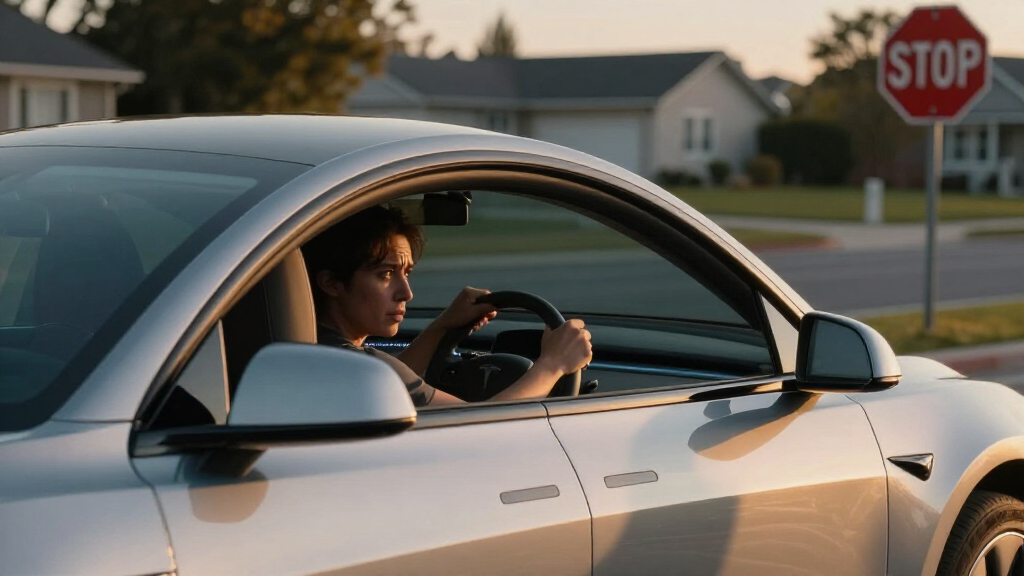
A Tesla vehicle with Full Self-Driving or Autopilot active ran a stop sign and struck a pedestrian, resulting in a fatality. Authorities are investigating, and the incident raises questions about Tesla’s driver-assist systems.
A Tesla vehicle, with Full Self-Driving or Autopilot active, ran a stop sign and struck a pedestrian, resulting in the death of the pedestrian. The incident occurred recently and is now under investigation by authorities. This development underscores ongoing concerns about the safety of Tesla’s driver-assist features when used in real-world conditions.
According to preliminary reports, a Tesla vehicle was traveling through an intersection when it failed to stop at a stop sign, striking a pedestrian who was crossing the street. The pedestrian, whose identity has not been publicly disclosed, died from injuries sustained in the crash. The vehicle’s driver, who was reportedly using Tesla’s Full Self-Driving or Autopilot system at the time, remained at the scene and is cooperating with investigators.
Authorities have confirmed that the vehicle was equipped with Tesla’s driver-assist system, and footage from nearby cameras shows the car entering the intersection without stopping. The incident is now under review by local traffic safety officials and federal agencies, including the National Highway Traffic Safety Administration (NHTSA). No charges have been filed yet, and it is unclear whether the driver or the vehicle’s systems will face legal scrutiny.
Potential Impact on Tesla’s Driver-Assist Safety Debate
This incident highlights the ongoing debate over the safety and reliability of Tesla’s Full Self-Driving and Autopilot systems, especially when drivers rely on them in complex traffic scenarios. The fatality raises questions about whether these systems are sufficiently tested and whether drivers fully understand their limitations. It also adds to a series of previous incidents involving Tesla’s driver-assist features, which have attracted regulatory attention and public concern.
While Tesla states that its systems are designed to assist, not replace, human drivers, critics argue that the marketing of these features can create a false sense of security. The incident could influence upcoming regulatory decisions, including potential updates or restrictions on the use of Tesla’s driver-assist technology.
As an affiliate, we earn on qualifying purchases.
Background of Tesla’s Autopilot and FSD Incidents
Tesla’s Autopilot and Full Self-Driving systems have been available to consumers since 2016 and 2019, respectively. These driver-assist features are designed to automate certain driving tasks, such as steering, acceleration, and braking, under driver supervision. However, Tesla emphasizes that drivers must remain attentive and ready to take control at all times.
Over the years, Tesla has faced scrutiny following multiple crashes involving these systems, some resulting in injuries or fatalities. Regulatory agencies, including NHTSA, have opened investigations into these incidents, examining whether Tesla’s marketing and system capabilities comply with safety standards. Tesla maintains that its systems are safe when used correctly, but critics argue that the technology is still evolving and prone to errors, especially in complex traffic environments.
The current incident adds to this ongoing controversy and underscores the importance of clear driver awareness about the limits of driver-assist features.
Tesla Full Self-Driving system accessories
As an affiliate, we earn on qualifying purchases.
As an affiliate, we earn on qualifying purchases.
Unclear Whether Tesla’s Systems Were Responsible
It is not yet confirmed whether Tesla’s Full Self-Driving or Autopilot systems malfunctioned or if human error played a role. Investigators are examining vehicle data, driver actions, and system logs, but definitive conclusions have not yet been reached. The exact cause of the failure—whether technical or human—remains uncertain at this stage.
Tesla driver-assist system upgrade
As an affiliate, we earn on qualifying purchases.
As an affiliate, we earn on qualifying purchases.
Ongoing Investigation and Potential Regulatory Actions
Authorities are expected to analyze vehicle data, review footage, and interview witnesses and the driver involved. Tesla’s system logs will be scrutinized to determine if the driver was using the features correctly or if there was a malfunction. The incident could prompt regulatory agencies to issue safety advisories, update guidelines, or impose new restrictions on Tesla’s driver-assist features. Tesla may also face legal actions or recalls depending on the investigation’s outcome.
As an affiliate, we earn on qualifying purchases.
Key Questions
Was the Tesla driver at fault?
It is not yet clear whether the driver was at fault or if a system failure contributed. Investigators are examining vehicle data and driver behavior.
Did Tesla’s Autopilot or FSD malfunction?
It remains unknown whether the driver-assist system malfunctioned or if the driver failed to respond appropriately. The investigation is ongoing.
Will this incident lead to recalls or safety warnings?
Potentially. Regulatory agencies are reviewing the case, and Tesla may be required to issue updates or recalls if system faults are confirmed.
What are the safety risks of using Tesla’s driver-assist features?
While designed to assist, these features still require driver supervision. Overreliance or misunderstanding of their capabilities can increase safety risks, especially in complex traffic scenarios.
Has Tesla commented on the incident?
As of now, Tesla has acknowledged the incident and stated it is cooperating with authorities, but specific comments are limited pending investigation results.
Source: hn
Fall Picks
fall essentials
As an affiliate, we earn on qualifying purchases.