TL;DR

Get business pricing on garage and car supplies
- Business-only prices and quantity discounts
- Tax-exempt purchasing
- Multiple users, one account, clear invoices
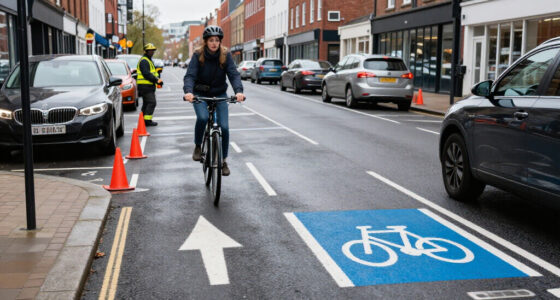
Cycling Weekly published practical guidance for cyclists who want to report suspected driving offences using helmet or bike-camera footage. The report says requirements differ by police force, and footage should clearly capture the incident and vehicle registration; the article presents enforcement and deterrence as potential road-safety benefits, not a guaranteed result.
Cycling Weekly has published guidance for riders considering helmet or bike cameras to report suspected driving offences, setting out how to record, submit and preserve footage. The report says police procedures vary across the UK, and that submissions are most useful when they capture the incident and make the vehicle’s registration number identifiable.
The guide draws on comments from police forces, cycling campaigners and people who regularly submit footage. It describes Operation Snap, a UK police initiative through which members of the public can report suspected driving offences using video. Each police force has its own submission process and evidence requirements, so the report advises riders to check the rules that apply locally before recording or uploading footage.
West Midlands Police says useful footage should show the incident and an identifiable vehicle registration number. Its guidance asks for the entire incident and, where possible, one minute before and after the offence, with a maximum clip length of 10 minutes. The report contrasts that with Dorset Police’s stated requirements, which call for at least two minutes of unedited footage both before and after the reported incident. These examples show why a clip format that works for one force may not meet another force’s criteria.
The article also recommends prioritising clear image quality, battery life and controls that are easy to use while riding. A camera’s incident-saving feature can preserve footage around an event, but the report warns that short saved clips may not satisfy a force’s longer recording requirements. Riders should retain the original footage while a case is ongoing and avoid posting submitted video on social media before or during police or court action, as this could affect proceedings, according to the police guidance cited by the report.
How Footage Can Aid Enforcement
The guide matters because a recording may give police evidence to assess a reported driving offence, while a functioning reporting process can connect an incident witnessed by a cyclist with a formal investigation. Campaigners quoted in the report argue that camera reporting can deter close passing, mobile-phone use while driving and other offences. That is their stated view; the article does not establish that every submission leads to enforcement or that cameras alone reduce collisions.
Tom Bogdanowicz, senior policy officer at the London Cycling Campaign, said West Midlands Police provides an example of how clear instructions and follow-up can support enforcement. He argued that this approach can contribute to deterrence and fewer road deaths or injuries. The source does not provide a causal study demonstrating that outcome, so it should be understood as an advocacy claim about the potential effect, not a measured result attributable to the guide.
For riders, the practical stakes are immediate: unusable footage, an unidentifiable registration plate or a clip that fails local rules may limit what police can do. Following the force’s instructions and keeping evidence intact can make a submission more useful, though the decision to investigate or prosecute remains with authorities.
Products Worth Considering

NOCO Boost GB150 3000A UltraSafe Jump Starter, 12V Lithium Battery Booster

DEWALT 20V MAX XR Hammer Drill and Impact Driver Combo Kit with Two 4Ah Batteries and Charger

NOCO Boost GBX75 2500A UltraSafe Jump Starter, 12V Lithium Battery Booster
As an affiliate, we earn on qualifying purchases.
Different Forces, Different Rules
The report was prompted in part by the writer’s account that a brother-in-law had been knocked off a bicycle and seriously injured. The writer said the experience led them to get a camera and begin reporting incidents. This is the author’s personal account, not a separately documented incident report in the supplied material.
The article also cites Danny Brothwell, chair of Bike Worcester, who said he had made about 800 Operation Snap submissions. He described using cameras with a button that saves footage from before and after an incident, reducing the need to review or edit long recordings. Brothwell said his own camera could struggle on unlit sections of his commute, underscoring that performance depends on conditions as well as equipment.
Brothwell told the report that the three times he had attended court in connection with submissions, hearings took place about 12 months after the events. That is his experience, not a timetable applicable to every case. The report advises keeping original files for as long as police or court proceedings require them, rather than assuming a short retention period will be enough.
“We strongly support camera reporting, which helps deter close passing by drivers, phone use while driving and other offences.”
— Tom Bogdanowicz, senior policy officer at the London Cycling Campaign, speaking to Cycling Weekly
What Footage Can Prove
The source does not provide national figures for how many Operation Snap submissions are made, accepted, investigated or result in prosecution. It also gives no measured comparison showing whether camera reporting reduces collisions, injuries or deaths. The claimed safety benefit is presented by a campaign representative as a consequence of stronger enforcement and deterrence, rather than as a verified outcome of the guide.
Police requirements cited in the report are examples from individual forces, not a complete list of rules across the UK. The supplied material also ends before completing its discussion of the reporter’s written statement, so it does not fully set out what each force expects a witness statement to contain. Riders should check current local instructions, and the article does not establish whether any particular submission led to a prosecution.
Check Local Rules Before Uploading
Cyclists planning to report footage should first consult their local police force’s current Operation Snap guidance, then confirm the required clip length, format and submission process. They should preserve the original recording and follow instructions about whether footage may be shared publicly while a case is being considered. Police and courts determine the next steps for individual reports; the source gives no update on a specific case or a nationwide policy change.
Key Questions
What is Operation Snap?
Operation Snap is a UK police initiative that lets members of the public submit footage of suspected driving offences. The process and criteria are set by individual police forces.
What should a cycling camera recording show?
The police guidance cited by Cycling Weekly says footage should show the incident itself and, where possible, an identifiable vehicle registration number. Required recording length varies by force.
Can a short incident-saving clip be enough?
Not necessarily. The report says one camera feature can save 10 seconds before and after an incident, while Dorset Police asks for at least two minutes before and after in the example cited. Check the local force’s current rules.
Should cyclists post reported footage on social media?
The article says Dorset Police and West Midlands Police warn against posting footage before or during police or court action. The report advises keeping submitted material off social media while a case is live, following the relevant force’s instructions.
How long should the original footage be kept?
Keep the original recording until the relevant case is complete and follow police instructions. Danny Brothwell told Cycling Weekly that court appearances in his experience took place about a year after the reported events, but that is not a universal timetable.
Source: cyclingweekly.com