
TL;DR
Motorcycle safety gear helps reduce exposure to impact, abrasion, weather, and debris, but it cannot prevent every injury. Start with a properly fitted, locally certified helmet, then add protective clothing with armor, gloves, and sturdy over-the-ankle boots that stay secure in your riding position. Fit, coverage, condition, and consistent use matter more than price.
Start with a locally certified, properly fitted helmet, then add protective clothing, gloves, and over-the-ankle boots.
Check fit while seated on your motorcycle; closures and armor should stay put when you bend and reach for the bars.
Compare construction, coverage, fit, and certification instead of using price alone as a measure of protection.
Choose ventilation, waterproofing, and visibility features for your real routes and weather, while keeping protective coverage.
Inspect gear for impact damage, worn closures, cracked armor, and deteriorated seams; follow the maker’s care and replacement guidance.

Get business pricing on garage and car supplies
- Business-only prices and quantity discounts
- Tax-exempt purchasing
- Multiple users, one account, clear invoices
Buy these four essentials before your first ride
Motorcycle safety gear starts with four pieces: a certified helmet, protective jacket and trousers, gloves, and sturdy boots that cover your ankles. Together, they cover your head, torso, limbs, hands, and feet against common crash hazards, though they cannot prevent every injury. Think of them as a complete riding outfit, like a rain shell with proper shoes: leaving one piece out can expose the part of you that meets the road first. If you’re budgeting for a first commute, buy in stages but ride in full gear from your first trip. Start with a properly fitted helmet and gloves, then add abrasion-resistant jacket and trousers with armor, plus over-the-ankle boots. For example, riding in jeans and sneakers because the trip is only ten minutes still leaves your knees and ankles with little purpose-built protection if you slide at an intersection.- Helmet: Choose a model certified for your market and fitted snugly.
- Jacket and trousers: Look for abrasion-resistant construction, secure closures, and armor at shoulders, elbows, hips, and knees.
- Gloves: Cover your wrists and stay secure without interfering with controls.
- Boots: Select over-the-ankle motorcycle boots with reinforced areas and soles that grip the footpegs.
Products Worth Considering

Autel 50A Level 2 EV Charger, 240V Hardwired with 25 ft Cable

NOCO Boost GB150 3000A 12V Lithium Jump Starter

Innova 5610 OBD2 Bidirectional Scan Tool
As an affiliate, we earn on qualifying purchases.
Choose a helmet that fits your head and your local rules
A good motorcycle helmet fits level and snug, fastens securely, and carries a certification accepted where you ride. A full-face helmet covers your chin and face as well as your head, offering more coverage than an open-face design. Standards such as DOT, ECE, and Snell refer to different requirements, so check the label and current local rules instead of assuming an approval transfers between countries. Put the helmet on and fasten the strap; it should feel evenly snug without painful pressure. If you gently move the shell, your skin should move with it rather than the helmet sliding freely. A loose helmet can shift in a crash. For example, if you can rotate it substantially while the chin strap is fastened, try another size or shape before buying. Features such as lighter construction, ventilation, and integrated communications can make a helmet easier to use on a hot commute. They don’t replace a correct fit or required certification. Check current product guidance for your market, and replace a helmet after a significant impact even if the shell looks fine; internal damage may not show. Follow the manufacturer’s service-life and replacement instructions too.Fit first: A comfortable helmet that stays put is a better choice than a feature-packed helmet that shifts or presses painfully.
Let your jacket, trousers, gloves, and boots cover the road-facing areas
Protective clothing should resist abrasion, cover exposed skin, and keep armor positioned over the parts it is meant to protect. Look for reinforced or purpose-built motorcycle materials, secure closures, and armor at shoulders, elbows, hips, and knees. A back protector can add coverage beyond armor built into a jacket. These pieces help reduce exposure to slide and impact hazards, but ordinary denim or fashion leather may not offer the same coverage or construction. Fit the outfit while sitting on your motorcycle, because a jacket that feels right standing in a shop can ride up when you reach for the bars. Bend your knees, lean forward, and check that cuffs, waist, and armor stay put. Imagine braking hard on a wet city street: gloves that slip off the wrists or trousers that expose your knee in a riding crouch leave less protection where you need it. Gloves should let you operate the throttle, clutch, and brake without bunching. Boots should secure around the ankle and grip the pegs; work boots may lack motorcycle-specific reinforcement or closure. Leather and textile both have tradeoffs, and performance depends on the garment’s construction and intended use. Choose based on the label, fit, conditions, and type of riding—not material name alone.Match your gear to weather and the ride you actually do
The best motorcycle safety gear is gear suited to your route and conditions, because comfort affects whether you keep it on. A ventilated jacket may feel far better in summer traffic, while a waterproof layer can make a rainy tour less tiring. Still, comfort features don’t substitute for protective coverage, and a garment should fit securely in your riding position.| Riding situation | Useful features | Tradeoff to check |
|---|---|---|
| Daily city commute | Easy closures, reflective details, weather layers | Convenience should not leave wrists or ankles exposed |
| Hot-weather ride | Ventilation and breathable materials | Check that protective panels still cover shoulders, elbows, knees, and hips |
| Rainy touring | Waterproof, breathable layers and secure cuffs | Test that layers don’t bunch or restrict movement |
| Track or off-road riding | Equipment designed for that activity and its rules | Check the organizer’s or governing body’s requirements |
Use this quick fit check before you ride
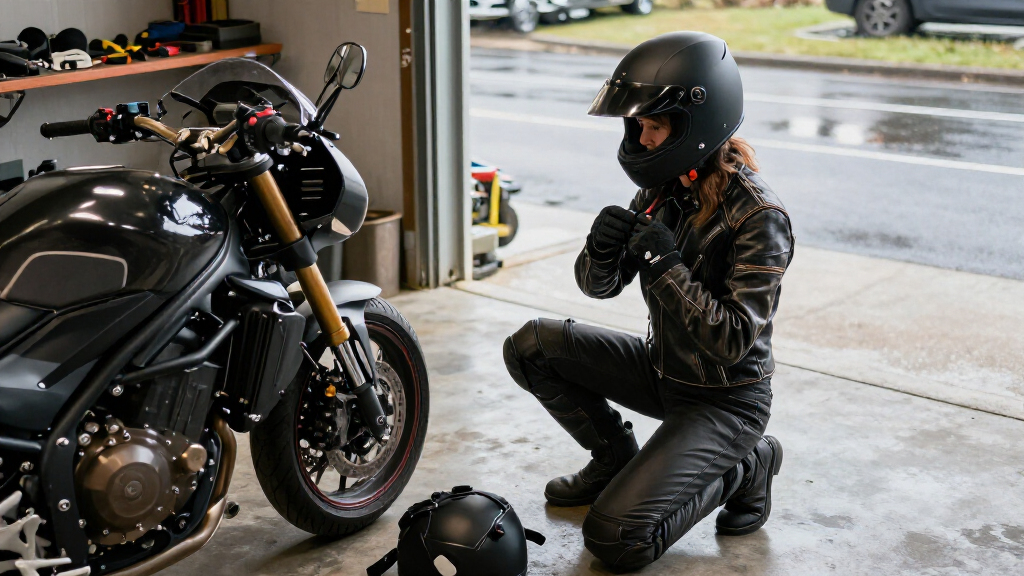
Check motorcycle safety gear before each ride by confirming that it fits, closes, and keeps its protective parts in place. A two-minute check in the garage can catch an open cuff, twisted armor pocket, or loose boot closure before wind and movement make the problem harder to notice. Do the check in your normal riding position, not just standing in front of a mirror.- Fasten your helmet and confirm it sits level and snug without shifting freely.
- Close every zip, snap, and strap on your jacket, trousers, gloves, and boots.
- Move into a riding crouch and check that the jacket still covers your waist and the trousers cover your knees.
- Feel for armor at the shoulders, elbows, hips, and knees; confirm it hasn’t folded or slid away.
- Grip the bars and controls to make sure your gloves allow smooth movement and your sleeves don’t pull open.