TL;DR

Get business pricing on garage and car supplies
- Business-only prices and quantity discounts
- Tax-exempt purchasing
- Multiple users, one account, clear invoices
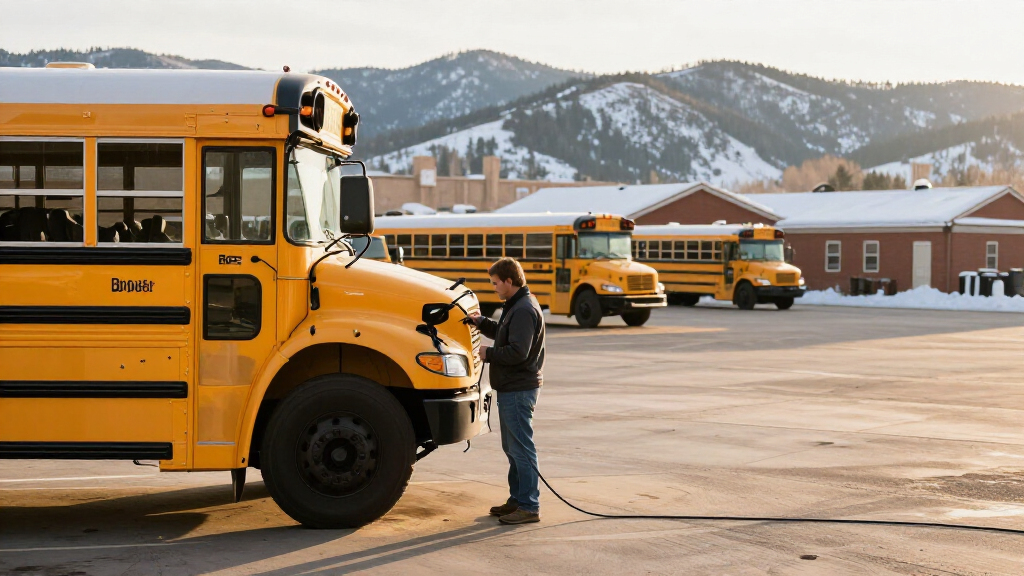
Jefferson County Public Schools has placed six electric school buses and six bidirectional chargers into service in Colorado. Xcel Energy provided $3.4 million through its Electric School Bus Program, while Highland Electric Fleets is supporting the buses, charging infrastructure and long-term operations. The project is intended to test how buses can return stored electricity to the grid when they are not in use.
Jefferson County Public Schools has placed six electric school buses and six bidirectional chargers into service in Colorado, launching a project to test whether buses can store electricity and return it to the grid when they are parked. Xcel Energy provided $3.4 million through its Electric School Bus Program, and the buses are expected to begin carrying Jeffco students during the current school year.
The buses are IC electric school buses, according to the report by Charged EVs. The six charging systems are bidirectional, meaning they are designed to allow electricity to flow both into a vehicle’s battery and back out. The project’s partners describe the buses as potential mobile energy assets, though the report does not give projected power output or specify when grid exports will occur.
Xcel Energy’s funding supports the district’s move to electric transportation. The utility says its program is supporting the launch of 38 electric school buses and 30 bidirectional charging systems in Colorado. Highland Electric Fleets is providing the buses, charging infrastructure and long-term services through its Electrification-as-a-Service model.
The project is intended to provide operational experience with bidirectional charging in a school fleet. According to the source report, that experience will help show how the technology can fit both daily fleet operations and the electric grid. The report does not identify the chargers’ manufacturer, disclose the six vehicles’ battery capacity or give a timetable for measuring results.
Testing Buses as Grid Resources
School buses are parked for substantial periods outside their routes, making their batteries a possible source of stored energy when vehicles are not needed for transport. In this project, bidirectional charging is being tested as a way to use that stored power beyond the buses’ regular journeys. Whether it can provide practical grid support will depend on operating schedules, charging arrangements and utility needs; the report gives no measured results yet.
The project also adds electric buses to a large public-school system. Jeffco serves 75,000 students at 145 schools, according to the source. Electrification may reduce diesel exhaust around school communities, while the grid demonstration could give the district and its partners information for future fleet decisions. Those potential benefits should not be confused with outcomes already documented for these six buses.
The arrangement places several roles in one project: the school district operates the student transportation service, Xcel Energy provides program funding, and Highland Electric Fleets supplies vehicles, charging equipment and services. The partners’ experience may help inform other Colorado districts considering electric buses, particularly where charging equipment is expected to serve both transport and energy-management needs.
electric school bus bidirectional charger
As an affiliate, we earn on qualifying purchases.
As an affiliate, we earn on qualifying purchases.
Colorado’s Electric Bus Program
The six buses are part of a wider Colorado effort backed by Xcel Energy’s Electric School Bus Program. The utility says the program is supporting 38 buses and 30 bidirectional charging systems statewide. The source report does not provide a breakdown of where the other buses will operate or whether all of the systems are already in service.
Highland Electric Fleets’ Electrification-as-a-Service model is described as covering vehicles, charging infrastructure and longer-term operational services. That structure can put multiple parts of fleet electrification under one provider, rather than leaving a district to procure and manage every component independently. No contract terms, costs beyond Xcel’s stated funding, or district contribution are given in the report.
Jeffco’s project also links transportation and energy planning: buses must remain available for scheduled routes, while any power returned to the grid would depend on the vehicles being plugged in and able to discharge. The source describes the demonstration’s aims but does not set out its operating rules or anticipated frequency of grid charging and exports.
“These new electric buses will deliver cleaner air for our students and schools while giving us a hands-on look at how innovative energy solutions can benefit our entire Lakewood community.”
— Jeff Gatlin, chief operating officer at Jefferson County Public Schools
As an affiliate, we earn on qualifying purchases.
Grid Performance Still Unreported
The commissioning is reported, but the source provides no performance data showing how much electricity the buses have returned to the grid, if any. It also does not state when grid exports will begin, what conditions would trigger them, or how the district will keep buses ready for transportation duties while participating.
The report does not name the charger model, describe utility interconnection arrangements, or specify a measurement plan for the demonstration. Xcel’s $3.4 million funding is stated, but the source does not break down how it is allocated or identify total project costs. The asthma-risk figure cited by Highland Electric Fleets is an attributed claim; its research basis is not included in the report.
vehicle-to-grid bi-directional charger
As an affiliate, we earn on qualifying purchases.
As an affiliate, we earn on qualifying purchases.
Buses Begin School-Year Service
The six buses are expected to begin serving Jeffco students during the current school year. As they enter regular service, the district and its partners are positioned to gather practical information on vehicle use, charging needs and the integration of bidirectional systems with fleet operations.
The source report does not announce a date for the first grid discharge, a public results report or a next expansion decision. Those details remain pending; the clearest near-term milestone is the buses’ start in student service and the project’s ongoing demonstration of the technology.
As an affiliate, we earn on qualifying purchases.
Key Questions
How many electric buses and chargers did Jeffco put into service?
Jefferson County Public Schools placed six electric school buses and six bidirectional chargers into service, according to the source report.
What does bidirectional charging mean for the buses?
It allows electricity to flow into the buses’ batteries and, when the system is set up for it, back out. The project is intended to test how buses might return stored electricity to the grid while they are not needed for routes.
Who is funding and supporting the project?
Xcel Energy provided $3.4 million through its Electric School Bus Program. Highland Electric Fleets is providing the buses, charging infrastructure and long-term services through its Electrification-as-a-Service model.
When will the buses carry students?
The source report says the six buses will begin serving Jeffco students during the current school year. It does not provide a specific start date.
Have the buses already demonstrated grid benefits?
The report describes the project as a demonstration but gives no measured grid-performance results. It does not say when the buses will first send power back to the grid or how much electricity they may supply.
Source: rss
Halloween Picks
halloween
As an affiliate, we earn on qualifying purchases.