
TL;DR

Get business pricing on garage and car supplies
- Business-only prices and quantity discounts
- Tax-exempt purchasing
- Multiple users, one account, clear invoices
Electric vehicle sales in Europe have surged dramatically, now representing 25% of all new car sales. This marks a significant shift toward EV adoption across the continent. The trend reflects evolving consumer preferences and policy impacts.
Electric vehicle (EV) sales across Europe have reached a new milestone, now accounting for 25% of all new car registrations in the region, according to recent industry data. This marks a significant acceleration in EV adoption, reflecting changing consumer preferences, stricter emissions regulations, and government incentives aimed at reducing reliance on internal combustion engines. The rapid growth underscores a major transformation in Europe’s automotive landscape, with EVs increasingly becoming the norm rather than the exception.
Data from the European Automobile Manufacturers Association indicates that in the first half of this year, EV sales in Europe surged by approximately 40% compared to the same period last year. The total number of new car registrations in Europe during this period was around 7 million, with electric vehicles making up roughly 1.75 million. This marks a substantial increase from just 10% of new car sales in 2020, illustrating rapid market penetration.
Several factors contribute to this trend. Policy measures, such as stricter emissions targets and bans on new internal combustion engine sales in multiple countries, have driven automakers to accelerate EV offerings. Consumer interest has also grown, fueled by falling battery costs, expanding charging infrastructure, and increased model availability. Notably, countries like Norway, the Netherlands, and Germany lead the charge, with EVs representing more than 30% of new registrations in some markets.
This surge in EV sales signifies a fundamental shift in Europe’s automotive industry, with electric vehicles now constituting a quarter of new car sales. It reflects the success of policy measures aimed at reducing carbon emissions and meeting climate commitments. For automakers, this trend necessitates a strategic pivot toward electric models, investment in charging infrastructure, and innovation in battery technology. For consumers, increased availability and declining costs make EV ownership more accessible. Overall, this growth accelerates Europe’s transition toward a low-carbon transportation system, with potential impacts on oil demand, automotive employment, and energy infrastructure.
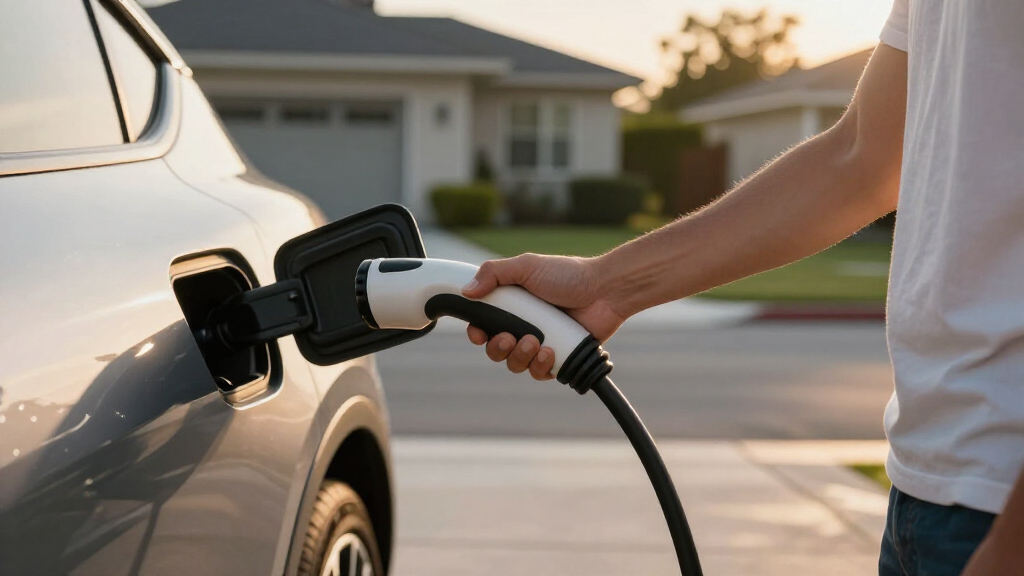
European electric vehicle charging station
As an affiliate, we earn on qualifying purchases.
As an affiliate, we earn on qualifying purchases.
Recent Trends and Policy Drivers Behind EV Adoption
Europe has seen a consistent rise in EV sales over the past five years, driven largely by government policies targeting climate change. The European Union has set ambitious targets to cut carbon emissions from transportation by 55% by 2030, with many member states implementing bans on new petrol and diesel car sales by 2035 or earlier. Countries like Norway have already achieved EV market shares exceeding 75%, serving as models for others.
Market dynamics have also shifted, with battery prices dropping by over 80% since 2010, making EVs more affordable. Automakers have responded by expanding their electric lineups, with many announcing plans to phase out internal combustion engine models within the next decade. The expansion of charging infrastructure, including fast chargers along major highways, has alleviated range anxiety and increased consumer confidence in EVs.
While the growth is notable, questions remain about supply chain constraints, battery recycling, and the pace of infrastructure deployment needed to sustain this momentum.
“The rapid increase in EV sales reflects the effectiveness of policy measures and market innovation, signaling a fundamental transformation in European mobility.”
— European Automobile Manufacturers Association spokesperson
As an affiliate, we earn on qualifying purchases.
Uncertainties About Long-Term Market Sustainability
While the current growth trend is impressive, uncertainties remain regarding supply chain constraints, battery material availability, and the pace of charging infrastructure expansion. It is not yet clear whether the market can sustain this growth rate through the next decade or if external factors such as geopolitical tensions or raw material shortages could slow progress.
Additionally, the impact of potential policy changes or economic downturns on EV adoption remains uncertain, and the long-term affordability of EVs could be challenged if battery costs plateau or rise again.
compact electric car for city driving
As an affiliate, we earn on qualifying purchases.
As an affiliate, we earn on qualifying purchases.
Future Outlook and Policy Developments for EV Growth
Industry experts expect EV sales to continue growing rapidly, with projections indicating that electric vehicles could constitute over 40% of new car sales in Europe by 2030. Automakers are planning significant investments in new electric models and battery plants, aiming to meet rising demand.
Policy developments, including stricter emissions standards and incentives, are likely to sustain this momentum. Infrastructure expansion, particularly in rural and less-developed areas, will be critical to maintaining growth. Monitoring supply chain developments and technological advancements will be essential for assessing whether the current trajectory can be sustained.
As an affiliate, we earn on qualifying purchases.
Key Questions
What countries are leading EV adoption in Europe?
Norway, the Netherlands, and Germany are leading, with Norway surpassing 75% of new car sales being electric in recent months, followed by the Netherlands and Germany, where EVs now account for over 30% of new registrations.
What policies are driving EV growth in Europe?
Policies include bans on new internal combustion engine sales in several countries, stricter emissions targets, incentives such as tax breaks and subsidies, and investments in charging infrastructure to support EV adoption.
Are there challenges that could slow down EV growth?
Yes, potential challenges include supply chain disruptions, raw material shortages for batteries, the pace of infrastructure deployment, and possible policy shifts that could affect incentives or regulations.
How affordable are EVs becoming for consumers?
Battery costs have decreased significantly over the past decade, making EVs more affordable. However, the overall cost depends on factors like model, incentives, and charging infrastructure, with prices expected to continue falling as technology advances.
Source: rss
Fall Picks
fall essentials
As an affiliate, we earn on qualifying purchases.