
TL;DR

Get business pricing on garage and car supplies
- Business-only prices and quantity discounts
- Tax-exempt purchasing
- Multiple users, one account, clear invoices
Tesla’s Cybercab prototype has been revealed without a steering wheel and brake lines, marking a significant departure from traditional vehicle design. The development prompts questions about its safety and operational approach, with details still emerging.
Tesla’s upcoming Cybercab prototype has been confirmed to lack both a steering wheel and brake lines, marking a radical departure from conventional vehicle design. This development, first observed in recent images and reports, raises questions about how the vehicle will be operated and regulated, given the traditional reliance on manual controls for safety.
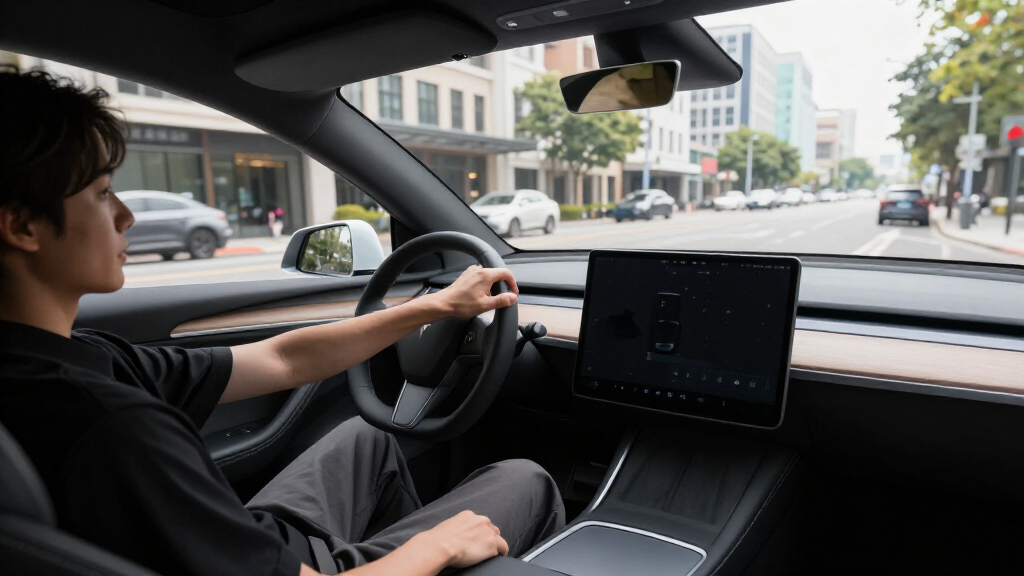
Sources familiar with Tesla’s prototype reveal that the Cybercab does not include a steering wheel or brake lines, components considered essential in conventional vehicles for manual operation and safety. Tesla has not publicly confirmed these design choices, but recent images circulating online show the interior of the vehicle with a minimal control interface, suggesting a fully autonomous system.Industry experts note that the absence of a steering wheel and brake lines indicates Tesla’s confidence in its autonomous driving technology, potentially allowing the vehicle to operate without human intervention. However, regulatory agencies and safety advocates emphasize that such radical redesigns will face significant scrutiny before approval for public use. Tesla has not yet issued detailed statements explaining how the vehicle will be operated or how safety will be ensured in emergencies.
Implications for Autonomous Vehicle Safety and Regulation
The removal of traditional controls like a steering wheel and brake lines from Tesla’s Cybercab prototype signifies a major shift in autonomous vehicle design, potentially paving the way for fully driverless taxis. However, it also raises critical safety concerns and regulatory challenges, as authorities worldwide are still establishing standards for autonomous operations. The development could influence future vehicle regulations, but it also underscores the uncertainty surrounding the safety and legal frameworks for such radical innovations. For consumers and regulators, understanding how these vehicles will be operated and how safety will be maintained remains crucial, making this a pivotal moment in autonomous vehicle development.Tesla autonomous vehicle safety features
As an affiliate, we earn on qualifying purchases.
As an affiliate, we earn on qualifying purchases.
Tesla’s Autonomous Vehicle Innovations and Regulatory Challenges
Tesla has been a leader in autonomous driving technology, with its Autopilot and Full Self-Driving (FSD) systems under continuous development. The company has previously announced plans to develop fully autonomous taxis, which would operate without human drivers. Traditionally, vehicles rely on physical controls such as steering wheels and brake lines to ensure manual operation when necessary. The recent prototype reveal, showing a vehicle without these controls, suggests Tesla is moving toward a future where vehicles are operated entirely through software, pending regulatory approval. Regulatory agencies worldwide are still formulating standards for autonomous vehicles, especially those lacking manual controls, making Tesla’s approach both innovative and controversial.As an affiliate, we earn on qualifying purchases.
Unconfirmed Details About Vehicle Operation and Safety
It is not yet clear how Tesla plans to operate the Cybercab without manual controls, or how safety will be assured in emergency situations. Regulatory approval processes for such radical designs are still in development, and Tesla has not provided detailed explanations or safety protocols for the prototype. Further official statements and testing results are awaited to clarify these issues.electric vehicle with no steering wheel
As an affiliate, we earn on qualifying purchases.
As an affiliate, we earn on qualifying purchases.
Next Steps for Tesla and Regulatory Review
Tesla is expected to conduct further testing and seek regulatory approval for the Cybercab prototype. Public demonstrations and safety assessments are likely to follow, along with potential updates to regulatory frameworks to accommodate vehicles without traditional manual controls. Industry observers will be watching closely for Tesla’s official disclosures and any regulatory decisions that could influence the future of autonomous vehicle deployment.fully autonomous vehicle safety system
As an affiliate, we earn on qualifying purchases.
As an affiliate, we earn on qualifying purchases.
Key Questions
Why is Tesla removing the steering wheel and brake lines from the Cybercab?
Tesla appears to be developing a fully autonomous vehicle that does not require manual controls, aiming to operate as a driverless taxi service. The removal of these components suggests reliance on advanced AI and sensor systems for operation.
What safety concerns are associated with this design?
Without manual controls like a steering wheel and brake lines, safety depends entirely on autonomous systems. Regulatory agencies and safety advocates are concerned about how emergency situations will be handled and whether these vehicles can respond appropriately without human intervention.
Has Tesla officially confirmed these design features?
As of now, Tesla has not issued an official statement confirming the absence of a steering wheel or brake lines. The information comes from recent images and reports, and Tesla has emphasized its commitment to safety and regulatory compliance.
Could this prototype be approved for public use soon?
It remains uncertain. Regulatory approval for vehicles without manual controls is still in development, and Tesla will need to demonstrate safety and reliability through testing and regulatory review before any public deployment.
How does this development compare to other autonomous vehicle projects?
Most autonomous vehicle efforts still include manual controls as a safety fallback. Tesla’s approach is more radical, aiming for completely driverless operation without traditional controls, which sets it apart and introduces unique regulatory and safety challenges.
Source: rss
Evergreen bestsellers Picks
bestsellers
As an affiliate, we earn on qualifying purchases.