
TL;DR

Get business pricing on garage and car supplies
- Business-only prices and quantity discounts
- Tax-exempt purchasing
- Multiple users, one account, clear invoices
Bikerumor’s review of Yakima’s OnRamp LX 2-bike hitch rack found it sturdy, adaptable and suited to e-bikes, with a detachable ramp and a reported capacity of up to 70 pounds per tray on the tested 1¼-inch model. The reviewer also described awkward moments when loading the inner bike, adjustment work and a ramp that needs extra space to use.
Bikerumor has published a hands-on review of Yakima’s OnRamp LX, a two-bike hitch rack designed to carry heavy bikes, including e-bikes, with a reported capacity of 70 pounds per tray on the 1¼-inch receiver model tested. The reviewer found the rack stable and adaptable to different bike styles, while noting that setup and loading the inner bike are less straightforward than with some wheel-holding racks.
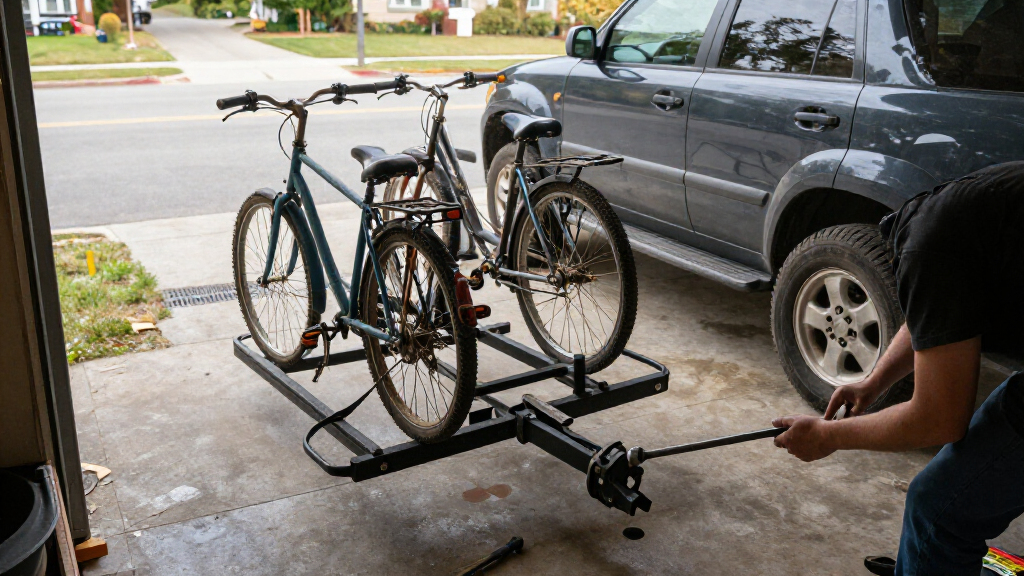
The OnRamp LX carries two bikes and uses a detachable loading ramp that attaches to the rack when it is not in use. According to the review, the ramp lets riders roll heavier bikes onto the trays rather than lifting them. The tested rack weighed 53.5 pounds and fit tires up to five inches wide, wheels up to 32 inches in diameter and wheelbases up to 54 inches. The source lists a maximum of 70 pounds per tray for the tested 1¼-inch model and 80 pounds per tray for the 2-inch receiver version.
Instead of clamping only at a wheel, the rack’s stabilizers hold a bike by its frame or seatpost. The reviewer said that design accommodated bikes with fenders and worked across the bikes tested. The rack also folds vertically for storage and includes a locking hitch pin to deter removal from the vehicle. It does not include a lock for the bikes; the review says a separate cable lock can be looped around the rack and bicycles.
Assembly required joining the rack body to its tongue with one bolt. The reviewer reported that installing the hitch pin requires tightening it to 100 newton-metres and said the supplied wrenches were uncomfortable to use, opting for a socket wrench. Adjusting the trays to center and fit the bikes involved both tool-free changes and, for the bikes in the test, removing an Allen bolt from each tray. From assembly through loading two bikes and completing adjustments, the reviewer said the process took about one hour and 15 minutes, without rushing.
A Ramp and High Capacity, With Trade-offs
The review focuses on a practical challenge for riders transporting heavy e-bikes: lifting them onto a vehicle rack can be difficult, and bikes with fenders or unusual dimensions may not suit every carrier. The OnRamp LX’s ramp and adjustable trays address those needs, while the stated weight ratings make the rack relevant to buyers comparing options for heavier bicycles. Those specifications describe the rack’s listed capacity; they do not by themselves establish how every vehicle or hitch setup will perform.
Usability is part of the trade-off. The reviewer found the rack stable in use, but said loading the inner bike can require holding it upright while raising the mast and positioning a stabilizer. The ramp also needs clearance behind the vehicle, which may be a limitation in a tight driveway or crowded parking space. For shoppers, the review suggests weighing the benefit of easier loading and broader bike compatibility against setup steps, handling and available space.
Products Worth Considering

Milwaukee M18 FUEL 1/2-Inch High Torque Impact Wrench with Friction Ring Kit

DEWALT 20V MAX Cordless 1/2-Inch Impact Wrench Kit (DCF900P1)

DEWALT 20V MAX 1/4-Inch Impact Driver Kit with Battery and Charger (DCF787D1)
As an affiliate, we earn on qualifying purchases.
How the Rack Handles Bikes
The review arose after the author acquired a vehicle that could not carry a bicycle inside and began relying on hitch racks. Yakima offered the writer an OnRamp LX 2-bike rack to test that spring. The account is a hands-on assessment of that rack and setup, rather than a report of a new product launch or a formal comparison test across multiple racks.
To load a bike, the reviewer placed its wheels in the trays, secured both wheels with straps and fastened a stabilizer around the frame or seatpost. The stabilizer’s position is adjustable; the reviewer found suitable contact points on the bikes tested. They also reported that one stabilizer shifted during an early load because it had not been tightened enough, and said tightening it further resolved the issue. Yakima supplies an additional strap that the company recommends using each time, according to the review. The reviewer described it as backup security if a bike is loaded incorrectly or something fails.
The inner bike presents more work than the outer one because the mast must be raised and the stabilizer positioned while the bike is held upright. Removing that bike also involves loosening the stabilizer, pulling a pin and moving the mast aside. By contrast, the reviewer found loading the outside tray easier once the mast was already upright. The ramp can make lifting unnecessary, but the writer said it may be unusable until the vehicle is moved or nearby space is clear.
““its weight capacity, adaptability to different bikes, and stability on my vehicle all impressed me.””
— Bikerumor reviewer
Limits of the Hands-On Test
The source reports one reviewer’s experience, not standardized testing, long-term durability data or a side-by-side comparison. The review does not establish how the rack performs across all bike frames, vehicle configurations or road conditions. Its capacity figures are presented by receiver size, but the account does not give a full assessment of vehicle-specific hitch limits or other setup constraints; buyers should check the rack and vehicle requirements for their own configuration.
The supplied material also ends partway through the reviewer’s description of removing the inner bike, so it does not provide a complete account of every adjustment needed when lowering the mast. It gives no pricing, warranty details or publication date. The reviewer’s positive comments about stability and construction remain personal observations from the test, rather than a guarantee of performance for other users.
Check Fit Before Buying
The source does not announce a follow-up test, product change or next release. Readers considering the OnRamp LX can compare the rack’s stated capacity and dimensions with their bicycles and vehicle, check the hitch receiver’s limits, and confirm there is enough clearance to deploy the ramp. They should also account for the rack’s 53.5-pound weight in the tested configuration and the adjustments needed to center their bikes.
For anyone who buys the rack, the review’s practical guidance is to tighten the stabilizers securely, use the supplied backup strap as Yakima recommends, and allow time for fitting and setup. Those steps reflect the reviewer’s report; the article does not provide a separate manufacturer response or additional technical testing.
Key Questions
How much weight can the Yakima OnRamp LX carry?
Bikerumor lists a maximum of 70 pounds per tray for the tested 1¼-inch receiver model and 80 pounds per tray for the 2-inch version. Check the rack’s current specifications and the limits for your vehicle and hitch before loading bikes.
Does the OnRamp LX include a loading ramp?
Yes. The review describes a detachable ramp that attaches to the rack for storage and can be used to roll heavier bikes onto the trays. It requires enough clear space behind the vehicle to deploy.
Can the rack carry bikes with fenders?
The rack’s stabilizers hold the bicycle at its frame or seatpost, rather than relying only on wheel contact. The reviewer said that arrangement worked with fender-equipped bikes in the test, but fit can depend on the individual bike.
Does the rack lock the bicycles?
The review says the rack includes a locking hitch pin to help prevent removal of the rack from the vehicle, but does not include a bike lock. It says a separate cable lock can be looped around the rack and bicycles.
What did the reviewer find difficult?
The reviewer described loading the inner bike as awkward because the bike must be held upright while the mast and stabilizer are positioned. Tray adjustments, tight access to the hitch pin and the space needed for the ramp were also practical considerations.
Source: bikerumor.com