TL;DR

Get business pricing on garage and car supplies
- Business-only prices and quantity discounts
- Tax-exempt purchasing
- Multiple users, one account, clear invoices
Good braking skills are vital for rider safety, especially in traffic. Using both brakes correctly, understanding modern tech like ABS, and practicing controlled stops can make all the difference when seconds matter.
Imagine weaving through traffic, your heart pounding as a sudden obstacle appears. Your hands instinctively squeeze the brakes. But are you doing it right? Most riders underestimate how much proper braking can prevent a crash. This guide breaks down the essentials every rider should master before traffic turns ugly, so you stay in control when it counts.
Braking isn’t just about stopping fast; it’s about stopping smart. From understanding your bike’s brake types to mastering emergency techniques, you’ll learn how to shave seconds off your reaction time and avoid skidding or crashing. Let’s get into what makes a rider confident and ready for those tense moments.
The Braking Basics Every Rider Should Know Before Traffic Gets Ugly
TL;DR: Good braking is not just stopping fast. It is reading the road early, squeezing progressively, using both brakes with purpose, and trusting modern systems like ABS when seconds get sharp.
The front brake carries most stopping power during hard deceleration because weight transfers forward.
Front brake for power, rear brake for stability, smooth release for control.
Brake early enough to stay calm, then brake smoothly enough to stay upright.
Assess, squeeze, stabilize, release.
Use it progressively, never as a panic grab.
Prevents wheel lock-up during hard braking.
Threshold braking builds emergency muscle memory.
Power, Stability, Balance
Most motorcycles give you separate front and rear controls because each brake solves a different problem. The safer rider knows which one is doing what before traffic forces a decision.
The stopping engine
Delivers the majority of deceleration. Apply it smoothly so the tire loads up instead of sliding or making the bike dive abruptly.
The stabilizer
Adds control at low speeds, on slick surfaces, and during tight maneuvers. Too much rear brake can lengthen stops or start a skid.
The real-world stop
Use both brakes together: front for force, rear for composure, eyes up for steering options when the lane changes fast.
| Braking Choice | Stopping Power | Stability | Traffic Use | Risk If Misused |
|---|---|---|---|---|
| Front brake, progressive squeeze | ✓ Highest | ~ Good with modulation | Emergency stops, normal slowdowns | Nose-dive or skid if grabbed suddenly |
| Rear brake only | ✗ Limited | ✓ Useful at low speed | Parking lots, gentle control, slick patches | Longer stop, rear-wheel skid |
| Both brakes together | ✓ Strong | ✓ Balanced | Best default for dense traffic | Requires practice and smooth pressure |
| ABS-assisted hard braking | ✓ Strong | ✓ Steering retained | Wet roads, sudden obstacles, uneven pavement | Not a substitute for looking ahead |
The Four-Step Stop
When a car pulls out, the rider who has practiced does not improvise. They run a compact sequence: read, load the front tire, add rear stability, and release cleanly.
Assess
Look ahead, identify the hazard, and judge your stopping space before your hands overreact.
Squeeze
Apply the front brake progressively so traction builds instead of breaking away.
Stabilize
Add rear brake as needed, especially at low speed or when the surface is uncertain.
Release
Ease off smoothly so the bike stays balanced and ready for the next maneuver.
Threshold braking belongs in a safe lot, not your first panic stop.
Practice braking just short of lock-up until the bike’s feedback feels familiar. That is how controlled pressure becomes automatic under stress.
ABS Helps Most When Grip Gets Weird
ABS rapidly modulates brake pressure to prevent wheel lock-up. It helps you keep steering control, especially on wet, loose, or uneven surfaces, but it still rewards early scanning and smooth inputs.
| Feature | What It Does | Rider Habit |
|---|---|---|
| ABS | Reduces wheel lock-up during hard braking. | ✓ Brake firmly and trust the pulse. |
| Cornering ABS | Adjusts braking force when the bike is leaned over. | ~ Still avoid abrupt inputs mid-turn. |
| Brake-by-wire | Uses electronic control for precise modulation. | ✓ Learn the feel before heavy traffic. |
| Performance pads and rotors | Improve heat control after repeated stops. | ~ Maintain them; hardware still wears. |
Match brake pressure to the surface.
Wet paint, gravel, oil, leaves, and uneven pavement all reduce the margin between maximum braking and a skid.
The Five Braking Errors That Turn Ugly Fast
Most bad stops start before the lever moves. They begin with late eyes, stiff hands, neglected hardware, or fighting the technology that was built to help.
Waiting too long
Late braking leaves no room for modulation, escape routes, or surface surprises.
Grabbing the front
A sudden lever pull can overload the tire before weight transfers forward.
Rear-only panic
The rear brake helps stability, but it cannot replace the front brake’s stopping force.
Fighting ABS
If ABS pulses, keep braking and steer. The system is helping the wheel keep rolling.
Skipping maintenance
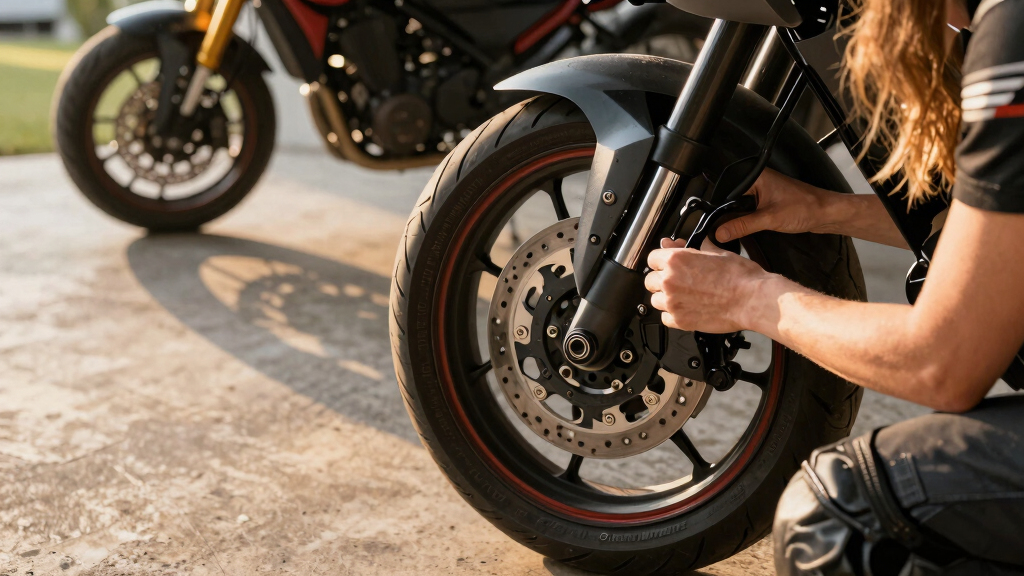
Worn pads, old fluid, and damaged rotors make emergency stops unpredictable.
Trace The Safe Stop
Key Takeaways
- Master smooth, progressive braking to avoid skids and crashes.
- Use both brakes together—front for power, rear for stability.
- Practice threshold braking in safe environments to prep for real emergencies.
- Trust your bike’s ABS if you have it—don’t fight the system.
- Always anticipate stops; don’t wait until the last second to brake.
As an affiliate, we earn on qualifying purchases.
What Are the Key Types of Motorcycle Brakes and Why They Matter
Most bikes have a front and rear brake, each with a specific role. The front brake provides about 70-90% of your stopping power—think of it as the engine behind your stop. The rear brake offers stability and control, especially at low speeds or on slippery roads. Understanding why each brake is designed this way helps you make smarter decisions during sudden stops, balancing power and stability to avoid losing control.
Recognizing these roles is crucial because misusing them can lead to dangerous situations. For example, relying solely on the rear brake during a panic stop on wet asphalt might cause longer stopping distances and increase the risk of skidding. Conversely, overusing the front brake without proper modulation can cause nose-diving, which destabilizes your bike and makes control more difficult. Knowing when and how to use each brake allows you to adapt your technique based on road conditions, bike load, and urgency, ultimately reducing the likelihood of crashes caused by improper braking or misjudgment.
Here’s a quick comparison:
As an affiliate, we earn on qualifying purchases.
How to Brake Correctly in 4 Simple Steps
- Assess the situation: Look ahead, identify hazards, and gauge your stopping distance. This initial step is crucial because it determines how much brake pressure you’ll need, helping you avoid over- or under-braking, which can lead to skidding or insufficient stopping. Proper assessment allows you to plan your braking strategy, whether it’s a gentle slowdown or an emergency stop, and reduces reaction time under stress.
- Apply the front brake smoothly: Squeeze the lever progressively, avoiding sudden pulls that can cause a skid or nose-dive. Proper modulation here ensures maximum stopping power without losing control, especially on variable surfaces. The front brake, being responsible for most of your stopping power, needs to be used with finesse—gradual application prevents abrupt weight transfer that can destabilize the bike.
- Use the rear brake as needed: Lightly tap the pedal to stabilize, especially at low speeds or on slick surfaces. The rear brake’s role is often underappreciated; when used correctly, it can prevent the bike from pitching forward or sliding out, particularly during panic stops. It also helps in maintaining balance and control, especially when road conditions are unpredictable, but over-reliance can cause skidding or loss of traction if not carefully modulated.
- Release the brake gradually: Once stopped or slowed, ease off the brakes smoothly to prevent abrupt shifts or skids. This controlled release helps maintain balance, reduces wear on brake components, and allows your bike to settle into a stable position. It also prepares you for the next maneuver, whether it’s accelerating away or preparing for a turn.
Imagine you’re riding at 30 mph and a car pulls out suddenly. Applying the front brake smoothly, then balancing with the rear, can shave precious seconds off your stop and keep you upright. Practicing these steps in a safe environment ingrains muscle memory, so your reactions are automatic when it matters most.
As an affiliate, we earn on qualifying purchases.
Understanding Modern Brake Tech: ABS and Beyond
ABS—Anti-lock Braking System—is a game-changer. It prevents your wheels from locking during hard braking, especially on slick or uneven surfaces. When you slam the brakes, ABS pulses the brakes rapidly, like a heartbeat, to keep your wheels rolling without skidding. This rapid modulation allows you to maintain steering control during an emergency stop, which is vital for avoiding obstacles or hazards.
Recognizing the importance of ABS is essential because it compensates for rider error—like sudden, hard pulls on the brake lever—and environmental factors such as wet or loose gravel surfaces. Without ABS, a rider might lock the wheels, losing steering ability and increasing the risk of a crash. Modern bikes also feature electronic aids like cornering ABS, which adjusts braking force during turns to prevent loss of traction when cornering suddenly. Brake-by-wire systems provide more precise control, reducing rider fatigue and response times. These advancements mean that understanding and trusting your bike’s technology can significantly enhance safety, especially in unpredictable traffic conditions.
High-performance components like carbon-ceramic rotors and advanced pads help dissipate heat better, maintaining braking power even after multiple stops. If your bike has these features, learn how to activate and trust them—they’re your safety nets in chaotic traffic.
motorcycle brake control techniques
As an affiliate, we earn on qualifying purchases.
As an affiliate, we earn on qualifying purchases.
Practical Tips for Safe, Effective Braking in Traffic
- Practice threshold braking: Push the brake just short of lock-up, feeling the bike’s response. It improves your control and reduces stopping distance by allowing the maximum brake force without skidding. This technique is especially valuable in slippery conditions where over-braking can lead to loss of control. Developing a feel for this balance is key because it helps you respond instinctively during real emergencies, reducing reaction time and improving safety.
- Maintain your brakes: Regularly inspect pads, fluids, and rotors. Worn components can double your stopping distance or cause inconsistent braking, compromising safety during critical moments. Proper maintenance ensures your brakes respond predictably when needed most. Over time, neglecting these checks can lead to reduced effectiveness, making emergency stops more dangerous.
- Anticipate stops: Look for brake lights ahead, slow down early, and avoid last-minute panic braking. Early anticipation reduces the need for aggressive braking, which can be dangerous on unpredictable roads. It also gives your bike more time to respond, decreasing the likelihood of skidding or losing control.
- Adjust for road conditions: Gently reduce your brake pressure on wet or gravel surfaces. A firm grip can turn into a skid faster than you think, so modulate your braking force to match conditions. Recognizing how different surfaces affect traction allows you to adapt your braking technique accordingly, preventing slips and maintaining control.
- Trust your tech: If your bike has ABS, trust it. Don’t fight the system—use it as intended to maximize safety. Overriding or fighting the ABS can reduce its effectiveness and increase your risk of losing control. Understanding its operation helps you harness its full potential during emergencies.
Imagine approaching a red light on a rainy evening. Early braking, combined with your bike’s ABS, can prevent a slip that might send you sprawling. These small habits and understanding how your systems work can make a big difference, especially when traffic is dense and unpredictable.
The Top 5 Mistakes Riders Make When Braking Too Fast
Most crashes happen when riders panic or make common errors. Here’s what to avoid, along with why these mistakes matter:
- Squeezing the brake too hard: Causes wheel lock-up and skidding, which can lead to a fall. Overly aggressive braking reduces your control and increases stopping distance, especially on slippery surfaces. This mistake often happens when riders panic, but understanding the tradeoff helps you apply just enough pressure for maximum efficiency without losing traction.
- Applying brakes unevenly: Over-relying on the front or rear alone can destabilize the bike. For instance, rear-only braking can cause the rear wheel to slide, while front-only can lead to nose-diving. A balanced approach maintains stability and shortens stopping distances. Recognizing the importance of even distribution during an emergency helps prevent loss of control and reduces stopping distances.
- Not practicing threshold braking: Leads to unpredictable stops and longer distances. Without this skill, you may panic or overreact, increasing the risk of skidding or losing control. Developing this technique allows smoother, more predictable stops, especially in adverse conditions.
- Ignoring road conditions: Heavy braking on wet or loose gravel can cause slides or loss of traction. Recognizing surface changes and adjusting your braking accordingly is critical for safety. This awareness can be the difference between a safe stop and a crash.
- Failing to maintain your brakes: Worn pads or low fluid reduce effectiveness exactly when you need it most. Regular inspections and maintenance ensure your brakes respond reliably during emergencies. Neglecting maintenance can lead to brake failure or reduced responsiveness when it matters most, increasing crash risk.
For example, on a rainy day, slamming the front brake can lock your wheel and send you sideways. Smooth, controlled pressure is your best friend in those moments. Understanding these tradeoffs helps you make better decisions under pressure, reducing the likelihood of accidents.
Frequently Asked Questions
How do I brake properly in an emergency?
Apply both brakes firmly and smoothly—front first, then rear. Look ahead, steer around hazards if possible, and avoid panicking. Practice this in safe environments so it becomes second nature.
When should I use the front brake versus the rear brake?
The front brake provides most stopping power and should be used for quick stops. The rear brake helps stabilize the bike, especially at low speeds or on slippery surfaces. Using both together yields the best results.
How can I prevent wheel lock-up?
Brake smoothly and progressively, especially with the front lever. If your bike has ABS, trust it to modulate braking force and prevent lock-up during hard stops.
What should I do if I start to skid?
Ease off the brake immediately, keep the handlebars straight, and try to regain control. Avoid panicking or overcorrecting, which makes the skid worse.
How does wet or slippery road affect braking?
Reduce your braking force and apply brakes gently. Increase following distance and be extra cautious—hard braking can cause slides or loss of control.
Conclusion
Braking is your last line of defense in traffic. Knowing how to use your brakes properly, understanding modern tech, and practicing regularly can turn a potential crash into a controlled stop. Stay alert, stay prepared—your safety depends on it.
Next time you’re riding, remember: confident braking isn’t just about stopping. It’s about stopping smart. Keep your skills sharp, your brakes well-maintained, and your mind focused. That’s the real gear for riding safe when traffic gets ugly.
Halloween Picks
halloween
As an affiliate, we earn on qualifying purchases.