
TL;DR

Get business pricing on garage and car supplies
- Business-only prices and quantity discounts
- Tax-exempt purchasing
- Multiple users, one account, clear invoices
Cycling Weekly columnist Michael Hutchinson uses a friend’s improvised bike-fit rules to examine how much precision everyday riders need. He argues that common adjustments can work for many riders, while specialist fitting may help with saddle choice, cleat position and other individual needs.
Cycling Weekly columnist Michael Hutchinson has used a friend’s informal bike-fit rules to argue that many recreational riders can start with conventional setup guidance, but should adjust their bikes to suit their comfort. His column, headlined “Your saddle should be level, unless you’re a triathlete, time triallist or some other kind of weirdo,” also says detailed fitting can be useful for issues such as cleat position, saddle selection and knee discomfort.
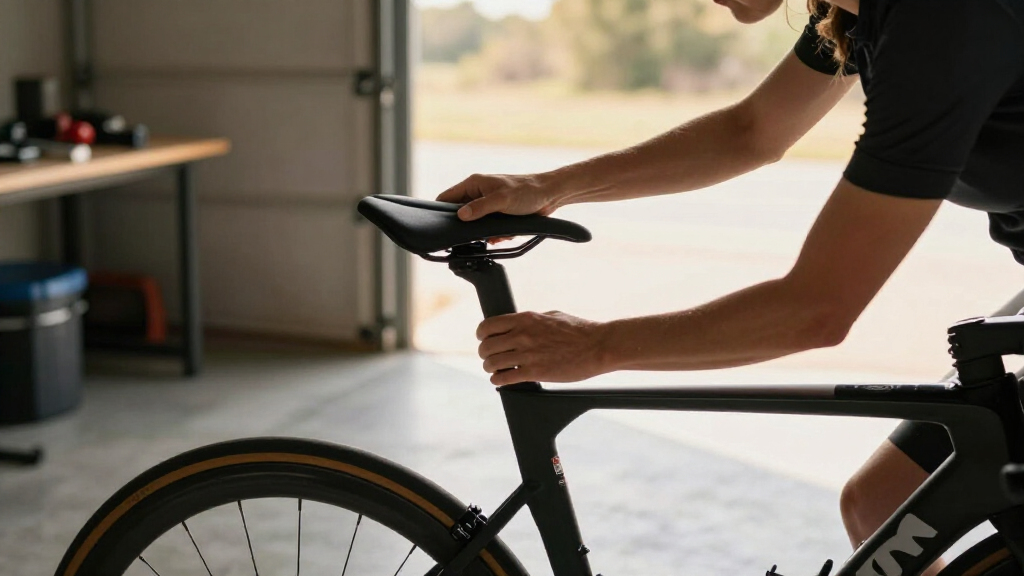
Hutchinson recounts riding with his friend Bernard, who stopped on a hot day to lower his saddle by a few millimetres because, he said, it felt right. Bernard is presented as sceptical of professional bike fitting and guided by his own maxim: “If it looks right, it is right.” The anecdote is the starting point for a humorous account, not a report of a formal study or new fitting standard.
Bernard’s rules include setting saddle height at 0.833 times the rider’s inside-leg measurement, placing the saddle tip 60–65 millimetres behind the bottom-bracket axle, and using a level saddle for most riders. The column makes exceptions for triathletes and time-trial riders, and jokes about crank length and handlebar position. These measurements are attributed to Bernard’s personal rules of thumb, not presented as universal prescriptions.
Hutchinson says the approach could be adequate for many people because riders can adapt to small differences in position. He also cautions that trial and error can be expensive, particularly when selecting a saddle, and says some riders may benefit from more detailed attention to cleat placement, cleat angles and insoles. The column does not provide clinical evidence or a comparison of fitting methods.
When Basic Fit Rules May Fall Short
The column addresses a practical choice faced by cyclists: whether to rely on familiar measurements and personal adjustment or seek a professional bike fit. Its answer is qualified. Simple rules can provide a starting point, but riders differ, and a setup that feels comfortable to one person may not suit another. Hutchinson’s point is not that professional fitting is useless; he acknowledges that detailed fitting can help with specific equipment and positioning questions.
That distinction matters because bike setup can affect comfort on repeated or long rides, while equipment decisions such as buying a saddle can be costly. Hutchinson’s discussion supports trying modest, reversible changes, but it does not establish that a particular measurement prevents injury or works for every rider. Riders experiencing persistent pain should not treat the column’s anecdotes as a diagnosis.
As an affiliate, we earn on qualifying purchases.
From Workshop Rules to Personal Fit
Hutchinson contrasts Bernard’s approach with the growth of bike fitting as a specialist service. He recalls that in earlier cycling years, fitting was less established as a separate profession, although bespoke frame builders often used their own methods to derive frame geometry from a rider’s measurements. The column offers this as personal historical context, not a detailed industry history.
The article also notes that riders have long adjusted their setups themselves. As an example, Hutchinson recalls that Eddy Merckx would sometimes stop during races to change saddle height and carried a small spanner. The anecdote reinforces the column’s argument that adjustment is not inherently inappropriate, while leaving the reader to distinguish an elite rider’s habits from advice for everyone else.
““The thing is, I reckon his system is not a million miles out.””
— Michael Hutchinson, Cycling Weekly columnist
As an affiliate, we earn on qualifying purchases.
Limits of the Column’s Advice
The source is a first-person opinion column with humour and personal anecdotes. It does not report a new scientific finding, a professional consensus, or measured outcomes from riders using Bernard’s formulas. The stated measurements are not shown to fit every body or bicycle, and the article does not set out how to assess pain, mobility limitations or a specific medical concern.
It is also unclear from the supplied material when the column was published. Hutchinson does not quantify how often a professional fitting improves comfort or performance, or how much it can reduce costly trial and error. The piece leaves those questions open rather than presenting comparative data.
As an affiliate, we earn on qualifying purchases.
How Riders Can Apply the Advice
The column’s practical message is to treat general measurements as a starting point, make small changes carefully, and pay attention to comfort rather than assuming one setup suits everyone. Because adjustments can be reversed, riders may choose to record their original saddle position before experimenting. That is a practical implication of the discussion, not a quoted instruction from a fitting standard.
For riders with persistent discomfort, uncertain cleat positioning or difficulty finding a suitable saddle, Hutchinson points to detailed fitting as one option. The article gives no specific follow-up study, product launch or policy change; its next step for readers is an individual decision about whether basic adjustments are enough or specialist help is warranted.
As an affiliate, we earn on qualifying purchases.
Key Questions
What is the main point of Hutchinson’s column?
Hutchinson argues that everyday bike-fit rules can be a reasonable starting point for many riders, but personal comfort and individual needs matter. He also recognises situations where detailed fitting may help.
Does the column say every saddle should be level?
No. The headline jokes that a saddle should be level except for certain specialist cycling positions. The article presents this as Bernard’s rule of thumb, not a universal technical standard.
What measurements does Bernard use?
His stated rules include a saddle height of 0.833 times inside-leg measurement and a saddle tip 60–65 millimetres behind the bottom-bracket axle. The column does not establish these figures as suitable for all riders.
When might a professional bike fit be useful?
Hutchinson says detailed fitting may help with saddle choice, cleat position and cleat angles, among other individual setup questions. The column does not claim that every cyclist needs a professional fit.
Is the column based on a new scientific study?
No study is cited in the supplied article. It is a first-person Cycling Weekly column built around anecdotes, personal observations and Bernard’s informal rules.
Source: rss
Fall Picks
fall essentials
As an affiliate, we earn on qualifying purchases.