TL;DR

Get business pricing on garage and car supplies
- Business-only prices and quantity discounts
- Tax-exempt purchasing
- Multiple users, one account, clear invoices
Nearhuman, a startup based at Bristol Robotics Laboratory, raised £350,000 in pre-seed funding for an AI camera designed for hire e-bikes and e-scooters. The company says it can identify pavement riding, pedestrian close calls and road hazards while processing and redacting footage onboard. The source does not name the investors or provide independent evidence of the system’s performance.
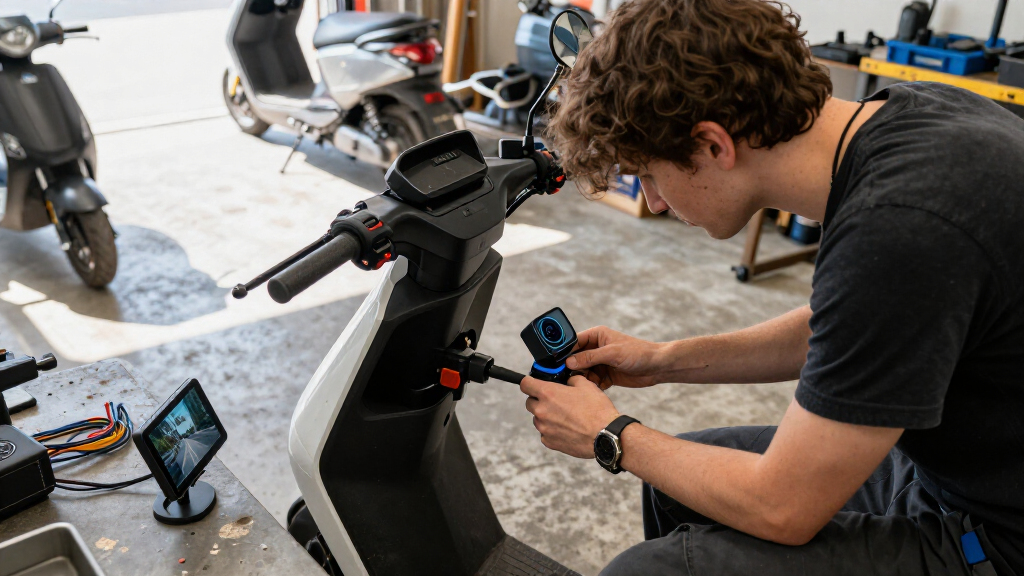
Nearhuman, a startup based at Bristol Robotics Laboratory, has raised £350,000 in pre-seed funding to develop an AI camera for hire e-bikes and e-scooters. The company says its vehicle-mounted system can detect pavement riding, close calls with pedestrians and road hazards, giving operators and councils information intended to improve micromobility safety.
The proposed camera module is designed to run AI processing on the vehicle, rather than sending unprocessed footage away for analysis. Nearhuman says the system processes and redacts video onboard, so sensitive footage does not need to leave the vehicle. The source does not specify what data is retained, how long it is stored, or how operators and councils would access any resulting safety information.
Nearhuman describes its product as a way for micromobility operators and local authorities to identify risky events and respond to them. The examples it gives include riders using pavements, near misses involving pedestrians and hazards in the road. Those are company descriptions of the system’s intended functions; the report does not provide trial results, accuracy figures or evidence that the camera has already reduced crashes.
The startup was founded by Faizan Mir and is based at Bristol Robotics Laboratory. The source reports that Mir raised the £350,000 as pre-seed funding, but does not identify the investors, the funding terms, a timetable for commercial launch or the number of vehicles that may be equipped with the camera.
How Onboard Cameras Could Aid Safety
If the system works as Nearhuman describes, it could give shared e-bike and scooter operators more timely information about risky riding and road conditions. That information may help operators review where incidents occur or identify patterns that need attention. Councils could also have another source of information when considering how shared micromobility interacts with pedestrians and streets.
The approach also raises a practical trade-off: collecting camera data could support safety monitoring, but footage of public streets can capture people who are not using the vehicle. Nearhuman’s claim that video is processed and redacted onboard is relevant to that concern, but does not by itself establish how privacy is protected across the full data lifecycle. The funding marks development of a proposed product, not proof of its safety impact or privacy performance.
As an affiliate, we earn on qualifying purchases.
From Early Builds to Robotics
The report links Mir’s early interest in building devices to his later work in robotics. It says he grew up in Kashmir and had built a drone and a flamethrower by age 14. Mir’s father challenged him to make something that could help people, a prompt the report says helped inspire his robotics studies in the UK and the creation of Nearhuman.
The funding announcement appeared in a wider roundup of e-bike developments, including Deliveroo’s Ride Safe campaign and Tenways’ plans for digital battery passports. Those items are separate stories, but they reflect the broader range of issues facing the sector: rider conduct and equipment safety, battery information and the management of shared vehicles. The Nearhuman announcement specifically concerns an AI camera and does not establish a link to either initiative.
“AI running on the vehicle is designed to detect pavement riding, close calls with pedestrians and road hazards as they happen.”
— Nearhuman, in a press release
As an affiliate, we earn on qualifying purchases.
Performance and Privacy Details Await
The available report does not say who provided the £350,000, whether the camera is being tested on vehicles, or when it might become commercially available. It also gives no independent assessment of the AI’s ability to identify the events Nearhuman lists, including pavement riding and pedestrian close calls.
Privacy details remain limited. Nearhuman says footage is processed and redacted onboard and does not need to leave the vehicle, but the source does not explain whether any video or derived data is stored, how long it is kept, who can review it, or how the system handles people captured incidentally. The scale and intended locations of any deployment are also not reported.
micromobility safety camera system
As an affiliate, we earn on qualifying purchases.
As an affiliate, we earn on qualifying purchases.
Awaiting Trials and Product Details
The next useful milestone would be information from Nearhuman on vehicle trials, system performance and deployment plans. Details about participating operators or councils, the number of vehicles involved and the company’s timeline would show how close the project is to real-world use.
Further information on data retention, access controls and independent evaluation would help assess the company’s privacy and safety claims. No launch date, test programme or named deployment partner is given in the source, so those developments remain unconfirmed.
As an affiliate, we earn on qualifying purchases.
Key Questions
What is Nearhuman developing?
Nearhuman is developing an AI-equipped camera module for hire e-bikes and e-scooters. The company says it is designed to detect pavement riding, pedestrian close calls and road hazards.
How much funding did the startup raise?
The source reports that Nearhuman raised £350,000 in pre-seed funding. It does not name the investors or disclose the funding terms.
Does the camera send video away from the vehicle?
Nearhuman says footage is processed and redacted onboard, so sensitive video does not need to leave the vehicle. The report does not provide further detail about retention, access or storage practices.
Has the system been shown to prevent crashes?
The source gives no trial results or independent evidence that the camera has prevented crashes or improved safety. Nearhuman describes its intended detection capabilities, but their real-world performance is not reported.
When will the camera be available?
No commercial launch date or deployment schedule is included in the source. Nearhuman’s testing plans and any participating operators or councils are also not identified.
Source: rss
Halloween Picks
halloween
As an affiliate, we earn on qualifying purchases.