
TL;DR

Get business pricing on garage and car supplies
- Business-only prices and quantity discounts
- Tax-exempt purchasing
- Multiple users, one account, clear invoices
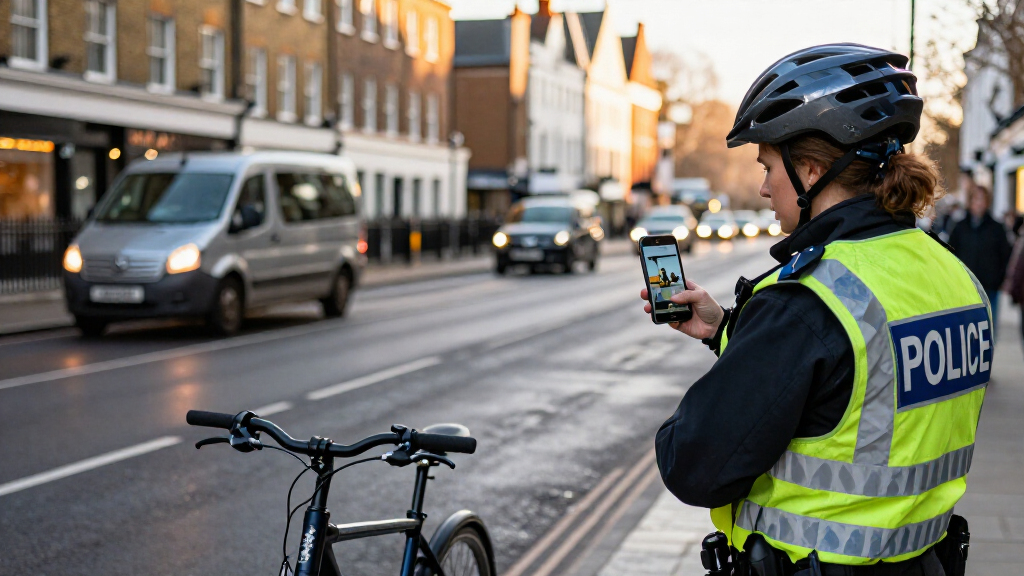
City of London Police have introduced a choice for cyclists caught riding through red lights: accept a £50 fixed penalty notice or watch a two-minute safety video. The force said all 70 cyclists stopped on the initiative’s first day chose the video. The approach is intended to encourage safer behaviour, but its effect on repeat offences has not been established.
City of London Police have begun offering cyclists caught riding through red lights a choice: accept a £50 fixed penalty notice or watch a two-minute safety video. The force said all 70 riders stopped on the initiative’s first day chose to watch the video, in a new effort to change behaviour as well as enforce traffic rules.
The option is part of an approach Sergeant Stuart Ford, the City of London Police Cycle Team lead, describes as “engage, educate and enforce.” Cyclists who agree to watch stand in a marked area the force calls a “cycle time out zone”; the report says Ford dislikes the more widely used label “sin bin.” The marked mat measures five by two metres and bears a bicycle image and police logo.
The public-facing video focuses on the consequences of red-light riding for people with sight impairment. It includes accounts of frightening encounters with cyclists who ride through red signals, and raises the possible harm to guide dogs. Cycling Weekly reporter Simon Fellows says the film prompted him to reconsider his own past conduct. That reaction is his personal response, not evidence that the initiative has reduced offences.
Ford told Cycling Weekly that officers issue fixed penalty notices for red-light offences daily, but the force has limited capacity. He said about 20,000 cyclists pass through the City between 8 and 9 a.m. and that a ten-person team might issue around 20 tickets during a morning deployment. The figures describe the period and staffing Ford outlined; they do not establish how many offences occur or whether enforcement has changed since the scheme began.
A Different Route to Safer Riding
The initiative matters because it tests whether education alongside enforcement can reach more riders than ticketing alone. The force says complaints about cyclists running red lights come from residents, workers and visitors, and Ford framed pedestrian safety as a concern. A brief video may help make the risks more immediate to people who might otherwise regard a red light as a minor shortcut.
That potential benefit should not be confused with a proven result. The first-day figure shows that riders selected the video when offered a choice; it does not show that they changed their conduct afterward, or that the scheme reduced collisions or complaints. The practical outcome will depend on whether riders comply with signals over time and whether officers continue to issue penalties when appropriate.
The London Cycling Campaign offered qualified support. Its representative Tom Fyans said cyclists are not the main road-safety problem overall, pointing instead to cars, driving and speeding, while also saying cyclists have responsibilities to keep others safe. His comments reflect the campaign’s position, not a finding that cyclist offences are harmless or that the video has measurable effects.
As an affiliate, we earn on qualifying purchases.
Why the City Is Testing It
Ford told Cycling Weekly that red-light riding is among the force’s biggest complaints about cycling in the City. He said the police want to secure behavioural change, rather than rely only on issuing tickets. The new option does not remove the underlying traffic rule: riders stopped for an offence can still face the £50 penalty.
The report says there is also a separate part of the video, not intended for media or public viewing. It contains real footage of a cyclist riding through a red light, being knocked off her bicycle and describing lasting consequences. Fellows said he had not watched that segment. The available account does not provide details about the rider, the incident’s date or the circumstances around the footage.
The report also notes that bicycles now outnumber cars in the City of London. That makes cycling behaviour a prominent local issue, but the article gives no count, measurement period or source for the comparison. It should be read as context reported by Cycling Weekly, not as a quantified national trend.
““So I came up with this 3E approach, which is engage with people, educate them, and enforce the law.””
— Sergeant Stuart Ford, Cycle Team lead at City of London Police
cycling helmet with reflective elements
As an affiliate, we earn on qualifying purchases.
As an affiliate, we earn on qualifying purchases.
The Video’s Longer-Term Effect
The report provides first-day participation figures, but no follow-up data on repeat offending, collisions, complaints or changes in riders’ behaviour. It is also unclear how officers decide which cyclists receive the video option, how often it will be offered, and whether it is available at every enforcement location or only during particular operations.
The source does not explain whether cyclists who decline the video are automatically issued a fixed penalty, or whether officers have discretion in individual cases. Details about the non-public footage, including the incident shown and how the cyclist’s account is presented, are not provided. The stated 20,000 cyclists and roughly 20 tickets relate to Ford’s description of one morning period and team capacity; they are not a complete measure of offences.
As an affiliate, we earn on qualifying purchases.
Monitoring the Scheme’s Results
The City of London Police say the goal is to encourage safer conduct while continuing to enforce red-light rules. The report does not give a timetable for reviewing the initiative or a date for publishing further results. A clearer assessment would require follow-up figures, such as how many riders are offered the choice, how many receive penalties, and whether repeat offences or safety incidents change over time.
For now, the confirmed early result is limited: the force said 70 cyclists chose the two-minute video on its first day. Whether the approach produces lasting changes, and how it will be applied in future enforcement, remains to be seen.
As an affiliate, we earn on qualifying purchases.
Key Questions
What choice are cyclists stopped for running a red light being offered?
According to Cycling Weekly, cyclists can accept a £50 fixed penalty notice or agree to watch a two-minute safety video in a marked area described by the police as a “cycle time out zone.”
How many cyclists chose the video on the first day?
The City of London Police said all 70 cyclists caught during the first day of the initiative chose the video option. That is a first-day figure, not evidence of a longer-term change in behaviour.
What does the public video show?
The report says the public-facing film features people with sight impairment describing frightening encounters with cyclists who ride through red lights. It also raises the potential consequences for guide dogs.
Has the initiative been shown to reduce red-light offences?
No outcome data is provided in the report. It describes the scheme’s launch and the choices riders made on its first day, but gives no follow-up figures on repeat offences, collisions or complaints.
Is there another version of the video?
The report says a separate segment, not for media or public viewing, contains real footage of a cyclist being knocked off her bike after riding through a red light and describing lasting consequences. Further details about the incident are not included.
Source: rss
Halloween Picks
halloween
As an affiliate, we earn on qualifying purchases.